Friday, 30 January 2026

Guildford's Friary Brewery

The text below has sat on my computer, in more-or-less the form in which I am now posting it, for more than five years. I had planned to make this part of a wider project that included things other than a straight-forward history of the brewery, and I do worry this might be a little dry. But I do occasionally I get emails about Guildford's now-defunct Friary Brewery, presumably because my blog is one of few sources to come up in a Google search, which makes me think it would be better to just get this information out there. So, here is everything I could find out about the Friary Brewery.

Guildford is a weird place. It’s not a new town: the first known references to it are in the will of Alfred the Great. But it often feels like a new town: the unglamorous, unattractive, post-war kind that Radio 4 comedians make disparaging jokes about. Walk out of the train station and you’re confronted with a grim spaghetti of roads and underpasses, sympathetic only to cars. It’s the sort of place where, to cross the road, you need to wait at three or four pelican crossings. What awaits on the other side is a bland shopping centre: the Friary.

It would be lovely to think that the Friary shopping centre was named after the brewery it replaced, but this is not the case. In fact, both businesses took their name from a distant former occupant of the site - a medieval monastery. The monastic house existed from some time in the late 13th century until 1538.i I’m not sure what was done with the space between then and 1865, when Thomas Taunton established the Friary Brewery. This enterprise was originally a partnership with his brother Silas, but he left in 1873 and Thomas went into business with Charles Hoskin Master, at which point the brewery site in Guildford was occupied. Master subsequently bought the business outright. ii


Beginning a continual process of absorbing other local breweries, Master acquired Holryods of Byfleet in 1889 and it was in this year that he first officially registered the business. A further acquisition, Healys in Chertsey, was made the next year. The company name was officially updated to Friary, Holroyd & Healy’s in 1895iii, but continued to be generally known as ‘Friary’.

The Guildford brewery was an important local employer and the brewery also played other community roles. Aside from a football team, Friary Brewery Athletic, and a well-regarded brass band, the cellars were used as air raid shelter in the First World Wariv. In 1920 the company saved the nearby Pewley Down from development by buying 22 acres it as a gift to the town. It is now a nature reserve.v

In 1956, Friary, Holroyd & Healy’s merged with London’s Meux brewery, probably best known as the site of an accident known as the Great Beer Flood at its Horseshoe Brewery in 1814 in which a porter huge porter vat burst, killing eight people and injuring many more.vi Five years later, Friary Meux went into liquidation, and was taken over by Allied Breweries in 1964.vii

Brewing at the Guildford site ceased on 23rd January 1969viii and production of the Friary Meux beers was moved to the brewery in Romford where Ind Coope, another Allied brand, operated.ix The Guildford brewery was demolished in 1973. In 1978 Allied merged with food manufacturers J. Lyons and Co. to form Allied Lyons.x

After a wilderness period, Allied revived the Friary Meux brand in 1980.xi Their motive was probably to disguise the fact they were a faintly evil mega-corporation by spreading their output over the brand names of breweries they had acquired. Thomas Walker, another defunct Allied acquisition, got the same treatment.xii In February 1981’s ‘London Drinker’, an anonymous “mole” revealed that the beers brewed at Romford Allied brewery were paired, with different brand names used for the same beer. Friary Meux Bitter was, they say, exactly the same as Benskin’s Bitter.xiii Obviously this information can’t be strictly verified but the hint of espionage about the whole thing is quite exciting.

Allied Lyons merged with Carlsberg in 1992, becoming Carlsberg-Tetley – now Carlsberg UK.xiv The brand was used into the 1990s, and it seems production of cask beer continued. An edition of the Reading Evening Post from 1997 contains an advert for a real ale-focused pub, The Plough in Tilehurst, who boast “ale pulled by hand from the cask, just as nature intended”, and lists Friary Meux as one of its regular fixturesxv. Exactly when the use of the brand fizzled out isn’t clear, and indeed it may not have vanished entirely. The most recent sighting I’m aware of is a bizarre one – a ‘smooth bitter’ on keg in a discount pub in Woking called The Pound. Blogger Ed Wray, who made this discovery in 2016, called this an example of “neo-retro” branding – an old name attached to a new product, likely never produced whilst Friary Meux was a going concern.xvi


Tuesday, 9 November 2021

Craft Beer World, now and then


In the very first post on this blog, I acknowledged Mark Dredge’s book Craft Beer World as instrumental in changing the way I drink, and think about, beer. I found it around the time I first dipped a toe into the possibilities of beer outside of macro lager, and it enchanted me. When the book was published in 2013, Brighton already had several craft-leaning pubs, and beer started to take up more and more of my headspace.

I was transported back to that time when I read that Mark was releasing a sequel, The New Craft Beer World. I imagined a version of myself, seven years younger or maybe, in a much sadder scenario, stuck in the same dead-end retail job in which I first encountered Craft Beer World and with Holsten Pils still my favourite beer. What would that beer world look like now, and how would it compare to 2013?

Beer styles is one obvious change, and the most significant omission from the 2013 edition is the New England IPA, simply because it didn’t exist at the time of writing. Hazy IPAs are now so ubiquitous that it’s easy to forget what a recent development they really are (although proto-NEIPA Heady Topper is included in the American Imperial IPA section.)

The descriptions of the other beers in the IPA chapters of the book seem pretty old-school today. The word “juicy” doesn’t feature once, and some of today’s most sought-after hop varieties are notable by their absence, too – although Citra features, it’s outnumbered by Cascade; none of the beers included use Mosaic, which was commercially available but far from commonplace in 2013.

Mark also points out that in 2021, “the IPA family has got a lot broader in general”. In the original edition, there was much less distinction between IPA sub-styles; in the recent update we have beers labelled West Coast, East Coast and even Northwest IPA, with a double page spread dedicated to sorting through the regional IPAs of America.

Today’s other style du jour, the pastry stout, is also pretty much absent in the first book. Again, a trailblazing beer does feature – Three Floyd’s “blockbuster” imperial stout, Dark Lord – but there’s little hint of the coming blurring of lines between beer and confectionary. A section entitled ‘German Curiosities’ includes examples of Gose and Berliner Weisse which seemed impossibly obscure at the time – most of the beers listed are American and very few, if any, UK breweries were making these styles then. Their current popularity would have been difficult to predict, as would the recent tendency to load them with smoothie-like fruit purees and lactose.

“Visually beer is so different now, with all the colourful cans and the opaque orange glasses of IPA,” Mark tells me, suggesting that the visual impact of some styles might be the secret of their success. “I don’t think hazy IPAs or thick fruit sours would be as popular if it weren’t for things like Instagram and Untappd.” I’m just an armchair commentator, and from where I’m sitting, it’s can be difficult to tell which styles are actually popular with a broad range of drinkers and which are the most Instagram-able. It’s hard to know whether someone in the position I was in 2013, picking up The New Craft Beer World as an guide to navigate craft beer, would even know about fruit smoothie sours.

The accessibility of craft beer is, one obvious change that has occurred in the intervening years between Craft Beer World and its sequel. “Back in 2012 when I wrote the book there were only a few places where I could buy or order interesting beers”, Mark says, “it’s now become normal to find great beer everywhere.”

Back then, I probably wouldn’t have believed you if you’d told me that in the not too distant future, I’d be picking up a can of Mikkeller’s American Dream lager during my weekly shop at Sainsbury’s. I certainly wouldn’t have believed that I would purchase said can only once before losing interest, such is the variety of craft beer in 2021. (I would also have been pretty shocked to hear that Mikkeller would then end up on a personal list of boycotted breweries after accusations of harassment, bullying and misogyny, but that’s another story…)

If we consider the greater accessibility of craft beer, there is one big elephant in the room – corporate take-overs. Some of the breweries featured in Craft Beer World really are everywhere now. In some cases, that’s a great thing. Camden Hells is a small miracle, wedged as it is between pumps for Kronenbourg and Amstel all over the UK, frequently the only decent beer on the bar.

But at the same time, selling out to a multi-national can render a brewery’s output permanently uninteresting. I would place both Meantime and Beavertown in this category – note that both are included in Craft Beer World for excellent porters which have since vanished from their line-up.

Some of the beers and breweries featured here have become very easy to find, but in happier circumstances. Take Yeastie Boys, who feature in the original book several times – I was so intrigued by them. They’re from New Zealand, of all places! And they’re named after the Beastie Boys! They are now, happily, partly a UK-based operation, and I need daydream no more about how their beers might taste.

That’s good news, of course. But the greater visibility plus the sheer number of breweries there are now does mean a certain lost romance. I asked Mark if there was anything he missed about craft beer in 2013, and he replied, “ten years ago, there were a lot of beers which I’d never tasted but I’d read about them online and I have really visceral memories of imagining how they’d taste and longing to drink them. There was something thrilling about the beers I’d never tasted.” That happens less and less in today’s craft beer world.

Whilst I can confirm that Mark’s infectious enthusiasm shines through just as clearly as ever in the new book, it is easy to become jaded. But for me, the beers listed in Craft Beer World still hold an indelible romance. The pages are so well-thumbed that I will recognise a beer from the book instantly – if I find one I haven’t tried, it becomes an essential purchase.

I was able, recently, to get in another tick, albeit in a round-about way. Some of the breweries in the original book are no longer with us, such as Boston’s Pretty Things. Conveniently for me, Boston’s loss was Sheffield’s gain, and the same people are behind St. Mars of the Desert. Not only that, but they’ve revived some old favourites. So, seven years later I can finally say I have tasted Jack d’Or saison – and it was every bit as good as I’d hoped.

I doubt I’ll be quite so dedicated to hunting down all the beers in the new edition – but for some readers, this book will be the beginning of a beautiful friendship with beer.

The New Craft Beer World is out now. For what it's worth, I bought my own copy. Thanks very much to Mark for answering my questions.

Saturday, 13 February 2021

Do you remember drinking Friary Meux?


For the past six months or so, I've been digging for information on the Friary Brewery in Guildford. In 1956 it merged with the Meux brewery to become Friary Meux, and was taken over by Allied Brewers in 1964.

Deep Google searches and newspaper archives are bringing up lots of fascinating stuff on the history of the brewery, but it's much more difficult to find any material on the beers themselves.

So I thought I'd put out an appeal. Do you remember drinking Friary Meux beers? 

Any first-hand recollections would be hugely appreciated. Leave a comment, or if you prefer, drop me a line at joetindall at hotmail dot com. 

Thursday, 28 January 2021

I know very well, but all the same...

Our ability to succumb to the immersive illusion of fiction film is often referred to as ‘suspension of disbelief’. From what I remember from my time as a Film Studies student, Christian Metz tells it differently – we don’t simply switch off the part of our brain that consciously knows that the world playing out on the screen isn’t real. For Metz, it might be more accurate to say that we allow ourselves to become immersed in the film, whilst simultaneously marvelling at the workings of the ‘machine’ that enchants us.

Borrowing a phrase from psychoanalyst Octave Mannoni, Metz suggests that the viewer in the cinema tells themselves “I know very well, but all the same…” This is what I tell myself when I drink alcohol-free beer.

A common retort to alcohol-free beer is that other drinks, naturally lacking booze, are available. Rather than have a beer you could just drink tea, sparkling water, juice, and so on. This is a reasonable point, except it supposes that beer is merely a drink. Especially in the current miserable circumstances, it is also often part of a special sort of personal ritual, signalling the moment when the working day is done, dinner’s eaten and the washing up done. The point at which I sit down on my sofa and enjoy a couple of hours of freedom. These moments are important – they’re pretty much as good as it gets at present - and deserve some ceremony. But at the same time, I don’t want to drink every day.

So I might sit back with an alcohol-free beer instead. On one level, I am trying to suspend disbelief, buying into the fantasy that I’m relaxing with a ‘real’ beer. If it’s no good, the illusion is shattered. But at the same time, the very fact that I am assessing whether the beer is good or not means that the illusion is never total. And if the beer is good, I might find myself thinking, “hey, this actually tastes like beer! How did they do that?” Like Metz’s film audience, I am both allowing myself to be swept up in the illusion, whilst also admiring the brewery’s ability to sweep me up in the first place.

All of this means it is difficult to assess the quality of alcohol-free beer from a neutral standpoint. Beer is never going to taste the same once you take the booze out; equally it’s easy to overrate some examples just for tasting vaguely decent. There’s no accounting for taste, but I have seen people whose opinions and palates I trust very highly raving about a 0.5% stout that I poured down the sink because it tasted like damp sticks.

I wanted to write something on this subject that says something beyond, “some alcohol free beers are nice, actually.” So what follows is a brief attempt to categorise the sub-genres I’ve found on my travels through the 0.0 – 0.5% beer world.


The watery ones

If you had never tried an alcohol-free beer, but had to guess what one is like, I think you might assume they were watery and bland. In many instances you’d be right. Some examples go beyond mere blandness and are actually quite impressive in terms of their near-total absence of flavour. Brewdog’s Nanny State, for example, has a promising hop aroma which briefly translates to the palate before fading to absolutely nothing. California Uncommon, from AF-beer specialists Mash Gang, does it the other way round. Bizarrely sold as an alcohol-free malt liquor, which is meaningless gibberish, it starts off tasting like straight-up H20, but then a hollow ghost-flavour of toasted malt niggles at you in the finish. Both are pretty unsatisfying.

The sweet ones

AF beer often has a lot of residual sweetness. This sounds unpleasant, and in some cases it is – dry-hopped wort, anyone? But in others it works very well. Hoppy styles seem to particularly benefit from the extra body this brings, and the sweetness rounds out the flavour and offers a good foundation for hop character to assert itself. Mikkeller’s Weird Weather is the best alcohol-free IPA I’ve encountered so far. Allow for the extra sweetness and it is convincingly beery, with juicy stone fruit notes and a citrus kick in the finish.


The various IPAs from Coast are quite similar, perhaps because they are also contract brewed at De Proefbrouwerij in Belgium. Their standard IPA has an odd strawberry jam flavour which is quite pleasant but not likely to let you forget that that’s merely near-beer in your glass. A recent range of single-hopped beers are much better, with much more precise hop flavour.

One big success in this area was the short-lived Guinness 0.0, which had a sweetness that would stop the flagship product from tasting so acrid and bland. Famously withdrawn in record time due to disconcerting possibilities of contamination (announced just slowly enough for me to finish a 4-pack), I hope it’ll return in a form fit for human consumption.

The ones with lactose

Picture the scene; the brewing team are sitting around having a post-shift pint, pondering a potential new line.

"I think we need to diversify our range and make it as inclusive as possible. We should make an alcohol free beer – lots of people are more mindful about their drinking these days and we don’t want to alienate customers."

"Great idea! And let's put dairy products in it!"

Look, I don’t want to get militant vegan on you, but I do think its safe to say in the current climate emergency, we all have a responsibility to think again about our consumption of products that derive from intensive animal farming. May I suggest that milk in an alcohol free lager is just about the most pointless, wasteful use of animal products imaginable?

The ones with adjuncts

One way to paper over the less convincing elements in alcohol-free beer is to add in some additional flavours. This is a delicate balancing act. It’s already not real beer; take the adjuncts too far and you end up with a sort of simulacrum that supposedly simulating beer, whilst predominantly tasting of grapefruit, or coffee, or rhubarb and custard sweets.

When done right, though, this is perhaps the most enjoying and deceptively beery category of them all. Non-alcoholic stouts are tough to pull off, and a lot of those I've tried just taste like malt extract, if not Marmite. However the aforementioned Mikkeller’s coffee-infused Beer Geek Flat White 0.3% is superb and I had settled on this being my go-to school night treat until I bought 4 bottles, all of which were infected and sour. I'll try again soon and hope that was a dud batch. Hamburg’s Kehrwieder also do wonderful things with coffee in their Road Runner porter.


On the fruity end of the spectrum, I’m a big fan of Lowlander’s 0.0 Wit (another brewed under contract at De Proefbrouwerij, who clearly know their stuff). Made with waste lemons and limes from bars, this threatens to teeter into fizzy pop territory, but retains an element of rustic wheat that hits the spot. Another shout for Mikkeller, too – they’re the best in the AF game, for my money – whose Limbo series of fruited sours is superb. Riesling is the pick of the bunch for me, with a complexity and dryness that almost matches its boozy equivalents.

And the others

Then there are some beers that don’t fit really fit into any of the sub-genres outlined above. Two recent highlights come from UK brewers. Signature Brew recently released Lo-fi (DISCLAIMER - my samples were gifted by the brewery), which although maybe slightly on the thin side, could never been accused of being watery. It’s billed as a New England IPA, and does a good impression of one. This includes a couple of the less desirable tendencies of that style; tropical notes not quite gelling with savoury caraway, and a touch of asprin-like hop burn, but these are minor enough to overlook. It’s good fun and I’d definitely add it to my regular weeknight rotation.

Ridgeside’s Currant Wisdom is a sour so heavily fruited that the blackcurrant and apricot qualify as stars of the show, rather than adjuncts. It starts off a little watery, but the sour fruit tang soon overpowers that, whilst a smooth vanilla note fills out the middle.

So there you go. Some alcohol-free beers are nice, actually.

Sunday, 27 September 2020

Beers from the smoke


In life, I am a planner. In beer drinking, I am a ticker. These two characteristics compliment one another, especially whilst travelling, but if I’m not careful spontaneity can go out the window. Whilst I’ve had many beer experiences in which careful planning paid off and I was right to leave nothing to chance, the experiences I wasn’t expecting are often more powerful.

The photo above is a memento from one such occasion. As my train pulled into Kings Cross, I smelt smoke. Not the kind that might raise alarm bells in a major railway station, but delicious smoke, charcoal grill-type smoke. I don’t know what it was – possibly something as mundane as a ham and cheese toastie wafting down from the refreshments car – but it was especially evocative, and put immediately in mind of rauchbier. In fact, rauchbier was already on my mind; I’d read that morning that Anspach and Hobday would be pouring theirs at their Bermondsey tap room that day.

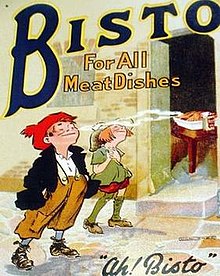
With my nose held high in the air, chasing aromas like the grotesque children in vintage Bisto adverts or Divine in John Waters’ Polyester, I formed an improvised plan. I’d need to change trains at London Bridge, so a one-stop diversion could have me in Bermondsey in no time. Over to Druid Street for a swift smokey treat, then back on my way. That’s exactly what I did, and it was wonderful.

Why am I telling this story? I don’t know, really. It is a very long and quite tangential way to start talking about rauchbier. To discuss this style, I need to return to that word evocative. Rauchbier feels especially appropriate at this time of year, as distant bonfires spread their aromas far and wide, soaking into your clothes and confirming that summer is well and truly over. I’ve drunk Spezial Rauchbier on Brighton beach in mid-30 degree heat, and it was still great – but a crisp autumnal air is undoubtedly more appropriate.

I was delighted, then, to find that not one but two London breweries have tried their hand at the style for the A/W 2020 season – the afformentioned Anspach and Hobday, and Signature Brew, who kindly gifted me two cans of theirs.


Signature call their offering In the Dark, so I was surprised that it poured a pretty light amber colour reminiscent of Vienna lager. The aroma proves quickly that there’s nothing half-hearted about it though, with a big hit of smoky bacon on the nose. This is, as will be obvious to anyone familiar with rauchbier, a large component of the flavour, if not an original tasting note. Once you get used to the style, what’s interesting is what else is going on beyond the ham. In this case, the smoke is well integrated with the malt flavour, mingling with toasted and bready notes. There are some almost salty mineral flavours, and just a touch of lemony astringency lending a welcome zingy freshness, before finishing on a burnt caramel note. Like the best smoked beers, this balances intensity, complexity and drinkability very well indeed – I confessed by ticker tendencies at the start of this post, but I’d happily forget all that and drink this all night if I found it in my local.


To Anspach and Hobday, then. This year’s simply titled The Rauchbier is, for the first time, a lager. It makes for a beautiful pour, with a big off-white head that sticks around right til the end of the glass (a result of the addition of that very un-Germanic ingredient, maize?) That meaty umami smoke is there in spades, as per, but rounded out by an intriguing herbal note suggestive of oregano. Spot on, really – but the real coup here is actually more about texture and mouthfeel. The carbonation is relatively soft, which makes the beer feel full and smooth – closer to Schlenkerla marzen poured directly from the cask than the bottled equivalent.

Time for more planning – how can I get hold of more of these beers to see me through the lengthening nights ahead?

Thursday, 3 September 2020

(Actually) brewed in Brighton

 Basing your brewery in Brighton is a great idea, from a marketing perspective. It’s a popular summer destination, so you have that association going for you; it’s well known for its bohemian character, so there’s that, too. There are recognisable landmarks like the Laines, or the skeleton of the burned out pier that now eerily shadows the slick, pointless i360 tower. You could draw on these in your branding.

Not such a great proposition financially though. Rents are high, second only to London. So you can see how one might form a dastardly plan to claim, or at least heavily imply, to have a brewery based in Brighton, whilst taking care of the inconvenient of business of brewing beer somewhere cheap in the Sussex countryside. 

To be clear, there are a number of excellent local breweries who don't actually brew in Brighton and have never suggested that they do. They have made the city their primary market and have become associated with it. I have no problem with that whatsoever. Gun, Franklins and Downlands are amongst my favourites. 

But the strategy I describe is increasingly familiar, and brings about various questions about contract brewing and transparency. It might be worth making a distinction between contact brewing – where beers are made to your specifications at a third party brewery, such as Missing Link in East Grinstead – and cuckoo brewing, where brewers don’t have their own site but do the hands-on work on other breweries’ kit. The former isn’t ideal, but can be an important step towards breweries establishing themselves in their own permanent home. The latter is preferable in terms of transparency; the ownership of the stainless steel is less important than the understanding that the group of brewers representing the brand name on the can, or bottle, or pump clip, rolled their sleeves up and made the beer you’re drinking.

But there is also the question of authenticity and a sense of place. If I’m told a beer is from a certain place – be that Brighton, Brussels, Berlin – then I expect it to have been brewed there. It is an important factor, one of the intangible things adjacent to whatever’s in the glass, that means something.

Assuming it means something to others, too, I thought I should pull together a small directory of the breweries who actually brew in Brighton. I can't guarantee it’s complete - these things move fast. Still, if you’re in Brighton and want to legitimately drink local, here’s some options.

Brighton Bier

Brewing since 2011, Brighton Bier is the city’s original craft brewery. For a good while they were the only full scale commercial brewery in the city, and have been known to speak their minds about those breweries claiming Brighton heritage whilst brewing elsewhere. Before setting up at their current Kemptown brewery, they began life at Hand in Hand brewpub just down the road.

Their flagship pale ale, simply named Bier, typifies what they do so well. Endlessly drinkable, it crams a lot into its 4% ABV, with lots of fresh lemon and pine and a moreish bitterness. Their cask beers are also excellent – find South Coast IPA in good condition and you won’t want to drink anything else. Their output can feel a little samey at times – a lot of pale ales at around the 5% mark - but regular beers like Grand Havana, a beautifully smooth cask porter, and No Name Stout balance things out.

The beers used to be available in cans, but that seems to have stopped, and whilst they do make it outside of the city, they’re at their best in one of the brewery’s excellent pubs. Brighton Bierhaus, the most central of the three, is designated as the official taproom, but the equally excellent Haus on the Hill and Freehaus in the Hanover area of town are also highly recommended.

Hand Brew Co.

I wrote a profile on the Hand in Hand brewpub back in 2018, and much has changed in the time that’s passed. The ‘idiosyncratic’ brewing set up, which necessitated a kind of ‘make do and mend’ approach, has been expanded and modernised and, most significantly, Hand Brew Co. has outgrown the premises. A new brewery and tap room in Worthing is set to open soon, which is exciting news. The beers have always been impressive, but have grown increasingly accomplished over time. Most recently, I was seriously impressed by the Hans Pilsner, a dead ringer for a herbal, bitter Bavarian pils.

The new operation in Worthing doesn’t, however, replace in-house brewing at the pub. Head brewer Jack assures me “we’re still brewing at the Hand and always will.” As is blindly obvious, the best place to find these is the pub itself, happily also one of Brighton’s most characterful boozers.

BRZN

BRZN has apparently existed in some capacity for over a year now, but completely passed me by until a couple of weeks ago when I stumbled across their new venture on my way home from the shops. Initially operating as a cuckoo brewer, they moved into a shipping container in what’s known as the ‘Cobbler’s Thumb’, just up the road from Preston Circus, in May. Their model of selling beer directly to pubs was challenged by lockdown, so now they open their doors every Saturday for takeaways.

The beers are pretty inventive, ranging from fruited sours to imperial milk stouts, and they seem to make liberal use of the magnificent Voss Kviek yeast. I was hugely impressed with Modern Solutions, a Voss-powered pale ale with cold brew coffee from the superb Pharmacie roastery in Hove. Combining both foam bananas and the little pink shrimps that shared their pick ‘n’ mix bag, sweet orange, zesty and floral coffee notes and a gentle, refreshing acidity in the finish, this is an incredibly flavoursome beer for a relatively low ABV of 4.5%. On the strength of Modern Solutions, I’ll be back at the shipping container pretty soon.

Unbarred

Unbarred began life as a homebrew operation, before setting up commercially through the aforementioned Missing Link. They now have a permanent home in Brighton, having taken over a great purpose-built brewery and taproom space from the now defunct Holler Brewery last year. For me, the beers are far more consistent these days.

It would be reductive to say that Unbarred specialise in wacky adjuncts, but they’re certainly not averse to them - it's part of the 'anything goes' approach to brewing implied by their name. These range for the tasteful - pale stout with Nicaraguan coffee cherry tea - to the... decadent. Take Bueno Shake, a hazelnut milk stout inspired by a certain European chocolate treat, or Dip Le Donut, a coffee and doughnut white stout which uncannily reproduces both the sweet bready quality and the gooey glaze of a Krispy Kreme.

If the thought of all that makes your teeth hurt, then look to something like their Casual Pale, an aptly named easy-going pale ale, full of refreshing lemon and pine notes on a faintly biscuity pale malt based that’s made for multiple laid-back pints.

Larrikin

I've been slow to investigate Larrikin because of shellfish. The brewery operates out of the basement of The Urchin, a Hove pub specialising in shellfish, a cuisine to which I am extremely averse. However much I want to support what is by all accounts a lovely pub and a small Brighton-based brewery, the thought of sitting sipping beer in a room that hums of mussels is not my idea of a good time.

I was excited, then, to see that Larrikin had started selling cans to take away and drink in a neutrally-scented environment. This seemed perfect until I opened them. I have to assume that something is going wrong in the canning process, because all three beers (IPAs of various iterations and ABV) were the same unappetising brown colour, like fruit left out to go oxidised. They also all tasted remarkably similar, with a sweet fruity note recalling boiled sweets, and some fresher melon notes that were reasonably pleasant. 

It's hard to believe these beers were as the brewer intended, but then ideally, I think the brewer intended for them to be drunk in the pub and I'm inclined to give them the benefit of the doubt. I'm exaggerating about the shellfish thing for comic effect, but according to those whose opinions matter (i.e. people who can stand to be in the same room as a prawn), the place is excellent. And yes, they do brew an oyster stout - it would be mad if they didn't.

Loud Shirt

Loud Shirt is probably the Brighton brewery I'm least familiar with. Hence the lack of relevant photo; hopefully this snap of kids TV icon and loud shirt trailblazer Dave Benson Phillips will suffice. They have been brewing since 2016, but I’m not sure how long they’ve occupied their brewery in Whitehawk.

I may as well acknowledge that, even if unconsciously, the name and general ‘embarrassing dad’ vibe of the branding has probably been a barrier to investigating their stuff. I did once encounter their Ecstasy Stout at a local CAMRA festival; rich and chocolatey but with an unusual clementine note (is it Sorachi Ace?), I liked it enough to forfeit the ticking potential of such a setting and went back for more.

They do bottle and can, but I was unable to find anything for my important research, so Loud Shirt remains a bit of an enigma for me. Some of the beers sound very appealing; Hallucination Brune in particular - I'll be keeping an eye out for more.

Sunday, 2 August 2020

Mein biergarten

Like everyone else, I’ve been stuck at home a lot lately. Aside from the three-and-a-bit months of fairly strict lockdown, I’ve also been slow to return to the pub – partly because I’m still anxious about COVID-19 and don’t fancy taking the risk, and partly because I’m happy drinking at home.

My new garden certainly helps. I count myself lucky to have some outdoor space, something of a rarity for rented flats in Brighton. It’s small, and a bit of a ‘fixer-upper’, but big enough that I can satisfy a medium-term dream and sit drinking lager at a trestle table, pretending I’m in a German biergarten.

To further aid this holiday-at-home pretence, I’ve been drinking my way through a box of beers from Franconia, purchased from Hier Gibst Bier (thank you to Jezza on Twitter for the tip). I’d always assumed ordering beer from abroad would take ages and be extremely expensive, but neither is true in this case. Based in Bayreuth, this site stocks beers from all over the region. Of course I understand that bottled beer is a poor substitute for Franconian lagers poured bayerische anstiche in the brewery’s own timber-framed pub, but it’ll do me just fine.

These beers are designed for drinking, not thinking. But I’ve been pondering what makes them so satisfying and so highly regarded. Some of the classic lager descriptors don’t necessarily apply – some of these beers aren’t ‘clean’ for example – diacetyl is not uncommon amongst my selection, but then I’m not diacetyl-averse. They might not be exactly ‘refreshing’ either – they often have a rustic, bready quality that feels more nourishing than quenching.

The Lagerbier from Fassla in Bamberg exemplifies a lot of what these beers do well. Pouring a rich golden colour, it has a huge depth of malt flavour. If that conjures up thoughts of something sweet and sticky then think again, because it’s wonderfully balanced, finishing with herbal hops and a mineral note that leaves it slightly dry.

What is it that makes these beers different to, for example, those found in Munich – good lagers, sure, but in comparison to the best of the Franconian beers in this box, it seems like they’re missing an extra layer of complexity. Is it decoction that makes the difference? Fermenting in open containers? Or are these practices just relics of the brewing past, held onto more for a sense of rustic authenticity than anything that actually benefits the beer?

Maybe I’m onto something with that last thought. I’m attaching a considerable romance to these beers, as my whole pseudo-biergarten project suggests. And I’m fine with that. Another box is on it’s way from Bayreuth as we speak.

As well as the Fassla lager, I especially enjoyed the Kellerbier from Brauhaus Binkert and the Breitenlesauer Pilsner from Krug-Brau. On a slightly different tip, the Fraundorfer Rauchbier from Brauerei Hetzel is an excellent, light and hoppy take on a favourite style of mine.


Tuesday, 12 May 2020

Tasting beer: a confession


Here’s an odd confession for a beer blogger – sometimes, I can’t really taste beer.

This has been going on for a couple of years. It comes and goes. I can taste some beers more than others. One day my palette might be operating at full power, but the next I might find the IPA in my glass no more flavoursome than tap water.

The problem isn’t my sense of taste so much as smell, which intermittently loses intensity. As is fairly obvious, olfactory perception is a large component of taste, and this is particular important with beer. In fact, I don’t seem to have any issues tasting food. It’s the relationship between aroma and taste in beer (but also coffee and wine) that I struggle with. Thankfully I can still enjoy scented candles, freshly cut grass and dusty libraries.

There isn't a clear medical reason for this, according to ENT specialists who’ve shoved cameras so far up my nostrils that my eyes watered. I’ve tried so many different nasal sprays that I could probably start a side blog noting their nuances. In September, I had an operation to cut back inflamed soft tissue behind my nose. None of it seems to make much difference.

Should I admit this? Might it damage whatever shred of credibility I have as someone who opines on beer? Well, hopefully it goes without saying that if I drink a beer than I can’t really taste, I’m not likely to mention it on this blog. It’d be dull reading if I did – every post would say “yet another beer that is almost completely devoid of flavour” – and unfair, too. I decided to write this post whilst reflecting on how my drinking has changed over the past couple of years, and how I’ve adapted to the situation.

One factor is temperature. It’s not exactly a revelation that flavour and aroma is slightly muted by colder temperatures, but I’m particularly sensitive to this. Any beer that’s been kept in my fridge needs 30-60 minutes at room temperature before I get stuck in. This is more difficult in pubs, where keg beer is often served far too cold for me. If I’m just having one pint, it tends to be from cask, which is (hopefully) cool but not cold.

This gets complicated if I’m settling in for the evening. Let’s take my beloved Evening Star in Brighton as an example – they’re likely to have numerous beers across cask and keg that I’ll want to try over the course of a session. I have to be a tactical here; start by ordering two beers, one cask and one keg. Drink the cask beer first, allowing the other glass to warm up a little. Then, there’ll be a kind of rolling system, one beer ready to drink whilst another ‘matures’ on the table in front of me. I’ve made it work but it involves more thought and planning than a simple evening in the pub should, and answering the inevitable “why have you got two beers?” question can be embarrassing and long-winded.

Then there’s beer style. Heavily hopped IPAs are the unfortunate casualty in all this; although very bold in flavour, they rely heavily on the aromatics. I haven’t completely stopped drinking them, but I have to be pretty careful. What could be more disappointing than ordering a pricy 2/3rds of hazy, hyped DIPA and having to desperately chase the ghosts of flavours that should be dancing a samba on your tongue?

I’ve found myself gravitating towards simpler, subtler beers – not because my palette has ‘developed’ or ‘matured’, which would be self-congratulatory, elitist nonsense. I just find that the roasted coffee notes of a porter, the bready malt and grassy hops of a pilsner, the rustic hay and pepper of a saison, all present themselves boldly on my palette.

There is a satisfaction in going back to these beers, which can be unjustly overlooked in the IPA-driven craft beer world. I’d prefer to just drink whatever I wanted, though. And I’d like to go back to ordering one beer at a time. It would make buying rounds with my friends so much simpler.

Friday, 28 February 2020

On veganism and beer


Recently I told one of the young people I work with that I’m vegan, and apparently blew his mind. Every time I see him, he asks me a series of questions about how this works, ranging from “are those leather shoes?” to “can you have bread?” It is quite possible that he will one day ask me if vegans can drink beer, and I will laugh and say “of course we can.” Usually.

Once, it was simple. If you needed to ensure your beer was dairy-free, you could simply avoid anything sold as “milk stout.” Clear, obvious, right there in the name – this stout contains milk. Or at least, lactose, the sugar found in milk, which gives these beers their creamy sweetness. Sorry, vegans, look elsewhere. These days, lactose doesn’t always announce itself with such clarity.

By law, the presence of milk must be clearly signalled in ingredients lists on bottles and cans, so shopping for beer isn’t an issue. In a pub or bar, though, you don’t have access to this information. A pump clip might make things more obvious, but modern craft beer bars don’t always display these.
Certain beer styles are easily swerved. Take the much-maligned “pastry stout” subgenre (which, incidentally, I was fond of when I was merely vegetarian). Omnipollo’s Chocolate Vanilla Coconut Blackout Cake Imperial Stout doesn’t sound very plant-based, and I’m happy to stick to that assumption and look elsewhere. Terms like “milkshake” and “ice cream” may seem infantile when applied to beer, but they’re useful because they heavily imply the presence of lactose.

Beyond that, things can get a little hazy – no pun intended. Heavily dry-hopped IPAs, especially those with added fruit, increasingly turn to milk sugar for balance, as have some big, dark beers – often imperial stouts or even Baltic porters. At the point of sale, it can be difficult to establish whether these beers are suitable for vegans. You could ask the bar staff, but they often aren’t sure themselves. Looking online often isn’t much help either. The result is that I’m now hesitant to order beer styles once loved, just in case I end up with dairy ingredients in my glass.

Veganism is, for me and many others, a strongly held ethical position and as such, I would be irritated to unwittingly lapse on this conviction by drinking an inadequately-labelled, lactose-laden IPA. This shouldn’t be underestimated. But it is also worth remembering that some people are lactose intolerant, and such a mistake could cause them real discomfort.


To be clear, I don’t really care if breweries make beers that aren’t vegan, if that’s what they want to do.  But Ritchie Bosworth, head brewer at Coventry’s Twisted Barrel brewery, suggest there’s no need. “In IPAs/Pales, lactose is only really used to balance beers that have been badly designed in the first place, with sweetness required to balance an excessive use of hops,” he writes in an email. “In most cases, these pale beers are too vegetal/bitter to drink without the addition of lactose to balance them out.” All of Twisted Barrel’s beers (and all food served at their taproom) is, and always has been, vegan.

In dark beers, Twisted Barrel use several methods to replicate the sweetness and body of lactose. They mash at high temperatures, producing longer, complex sugar chains yeast struggles to process, leaving more sugars present in the final product. This is particularly effective with old English yeast strains that don’t ferment complex sugars. Oats and wheat mimic the sweet, creamy qualities, especially in combination with vanilla pods; this combination is often used in their pale beers too. In beers like Gods Twisted Sister: Breakfast Edition, oat milk is even added for smooth, silky texture. This goes in after the boil at a rate of around 1ml oat milk per litre of beer.

There is, then, an argument that brewers should think more carefully about the drinkers they’re losing by using lactose unnecessarily. But either way, my principal problem is that there is no consistency in the way pubs and bars communicate whether what they serve is suitable for vegans. Some breweries make efforts to communicate this their end, and I know I’ll always be safe with something from Cloudwater or Moor. Whether pubs pass on this message is less certain – sometimes it happens, sometimes it doesn’t. If I walk into a bar with 10+ taps and only one is actually labelled vegan (which isn’t unfeasible), am I really to assume that none of the other options are suitable?

Isinglass remains a complicating factor. This fining agent, made from the swim bladders of farmed fish, isn’t really suitable for vegans or vegetarians. Frustratingly, its use is difficult to detect. It isn’t listed as an ingredient even when it’s used and bar staff often don’t know. Beers that don’t use it, perhaps not fining their beer at all, don’t always make this clear, either. I will confess to adopting a “don’t ask, don’t tell” policy when it comes to isinglass – many vegans will be more particular.

By way of a solution, I point to my local brewery, Unbarred. They’re known for hazy IPAs and beers with culinary adjuncts or added flavours – Honeycomb Milkshake Pale and Chai Latte are fairly typical examples. Both contain lactose. However, in the Unbarred taproom, these beers are clearly marked with an ‘(L)’, and vegan beers with ‘(VG)’. This is so simple that I have to ask – why isn’t everybody already doing this?

Friday, 2 August 2019

Snapshots from Athens


1.
The label on the bottle in front of me reads ‘New EnglandBarley Wine’. What, I wonder, is the impulse behind this seemingly contradictory collision of styles? Ignorance? Provocation? Is it a ploy to trick geeks like me into parting with their hard-earned Euros, or something genuinely inspired?

The blurb on the label is (quite reasonably) written in Greek characters, so this beer can’t explain itself to me. Only one thing for it – I taste it, in as open-minded a manner as possible. Sticky barley sugar registers first, then pithy marmalade. A lilt of tropical fruit before a big, bitter boozy orange finish, like a stiff Old Fashioned.

Later on, I look the beer up and find it’s brewed with Norwegian farmhouse yeast (kveik) and, just for a while, the concept of beer styles seems laughably inadequate.


2.
Inside the Lazy Bulldog pub, you’ll find beer engines, vintage Guinness advertisements, and West Ham football scarves on the wall. Slick, perhaps recently painted, everything here is a little too neatly placed to really resemble a shabby English pub. Nor would I want it to – I’m not here for a pint of Pride, but for the extensive range of Greek beers on the bar.

I plump for Head Twister, the pale ale by Athens outfit Noctua. Is it the power of suggestion that makes it taste peculiarly of home? Served with a tight, creamy head, it’s all Digestive biscuits, elderflower and orange. I never thought I’d come to Greece and come across a dead ringer for Hophead.


3.
I last about 5 minutes outdoors before a chilling breeze sends me back in. The sky’s darkening and the air feels charged. Sure enough, soon the streets and pavements are overflowing with rainwater and opportunistic street vendors emerge, seemingly from nowhere, flogging umbrellas.

Good news for Barley Cargo, the specialist beer bar in the centre of the city – it soon fills up. But their luck doesn’t last long – a few forks of lightening and growls of thunder later, and the lights go out. A piercing alarm beings to ring. The proprietor runs back and forth, on the phone, occasionally silencing the alarm, only for it to sound again moments later.

The lights flicker and come back on, accompanied by suddenly deafening music. The panicked barman runs behind the counter, reaching frantically for the volume dial and, in his haste, mistakenly turns it the wrong way.

Steeling myself for a wet wander back to my apartment, I order a glass of Sigri’s Sedusa, revelling in its warming qualities – sandalwood, crusty bread and cloves; orange zest and a little black pepper heat.

When I get back, I fail to operate the heating controls in my Air B&B and dry my shoes under the grill.


 General notes
  • Athens is not a huge beer town, but it is a good one. Aside from the aforementioned Barley Cargo, I’d recommend Brew Str. This friendly bottle shop has a small outdoor drinking space and is friendly and well-stocked with Greek beers. Although it’s a little way outside the city centre, a trip to The Local Pub is also essential. I’ve nothing against identikit industrial-chic craft beer bars per se, but I certainly prefer places like this, which are focused around good beer but also genuinely do seem to function as local pubs.
  • All the Greek beers I tried were good, at least. Several were excellent, none were infected or overcarbonated or any of the other issues you sometimes encounter in European countries with relatively young beer cultures. I was particularly impressed by KYKAO, from Patras, and the gorgeous Smoked Robust Porter from Chios.


Friday, 23 November 2018

Artisautza garagardoa Bilbon


There’s a resinous quality to the air on Goienkale, in Bilbao’s old town. Shops selling studded belts, Dr. Martens and Dead Boys records give this street a certain vibe – like Camden, but not trying so hard – which is completed by the groups of scruffy but friendly-looking young punks crouching outside the bars. The dank aromas might be something to do with them.

When I first visited Bilbao, aged around 14, my main priority was seeking out cheap Ramones CDs. That mission quite likely took me to this part of town, though I can’t really remember. It was probably the gently edgy feel to the place that made me fall in love with the city – it was one of the first places my parents took me on holiday that I actively enjoyed, rather than passively being dragged around between plates of chips and glasses of Coke in continental cafes.

Priorities changes, of course. There seems to be a punk show on at a squatted building down the road; but I’m more interested in wolfing down vegan pinxtos, the Basque equivalent of tapas, in a couple of the local bars. My introduction to Basque beer comes at Tirauki, where a selection of bottled beers displayed on the bar offer a welcome diversion from the Heineken brands on tap. From these, I opt for Pink Porter from local outfit La Txika de la Cerveza. I'm a little taken aback at first, not expecting vanilla and dark sugar that suggest rum ‘n’ raisin ice cream. Served cold and being relatively light of body, this hits a sweet spot between refreshing and interesting.


Moving out of the old town and crossing the river, I head for Café Bihotz. This place is intimate, but very cool in a minimalist, Scandinavian fashion like a hipster coffee shop – which, by day at least, is what it is; in the evening, candles are lit and beer pours from six draught lines. Initially bypassing these, I get stuck into the menu of bottles and cans, starting with Zapaburu from Basque brewery Laugar. Billed a hazy IPA but not especially murky, it has a sticky tropical mandarin edge, balanced with a touch of dankness. Dumbstruck from Jakobsland, a little further afield in Santiago de Compostela, is an ode to Citra hops, bursting with juicy lychee.

Of the draught beers, I plump for the local option -  Basqueland’s Brut Reynolds. Obviously enough, it’s brut IPA, a zeitgeist style at the moment and one I happen to be keen on. Like the best examples, this has a real precision and clarity of flavour, boosted by a very dry and bitter finish. I struggle all the way through the glass to put my finger on the dominant flavour – my best attempt is citrus zest and cannabis, with an earthy pine sap quality. On the way home, in a misplaced effort at sophistication, I stop at a cocktail bar and order almost blindly from a menu written in Spanish. I curse my monoglottism when a mango smoothie-style drink arrives in a milk bottle with a striped paper straw. I mention it because it was accompanied by a sprig of fresh oregano; chew on a leaf and sip the mango puree and the flavour sensation uncannily recalls the IPA from earlier in the evening.


The principal rationale for choosing Bilbao as a destination was the Guggenheim museum, somewhere I definitely did not appreciate on my previous visit as a teenager. It’s sensational, obviously, but a lengthy wander through its galleries builds up a significant hunger and thirst; Basquery is the answer. Though listed on Ratebeer and other sites as a brewpub, it looks to me more like a full-size production brewery with a deli, bakery and restaurant attached. The staff, initially bamboozled by my presence (I think I was maybe slightly early for full lunch service and this was the source of confusion, but I can’t be sure) valiantly overcome a significant language barrier to sort me out with a nice lunch and some impressive beers.

Itsasbeer is a saison incorporating grape must from a local winemaker specialising in the beautifully dry and acidic Basque white, txaokoli.  I’ll admit to being a sucker for almost any beer that straddles the boundary between grape and grain, but there’s something particularly wonderful about the crisp, tannic quality of white grapes in a saison; a gently floral air rounds it out and a dry, peppery finish almost demands another swig. Hitman, an IPA, is less distinctive, but very good, recalling that same mango/oregano interplay I’d found over at Bihotz the previous evening.

An audible buzz of conversation hit me from halfway down the street as I approached Singular. The place is bustling, seemingly fulfilling an important community function as a place for locals to meet for beer and pinxtos. The tap list is short but well curated and boosted by a decent selection of bottles and cans. I choose another from Basqueland, Aupa, and settle down with my book. I’m distracted first by the beer, which has an austere blood orange bitterness about it and a remarkable cleanliness. Then there’s the general ambience of the place, the people-watching potential, and the delightful old beagle scampering about. Before long I’ve put the book down, deciding I need no further stimulation than the beer in my glass and the ambience of the room.


A can of Salda Badago from the unfortunately-named Gross brewery in San Sebastien follows. The flavour is oddly nostalgic – it tastes exactly like Barratt’s Fruit Salad chews. The key elements here are pineapple and vanilla, but there’s a more grown-up edge of sharp tropical fruit and a notable bitterness in the finish. To finish, a small glass of Aupa Tovarisch, from the aforementioned Laugar (‘aupa’, by the way, is apparently a Basque expression meaning something analogous to ‘cheers’). This is a complex imperial stout that I initially find hard work, such is its intensity – my notes read “I will probably feel very pissed by the time I’ve finished this (very small) glass.” A rounded coffee depth of flavour props up notes of maple syrup, orange oil and gingerbread, finishing on a port wine tang. After a good 45 minutes of slow sipping, I decide its excellent and leave before I can be tempted by another.


Penguin Bar has a somewhat familiar feel; with a minimal, faintly industrial vibe and 16-strong tap list chalked on the walk, it's in the mould of craft beer bars in major cities the world over. Personally, I don’t hold that against the place; it's atmospheric with a young, hip crowd amongst whom I obviously feel right at home. There are several house beers, and its not easy to ascertain who brews these – some sources suggest it’s Txorierri Garagardoak, based just outside the city in Sondika. APA Blonde eases me in, and it’s a solid West Coast pale ale with a resinous, piney quality rounded out by some stone fruit.

To follow, I catch up with a couple of Barcelona breweries. I’m excited to reacquaint myself with Appasionada from Barcelona’s Edge, but I'm let down as its vibrant passion fruit aroma is muddied with buttery diacetyl. Beanz, a double IPA brewed in collaboration between Garage Brewing and Ireland’s Whiplash, is straight-up bizarre. I’m taken aback by its distinctly Middle Eastern vibe, which primarily recalls mint tea but with a musty quality redolent of saffron. Tropical fruit lurks underneath, sure, but I’m astonished to look it up and find that it doesn’t contain any kind of wacky adjunct ingredient. Perhaps this is what happens to New England IPAs when the savoury, caraway-type flavours almost completely take over? It’s interesting to begin with, but soon becomes difficult to drink.


Barcelona might be the more obviously fruitful location for beer, but on this evening in Penguin Bar, the Basque country easily has the edge. I’m aware that I end almost every travel post on this blog by saying something along the lines of ‘city X might not be an obvious beer location, but if you’re going anyway, there’s good stuff to be found.” Having spotted this trend, I should now resist it, but the truth is it applies perfectly to Bilbao. The dedicated ticker, such as myself, will gain satisfaction from the fact that the city’s beer locations can all be visited over the course of a weekend. There may be a couple of duds along the way – the worst Spanish beers can be really bad in my experience - but that’s tolerable. And at the very worst, I can heartily recommend sitting with a one-Euro tin of Mahou on the edge of the Nervión river in the sun.