Showing posts with label rauchbier. Show all posts

Sunday, 27 September 2020

Beers from the smoke


In life, I am a planner. In beer drinking, I am a ticker. These two characteristics compliment one another, especially whilst travelling, but if I’m not careful spontaneity can go out the window. Whilst I’ve had many beer experiences in which careful planning paid off and I was right to leave nothing to chance, the experiences I wasn’t expecting are often more powerful.

The photo above is a memento from one such occasion. As my train pulled into Kings Cross, I smelt smoke. Not the kind that might raise alarm bells in a major railway station, but delicious smoke, charcoal grill-type smoke. I don’t know what it was – possibly something as mundane as a ham and cheese toastie wafting down from the refreshments car – but it was especially evocative, and put immediately in mind of rauchbier. In fact, rauchbier was already on my mind; I’d read that morning that Anspach and Hobday would be pouring theirs at their Bermondsey tap room that day.

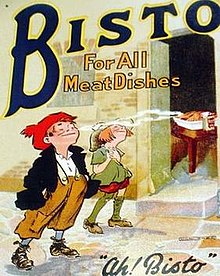
With my nose held high in the air, chasing aromas like the grotesque children in vintage Bisto adverts or Divine in John Waters’ Polyester, I formed an improvised plan. I’d need to change trains at London Bridge, so a one-stop diversion could have me in Bermondsey in no time. Over to Druid Street for a swift smokey treat, then back on my way. That’s exactly what I did, and it was wonderful.

Why am I telling this story? I don’t know, really. It is a very long and quite tangential way to start talking about rauchbier. To discuss this style, I need to return to that word evocative. Rauchbier feels especially appropriate at this time of year, as distant bonfires spread their aromas far and wide, soaking into your clothes and confirming that summer is well and truly over. I’ve drunk Spezial Rauchbier on Brighton beach in mid-30 degree heat, and it was still great – but a crisp autumnal air is undoubtedly more appropriate.

I was delighted, then, to find that not one but two London breweries have tried their hand at the style for the A/W 2020 season – the afformentioned Anspach and Hobday, and Signature Brew, who kindly gifted me two cans of theirs.


Signature call their offering In the Dark, so I was surprised that it poured a pretty light amber colour reminiscent of Vienna lager. The aroma proves quickly that there’s nothing half-hearted about it though, with a big hit of smoky bacon on the nose. This is, as will be obvious to anyone familiar with rauchbier, a large component of the flavour, if not an original tasting note. Once you get used to the style, what’s interesting is what else is going on beyond the ham. In this case, the smoke is well integrated with the malt flavour, mingling with toasted and bready notes. There are some almost salty mineral flavours, and just a touch of lemony astringency lending a welcome zingy freshness, before finishing on a burnt caramel note. Like the best smoked beers, this balances intensity, complexity and drinkability very well indeed – I confessed by ticker tendencies at the start of this post, but I’d happily forget all that and drink this all night if I found it in my local.


To Anspach and Hobday, then. This year’s simply titled The Rauchbier is, for the first time, a lager. It makes for a beautiful pour, with a big off-white head that sticks around right til the end of the glass (a result of the addition of that very un-Germanic ingredient, maize?) That meaty umami smoke is there in spades, as per, but rounded out by an intriguing herbal note suggestive of oregano. Spot on, really – but the real coup here is actually more about texture and mouthfeel. The carbonation is relatively soft, which makes the beer feel full and smooth – closer to Schlenkerla marzen poured directly from the cask than the bottled equivalent.

Time for more planning – how can I get hold of more of these beers to see me through the lengthening nights ahead?

Friday, 6 January 2017

Wholly smoke

This post is a contribution to The Session #119, hosted by Alec at Mostly About Beer. The topic is 'Discomfort beer' - "which/what kind of beers took you out of your comfort zones. Beers you weren’t sure whether you didn’t like, or whether you just needed to adjust to."


I’m not just saying this to brag about the supremacy of my palate – I’ve rarely felt out of my comfort zone with beer, and hardly ever have to work hard to enjoy it. I’ve always enjoyed the taste – as a youngster, my grandpa would occasionally slip me a tiny portion from his stubby green lager bottles, and besides the ego boost that came from swapping Ribena for a grown-up’s drink, it was always delicious to me. Bitterness was probably the main appeal – my other favourite thirst quencher as a child was straight tonic water, which makes a lot of adults wince.

There are styles that test your perception of what beer is – acidic and sour flavours in beer took some getting used to, for example. But there is only one traumatic incident that really sticks out in my mind, and it’s the closest I’ve ever come to spitting out a mouthful of beer.

The brew in question was Flue Faker, a smoked lager from Camden Town, sampled at The Craft Beer Co. in Brighton some years ago – thank God I asked for a taster first. I don’t remember it tasting of bacon, the common descriptor for the niche lager sub-genre known as rauchbier. I just remember it tasting disgusting and wrong. “Urgh! No!” I exclaimed to the blank-faced barman, unable to disguise my horror.

I’m not sure how I went from this unpleasant experience to continually pestering my girlfriend about visiting Bamberg, home of the rauchbier style.  I’d read about the beer in books by Michael Jackson and Mark Dredge in the meantime, putting it in some context, which probably encouraged me to persevere and learn to like it. In fact, rauchbier is probably the ultimate discomfort beer. In Jeff Alworth’s The Beer Bible, Schlenkerla boss Matthias Trum says;

“At the first sip, the smoke flavour is extremely dominant on your palate. If you’re new to this taste, you will notice nothing but the smoked flavour. Only as you go through your first two or three pints does the smokiness step back in perception and then the malty notes come out, the bitterness, the smoothness.”

On my visit to the Schlenkerla pub, I do remember remarking that their famous marzen was a brilliant lager underneath the smoke, and this aspect is probably worthy of further contemplation. However, I love that smoky flavour – that’s the appeal of the beer, not a challenge to be overcome. As such, it’s rare that I’ll ever drink more than one rauchbier on the trot. So, I decided to do just that, and procured three bottles of Schlenkerla marzen.


Even on the first mouthful of the first glass, I realised that the intensity of the smoke didn’t hit me in the way it used to. I’ve heard of a ‘lupulin threshold shift’, the idea that we build up a ‘tolerance’ to hop bitterness, and perhaps there’s something similar going on here with smoked malt. I think I’ve drunk this beer often enough that I’m just used to it, which slightly undermines the idea behind this ‘experiment’. Not to say it isn’t smoky – it certainly is. I’d say it tastes like bacon, but as I haven’t eaten bacon in over a decade, I’ll say it tastes like bacon flavoured WheatCrunchies. The bitterness is notable from the outset, something like the slightly acrid malt-derived bitterness you sometimes get in stouts and porters.

Around a quarter of the way into the second glass, the smoke flavour has really faded. It registers mainly as a background savoury flavour, with occasional bursts of bonfire and meat on the palate. I’m starting to notice a bready malt quality too, which in combination with the bitterness suggests slightly burnt wholemeal toast. As interesting as it is to draw out the backgrounds elements of the bee, for me the most exciting moments are still those flashes of smoke.

By the final glass, the prickly carbonation is starting to irritate, putting an obstacle in the way of the smoothness Matthias Trum suggests is waiting beneath the smoke. It feels like it should be silky, but that fizz jabs at my tongue. I’ve never had a problem with the carbonation in bottles before, but the accumulative effect is distracting. The traditional gravity-tapped serving method would solve this problem, of course. Towards the end, I’m beginning to notice a woody, tannic element. Further complexity clearly awaits, and I’d probably have opened a fourth bottle if I’d had one. Who knew that a beer style I first found so challenging would prove so sessionable?

The interesting thing about all this is that, now that I’m past the discomfort stage, I miss it. It’s like watching a difficult film for the second or third time – I’m always jealous of those experiencing it fresh. Those who are new to rauchbier shouldn’t hold their nose and joylessly gulp down the first few pints, waiting for the smoke to fade – they should revel in the discomfort and enjoy the challenge.

Sunday, 29 May 2016

My Bamberg onion


Bamberg might be getting a lot of things right, but vegetarian food isn't necessarily one of them. Actually, that’s not really true – finding good veggie fare in Bamberg was no problem at all when I visited, but the traditional dishes you’ll find served in the brewery taverns are as carnivorous as they come. I begrudge nobody their mountains of gravy-soaked pork, you understand, and was particularly envious of those getting to sample a speciality of the Schlenkerla pub, the Bamberg Onion. As it turns out, Bamberg is notorious for its onions as well as its beer, and in this dish an onion is stuffed with lots and lots of smoky meat and served with a gravy made from rauchbier and the drippings – the recipe can be found here. Quite understandably, a vegetarian version did not appear on the menu, so I started to think about how I could create such a thing at home.

How does one go about constructing a meat-free equivalent of a dish that revolves around pork, smoked pork, and a little smoked bacon for good measure? The answer was to fall back on the old vegetarian staples of mushrooms and cheese. Mushrooms bring a vaguely meaty depth of flavour, and cheese is, you know, delicious. In order to replicate the smokiness, I opted for smoked applewood, and decided to cook the mushrooms in Schlenkerla rauchbier. I sautéed them at a high heat until they took on a caramel colour and their liquids started to evaporate, then threw in around 100ml of beer, a teaspoon of smoked garlic powder and some smoked sea salt and cooked briskly until the liquid had mostly reduced. These mushrooms, even on their own, were a bit of a revelation, and something I’ll be cooking again. Leftovers made a sublime grilled cheese sandwich the next day.

I didn't have a genuine Bamberg onion at hand, of course, so went for the biggest Spanish one I could find. Spooning the middle section out was no fun at all. If I had to do it again, I’d seriously considering donning swimming goggles for this stage. I chopped these parts finely and fried them off, then added them to the mushrooms, before stuffing this mixture alternatively with grated cheese until the onion was bulging. I roasted this for about 45 minutes, occasionally topping up the water in the bottom of the dish whilst making a quick sauce out of vegetable stock and beer, thickened with a little flour and simmered in a frying pan. The sauce was simple but tasty, and the dish didn't need much anyway. The final touch was a smoked applewood crisp, tucked between the onion 'lid' and the main body where normally a slice of smoked bacon would rest.


I served it with mashed potato and some steamed veg, washed down with the remaining beer. It was delicious. That onion is no mere vessel – all of its sweetness is revealed, but it retains some texture and bite at the same time, and the filling was full of smoky umami flavour. It may insult Franconian tradition. It may sound unappealing to meat eaters drawn to the deeply porky original. It may have taken all afternoon. I don’t care. It’s my Bamberg onion and it made me happy.

Wednesday, 15 April 2015

Thornbridge vs. Schlenkerla: Battle of the Bocks

I’ve often thought that one of the Thornbridge brewery’s strongest suits is their respectful approach to beer styles, along with an interest in slightly more esoteric or niche styles less often attempted by other UK brewers. A copy of Michael Jackson’s Beer Companion and access to Thornbridge beers can teach a novice beer drinker an awful lot – I know, because I learnt a lot this way myself. Craft Beer Co. in Brighton seems to have at least two of their brews on at any one time and so as I read about, for example, kolsch beer, I was able to sample Tzara – surely the next best thing to a visit to Cologne, and way more satisfying than any imported bottle. Similarly, my first taste of Bière de Garde orginated not in Nord-Pas-de-Calais, but in the Peak District. When my dad returned from a trip to France with a couple of bottles of Dyuck Jenlain Ambrée, I was amazed at how true to style the Thornbridge example, still fresh in my mind, had been.

Considering this, I recently realised I had a bottle of both Thornbridge’s Bamberg and Schnlenkerla’s Urbock in my cupboard. This, I thought, could offer an opportunity to see just how well Thornbridge’s beers hold up in comparison to the classics of their style. And so, I decided to taste the two beers side-by-side. Now, I want to make it clear from the get-go that this is purely a bit of fun. There are many reasons why a comparison of this kind isn’t totally fair, not least the fact that strong smoked beer is kind of a palate scorcher. But the beers are both smoked bocks, with similar ABVs (6.5% for Schlenkerla, 6% for Thornbridge), and Thornbridge are acknowledging the influence of (if not inviting comparison to) Schlenkerla by naming their version after the city that famously houses that brewery. Still, the following is not intended to be anything other than a light-hearted experiment; apart from anything else, the tasting itself was really fun to do.


To help me with this venture, I enlisted the help of my other half, Sidony, who took me to Bamberg earlier in the year and became a Schlenkerla devotee in the process. We began by pouring each bottle into two glasses, after which I attempted a blind taste-test by closing my eyes and asking Sidony to hand me a glass without telling me which of the beers it contained. An unscientific element came into play immediately, however; whilst pouring, the aroma of the Thornbridge beer hit me very strongly. After smelling the two glasses, I predicted the one with the most intense, ham-like aroma was Thornbridge, but my guess was based on this prior information rather than a true blind test. The glass with the more powerful aroma unsurprisingly tasted stronger and smokier, too, and this glass actually turned out to be Schlenkerla.

Schlenkerla’s Urbock is, in every sense, a bigger version of their classic marzen. The meaty smokiness is just as strong, but more nuanced – flavours I haven’t detected in the marzen are apparent here, such as tobacco, oak, liquorice and certain herbal notes, and once the smoke subsides, there’s a poke of citrus sharpness. The elevated ABV is evident and, together with a fuller body and pleasantly oily mouthfeel, this slips down easily and leaves a warmth in the chest. Sidony uses an analogy rarely called upon in the beer world – make-up. There are many types of primer (something that is applied pre make up application). Some are gels & creams that often hit the skin and dry down almost immediately, making whatever comes after it apply roughly, whilst others have a more silicone feeling to them, which lets anything come after it glide on. Drinking the beer is a similarly seamless sensation; it's smooth and silky, slippery, easy drinking.

In comparison, Thornbridge’s Bamberg seems a little puny. To again acknowledge the flaw in this test, it is a little mean to taste this after such an intense beer as the Schlenkerla bock. I rinsed my mouth out with plenty of water in order to best compare them, but my palate was undoubtedly affected by the previous beer’s smoke. The smokiness is far milder here, but Bamberg also seems to me like a much cleaner (if stronger than average) lager than your typical rich, warming bock. The body is noticeably thinner, with more carbonation, and the colour resembles a Vienna lager, far lighter than Schlenkerla’s dark copper. Sidony doesn’t like it at all – for her, it neither warms nor refreshes and it’s neither a summer nor a winter beer. I’m much keener; admittedly, after Schlenkerla, it barely tastes like a smoked beer anymore, but then I think I’d enjoy an unsmoked version just as much, because for me it’s a robust but crisp lager. I’d prefer a slightly lower alcohol content, though, because I don’t feel the boosted ABV brings anything to the beer; the body is no fuller than your average lager, and you don’t get that tingling booze warmth.

As I said at the beginning, this was purely intended as a fun little experiment, and there’s no slight on Thornbridge intended – they remain one of the UK breweries I most admire, and to say that any brewery makes a smoked beer that doesn’t quite measure up to Schlenkerla is truly no insult. Apart from anything else, I really enjoyed Bamberg in its own right, and fully intend on trying it again on its own to appreciate it properly.

Thursday, 29 January 2015

Bamberg beer blog pt.2

Michaelsberg Abbey
The next morning we walk up to the enormous, stark and very beautiful cathedral. Here, at the top of one of Bamberg’s many hills, I decide that ticking off every destination on the Bamberg beer trail is not my priority. This may be one of the world’s great beer destinations, but it’s also a stunningly beautiful town, well worth a visit even for teetotallers. A relaxed look around the cathedral and the nearby Michaelsberg Abbey, taking in the views and strolling along the canal in the ‘Little Venice’ area of the city, having some nice, quiet meals together; these are all important aspects of our trip, too, and I’m glad we didn’t miss out on them in favour of rushing around every single tavern.

Not that I’m not keen to sample my fair share of local beer while I’m here, mind you. We stop at a quiet café down the street from Schlenkerla for lunch, and local breweries are served on tap here. I try Keesmann’s Herren Pils, which is a solid pilsner with a respectable bitterness. It’s very drinkable, but doesn’t knock me out. Mahr’s Ungespundet, on the other hand, does, and is perhaps one of the finest lagers I’ve ever tasted. It’s unfiltered, similar to kellerbier, and matured in an open vessel which produces little carbonation. Mine is served in a steinkrug with a beautiful head of foamy suds peeking out over the top. The first several gulps are nothing but foam, and even this is delicious, and when I get to the liquid itself I’m blown away. There’s a certain reaction I have to beers that really knock me out, whereby I tend to widen my eyes and move back from the table a little as if in disbelief – the ungespundent induces this reaction. The yeast lends a delicate hint of ripe banana, and there’s just a wisp of smoke in there, together with a massively refreshing lemon bite. Schenkerla’s rauchbier aside, this is my favourite beer of the trip, one I can’t stop thinking about now that I’m home and wish I could try again.


We’re still getting our bearings so, after lunch, we consult the map app on our phones and head out on the suggested route towards Obere Königsstraße , home to both Fassla and Spezial breweries. It’s a long and uncertain walk across something of a grey no-man’s land between the old and new sections of the city, and we have to wonder on several occasions if we can possibly be going the right way. When we eventually do arrive, Spezial is the first casualty of some very erratic opening hours in the city – it’s closed. Most of the shops are, too, although it’s Saturday, and the actual opening hours of most establishments don’t seem to match up with what’s published on their websites or on display in shop windows. Still, across the street, Fassla is open, and the man behind the serving hatch provides us with two glasses of their lagerbier. This is the kind of solid, endlessly drinkable lager I love, with comfortingly sweet malt and refreshing, citrusy hops. As we’re leaving, we realise where we are, and that the Iphone map has led us on a wild goose chase around the city in place of what could have been a very direct 20 minute walk. I mention it because, if you are visiting Bamberg, it’s probably worth having a more planned out itinerary, and examining a map more carefully before going out, than we did.

Our next stop is Klosterbrau. I’m not sure what to expect from this place – the lady who owns our apartment recommends it as the oldest and best brewery in the city, but pieces I’ve read online don’t seem to regard it as an essential stop. It’s also suspiciously quiet in comparison to the buzzing Fassla – we’re even blessed with a seat here, which is welcome, but makes me wonder if the locals don’t rate the place. I order their seasonal bock; not a style I’d profess to love, but it’s cold outside, and dark bocks work well as winter warmers. Thankfully, it also tastes great, with a depth of chocolate and liquorice flavour that is frankly astonishing.

The next morning, we return to Spezial, hoping it will be open this time. It is, but unfortunately, lots of locals have had the same idea – the place is teeming, with no available seats. The serving hatch in the schwemm is closed, and actually appears to be something more like the old fashioned English 'off-sales' window, with no overflow drinkers in the vicinity. We have to admit defeat. Instead, we head towards Café Abeits, in the modern part of the city. It’s another uncertain walk, our surroundings becoming increasingly residential the further we walk and seeming an unlikely setting for a great beer bar, and those bars we do see look somewhat intimidating and divey, last night’s empty bottles still littering the pavements outside. I haven’t been feeling myself all morning and, somewhere along the way, I take a turn for the worse, almost overcome by a wave of nausea that has me thinking I’m about to vomit all over a neat German lawn. It comes from nowhere – it’s not a hangover, and can’t have come from anything I’ve eaten – just completely random. Still, I’m determined to find the café, and eventually we do. After a momentary panic when I mistakenly think it’s closed, we take a seat in the appealingly unfussy dining room. 

I’m nervous about ordering beer, unsure if I can keep it down, but plump for Schlenkerla’s weissbier. It’s a strange beer, with intense smokiness blending with subtle clove spice, and probably not one I’d have again. Along with some very good food, I finally taste Spezial’s rauchbier lager. It pours an amber colour closer to a traditional marzen, and the smoke is more balanced than Schlenkerla’s version; it’s relatively sweet, with a pronounced vanilla note which, in combination with some refreshing lemon flavours, reminds me of an ice cream float, especially when served with a big, rocky head. Another strange beer, but I really enjoyed it.

Sadly, my stomach doesn’t quite recover, which means no more beer. I had hoped to nip over to Wunderbar and pay a visit to Keesmann and Mahr’s, which sit on opposite sides of the street, before leaving the next afternoon, but I simply can’t face it. I’d be disappointed if I hadn’t had the opportunity to taste them on tap just down the road the day earlier in the trip. They tasted so good then that I doubt they could have got very much fresher.


This won’t be my last visit to Bamberg, and when I return, I’ll make sure I stop by the breweries we didn’t get around this time. The determined drinker could certainly get around most of them, even if you’re just in town for a day, and I’d highly recommend a trip. 

Sunday, 25 January 2015

Bamberg Beer Blog pt.1


I’ve wanted to visit Bamberg long before a Schlenkerla rauchbier had ever touched my lips. How could you go wrong with a trip to a picturesque German town crawling with breweries? And, as I began to pick out bacon-like smoke as an enjoyable element of certain dark beers, when I eventually did try a bottle of Schlenkerla’s marzen, I found myself firmly on the fanboy side of this divisive beer. My girlfriend, Sidony, never seemed too enamoured with the idea, though, and I got used to hearing answers along the lines of “we are not going to bloody Bamberg!” whenever I brought it up. Imagine my surprise, then, when she gave me a handmade guide book this Christmas, containing all the details of a trip to Bamberg she’d booked without me knowing, to take place in just a few weeks’ time. I was blown away, and without doubt this is the greatest gift I have ever received.

The space between Christmas and our beery holiday was full of agonising anticipation, but soon enough we were on our way. A problem emerges shortly after our arrival at Nuremberg airport; an inspector on the very plush train we’re on doesn’t like the look of our ticket. We’ve unknowingly boarded a luxurious direct train instead of the stopping service our ticket entitles us to. Nervous at the prospect of a hefty fine before we’ve even arrived at our destination, we plead innocence. “Where is your home?” he asks. When we tell him we’re English, he gives us a look of recognition. “I was waiting for the next one”, he says and, bowing somewhat sarcastically, bids us “good evening.” This incident establishes something of a theme of the whole trip; blundering tourists (us/me) draw attention to themselves by not understanding how anything works. We spent so much of our time here trying to figure out how or where to order a beer, opening the door to a tavern’s kitchen when trying to find the bar, or just simply baffling the locals by our mere presence. But this is all part of the fun, makes it more of an adventure, confirming that removing yourself from your comfort zone can be an exhilarating experience, even if you’re essentially just going to the pub.

There’s a welcoming bottle of Schlenkerla waiting for us in the apartment we’re staying in, and the lady who owns it gives us directions to the tavern, just a few minutes’ walk. A rowdy but friendly crowd drinking on the street outside tells us we’re in the right place and, stepping inside, we find a beautifully shady, high-beamed building teeming with people, everyone holding a glass of the same near-black brew. There are no free seats, so we head for what I understand to be the ‘schwemm’, a kind of covered courtyard where beer is served through a small hatch and often drunk standing up. With quite some anticipation, I join the small queue leading towards the hatch. Only the famous marzen beer is available here, tapped directly from traditional wooden barrels via gravity. This suits me, a confirmed rauchbier fan, down to the ground, but Sidony is sceptical about smoked beer – I’d previously reassured her that she could have the helles, which picks up a little smoky flavour but isn’t brewed with smoked malt. She’ll have to go for the full on rauchbier experience instead.


I order two glasses and, as expected, it’s a revelation, with a depth of flavour that no bottle at home could ever hope to achieve. Whilst I’ve never thought of rauchbier as an endlessly drinkable beer, I polish my glass off in no time, perhaps encouraged by the speed at which the beer is poured and the transaction completed. I love the initial hit of notorious bacon flavour, but continue drinking and the intensity of the blended Frazzles notes fade, and what remains is a remarkable dark lager. This is, without doubt, the greatest beer experience of my life so far, and proof that travelling for beer is worth it – it’ll never taste better than it does here, and the buzz in the tavern as the queue in the schwemm grows, practically pinning us to the wall, is intoxicating. If I had to go home in the morning having only visited Schenkerla, I’d still say it was worth it. And a rauchbier naysayer is converted – Sidony loves it, too.

Continuing the clueless tourist theme of the trip, I make a horrendous blunder when it’s time to order my second beer. A sign on the wall advertises two items; one is a glass of marzen, at €2.60, and the other is something called ‘glasspfand’ at €2. Not speaking German, I don’t know what this word means but, being a dickhead, I decide it’s a seasonal beer and try to order it. It is, in fact, the deposit that you pay on your glass. I’m saved from total embarrassment by the barman simply plonking two glasses of marzen down without listening to what I was saying anyway, but I feel like a total prick and vow not to be so cocky in future. 

To be continued...