Showing posts with label beer. Show all posts

Monday, 20 June 2016

Drunken sailor

As I mentioned in my previous post, I was recently in Barcelona for the Primavera Sound festival. Though I've never considered myself a nautical type, we ended up staying on a (moored) boat because it was cheap and extremely convenient for the festival. The purpose of the trip wasn't beer, and it wasn't a wander by day, booze by night holiday either. Still, I did get a chance to stock up at BeerStore, a bottle shop I'd highly recommend - its well stocked in general, but heavily promotes local beer. Each evening, I sat on the deck with a couple of bottles, enjoying the last of the sun before heading out to the festival and its plastic cups of rancid Heineken. Here's what I thought of those beers.


Guineu - IPA Amarillo
On a previous trip to Spain, I was really impressed by a double IPA Guineu brewed in collaboration with the Bavarian BrauKunstKeller. On the strength of that, I opted for two of their IPAs from the bulging Beer Store shelves. This one is resolutely old school in approach – British IPAs seem to have become paler and paler over the past few years, but this pours an attractive hazy red-gold, with a thick, tight white head. Peach and orange aromas jump out immediately, with lots of peach carrying into the flavour along with apricot and some grapefruit. There’s a savoury element to the beer which almost recalls tomato (possibly a characteristic of some of the darker malts? I often get the same thing in red ales) which sounds weird but does kind of work, and the finish is notably bitter but not excessively so. It reminds me of the IPAs doing the rounds when I first fell in love the style – not-so-pale, not afraid to bump up the IBUs – and it definitely still hits the spot.


I was hoping for something like a white IPA, my current favourite pseudo-style, from this, but it doesn’t have any of the estery or phenolic flavours of either a Belgian wit or a German weisse beer, seemingly brewed with a standard ale yeast with wheat mainly contributing some extra body.  There’s a sweet-ish candy sugar thing going on which, along with the hops, presents as a summery stone fruit character before a long, bitter finish. It’s kind of non-descript and a little disappointing given the label’s reference to dry-hopping – it doesn’t have that juicy, amped up hop flavour and aroma you’d expect, possibly because the malty sweetness refuses to let the hops sing.


The motivation stated on this beer’s label is refreshment in sticky Barcelona weather, and in that respect, Apassionada absolutely knocks it out of the park. A passion fruit beer in the generic ‘sour’ category, its flavour is incredibly vibrant and has all of the freshness and complexity of the fruit itself. A restrained honey sweetness, a floral note, rich tropical juiciness and a light tart finish. It’s deftly managed - any sweeter and you could almost believe you were drinking a can of Rio rather than a beer, any more acidic and it would become hard work – and extremely accomplished.


How could I resist that branding? And the BrewDog-aping isn’t the only British influence on this beer. Described as an English-style bitter on the back of the label and table beer on the front, it has a super-pale malt base (100% Marris Otter) and a big, juicy hop character in an otherwise relatively small beer. I could be wrong, but I’d wager that this is modelled on The Kernel’s majestic Table Beer. The aroma is beautiful, a big burst of sherbet, and in the mouth there are tangerines and grapefruits and something almost herbal or botanical which recalls gin. For one of the lowest-ABV beers on the shelf, this is packing a huge amount of hop flavour and was undoubtedly the best beer of the whole trip.
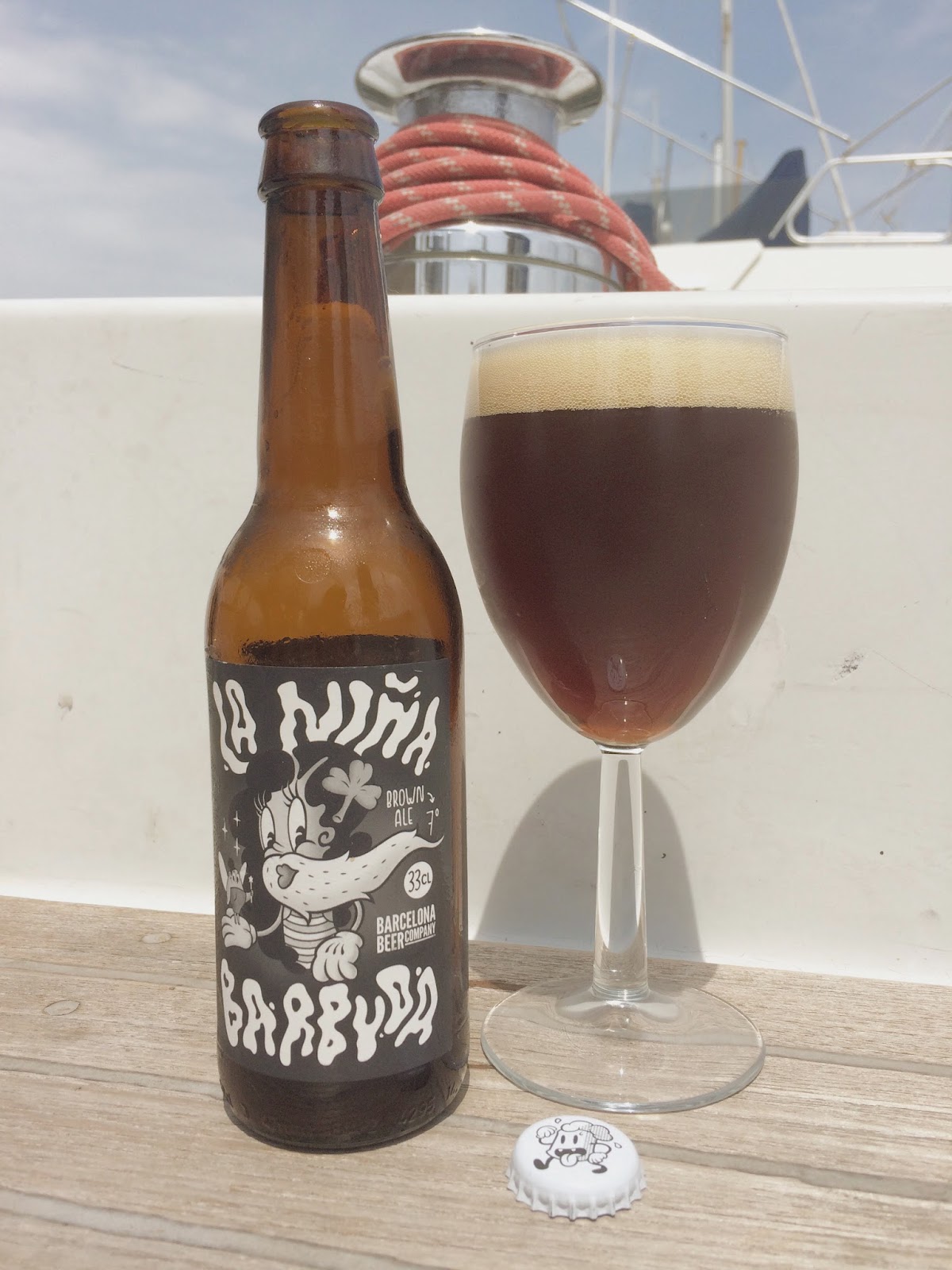

One of a healthy number of brown ales on offer, La Nina Barbuda pours a translucent cola-brown with a tight off-white head. There’s wholemeal bread and boozy Christmas pudding on the nose, and the flavour is exactly what I want from a modern brown ale – cola, cereal, savoury cereals and the peach and clementine flavours characteristic of a meeting between New World hops and darker malts. Its drawback is its pointlessly high 7% ABV – some mouthfuls have a kind of boozy spikiness which just clashes with the otherwise smooth flavours. Knock this down to 5% and you’d have an excellent brown ale.


I was drawn in by the beautiful label on this beer – not the best way to choose, but faced with hundreds of bottles from unfamiliar breweries, what else do you have to go on? This is just one of the reasons why beer branding is important. This is far, far darker than I’d like an IPA, veering towards amber ale territory. The malt brings a kind of caramel and candy floss foundation for a smooth mango hop character before a slightly spicy and bitter finish. There’s great promise here -that tropical hop flavour is gorgeous, but I’d suggest lighter malt character would accentuate it a little further.

Having recently re-read this old post from Mark Dredge on the 'pale and hoppy' cask ale, a style that's remained prominent in the UK, I started to ponder my reservations with the malt character of a couple of these beers. Many modern British breweries favour a very pale malt base, at least in beers which prominently showcase American and Southern Hemisphere hops - consider the Juicy Banger and the latest breed of  IPAs favouring ever-later hop additions and geared towards massive, booming hop aroma and flavour (the Cloudwater DIPA and BrewDog Born to Die series spring to mind here). It's telling that the beer I most enjoyed was the BeerCat, which acknowledges a British influence - I like beers like this, and they're also what I've become used to drinking. I hope this doesn't come across as a suggestion that this is what beer should be like - I'm just stating a preference.

Sunday, 12 June 2016

Cat Bar, Barcelona


Hot on the heels of my recent trip to Valencia, last week I was back in Spain. This time Barcelona was the destination and, since we were there for the Primavera Sound music festival, there was considerably less time available for beery pursuits. I didn't even scratch the surface of what seems like an interesting beer city, but on the first night before the festival properly kicked off, we stumbled across Cat Bar. We found it whilst researching vegetarian-friendly restaurant options, and I jumped at the chance to check out a bar with a fully vegan kitchen and a broad range of Spanish craft beer.

It’s a fun place - cramped and candlelit, all mismatched furniture and low ceilings, just on the right side of the bohemian/divey spectrum. The burgers we ate were fantastic, and even if the dominant accents around the tables were British and American, the draught beer is heavily skewed towards the local. I drank the Powerplant saison from Barcelona’s own Edge brewery, which was sadly drastically under-attenuated and under-carbonated and should be approached as a faintly phenolic pale ale to avoid disappointment. There are some nice lemon and lime flavours, with just a hint of juniper and pepper. It stood up well to a big, bready burger and patatas bravas with lots of paprika, which is high praise.

Also from Edge was Padrino Porter, a beer with a rich, decadent chocolatey malt depth that suits after-dinner drinking. There’s a certain earthy, Shredded Wheat hop character (East Kent Goldings?), but also a hint of New World fruitiness before a light bitter finish. It’s a little thin bodied for the style, but was also served at a temperature that suits the close Barcelona evening which makes this less of an issue. I'm rarely so refreshed by a dark beer.

Paying my tab on the way out, I decided to take advantage of the pub’s CAMRA discount, more for the novelty value than the 60c it saved me – I always forget about it and so have never used it at home, and I like the idea of doing so in Spain at a bar serving precisely no cask beer. I'd guess that not many people redeem this generous offer as it completely baffled the bar staff. The British ex-pat proprietor seemed delighted to oblige, though - he explained that there's only one bar in Barcelona that sells cask, as few bars have cellars and the climate means that a cask goes off almost instantly. He did reassure me that all his beer was KeyKeg - "beer in a bag!"

I also stocked up at Beer Store, a great bottle shop recommended to me by Joan at Birraire, via Steve at Beers I’ve Known – thanks guys! Since all conventional accommodation in the immediate vicinity of the Primavera site books up within minutes of tickets going on sale, we ended up staying on a boat in a nearby port. Heineken is the only beer available at the festival, so I established a routine of sampling the wares of Barcelona’s craft breweries on the deck before consigning myself to the Dutch fizz. A separate post detailing those nautical brews will follow soon.

Friday, 27 May 2016

The Watchmaker's Arms


It’s snowing as I head out to the Watchmaker’s Arms. It’s that wet, slushy snow that you get in the liminal weeks between winter and spring, the kind that disintegrates on contact and soaks my jacket and hair whilst a cold wind whips around my ears. The prospect of a warm and cosy pub has rarely seemed more appealing. The Watchmakers’ doors have only been open a matter of minutes, but the first regular customer is already sitting down with an early-afternoon pint and newspaper, and it’s not long until there’s a glass of Hammerpot’s Bottle Wreck Porter in my hand. It’s rich and warming with deep liquorice flavours, and I’ve soon forgotten the grey, apocalyptic skies outside.

This is East Sussex’s first and currently only micropub. I’ve been in pubs that are physically smaller, but the micropub model is more about taking a back-to-basics approach than necessarily setting up in a tiny premises. It’s easy to define this in negative terms – “no television, no music, no gaming machines” says Ali, one of four partners who own and run the pub – that don’t make micropubs sound especially inviting or fun, and there are those that find them a little exclusive. But think about the positive inversion of what this all means – a social environment that both encourages the sharing of tables and conversation, but also a peaceful place to relax with a book and a pint if you prefer. And, of course, a focus on beer which, bizarrely, is a subject many of Brighton and Hove’s innumerable pubs don’t seem particularly interested in. “Beer is what brings most people to us”, Ali says “a really nice pint of ale, served at the right temperature, straight from the cask. And then they say it’s friendly, or they met someone they liked here and that brings them back.”


Coincidence plays a large part in Ali and Ruth’s story. A former teacher and teaching assistant respectively, they were both looking for a change when an intriguing property came up on nearby Richardson Road, a small community shopping street. “You know how you start looking at houses for sale when you’re not really intending to buy one? I started looking at commercial property online, and this place came up”, Ali explains. Despite having fallen in love with Kent’s micropubs, it wasn’t the first thing to spring to mind – “I thought maybe I could sell furniture.” As it turned out, Ruth and husband Rick had already had the thought that the same property would make a great micropub - “and that was it, that’s what started it.”

After a lot of time, effort and money, the seller pulled out. But soon their current premises, a couple of hundred yards from Hove train station, came up for sale. As with many micropubs, the building is an old shop. With a visit to a local history archive, they discovered it had been a watchmaker’s in 1889, giving the pub its name. “We were worried it might have been a brothel or an undertakers”, says Ruth – “The Undertakers Arms!” They’ve now been here a little over a year, celebrating their first birthday with a weekend-long beer festival – when I visited, a steady stream of casks from the likes of 360 and Brighton Bier were rolling in in preparation.

There’s no bar here as such – more of a counter where you place your order, which is then poured from gravity-dispensing stillage in a separate room. Pump clips, wreaths of hops and regulars’ pewter tankards line the walls, along with a tasteful collection of clocks to tie in with the watchmaking theme. Alongside the beer, local cider and wine are served, but lager is notably absent. I’m intrigued by this – even the most beer-focused pubs and bars operate on the logic that you must serve at least one lager. “We do get people come in and ask for it”, says Ali. “Quite often they’ll come in with a friend who’s an ale drinker and very often we can find something they like.” “People come in and say “do you do lager?” and we say no, and either they try something or they go somewhere where they can get it”, says Ruth. “It’s a bit different to go somewhere where it’s just real ale and real cider.” This is the important point, I think. Should we really worry that lager drinkers (closed-minded lager drinkers who won’t even consider trying anything else, at that) might be excluded from micropubs when lager is available absolutely everywhere else, and decent cask ale isn’t? I think not.


The micropub model offers a lot of freedom and, in the Watchmaker’s case, very few challenges. Overheads are low, so financially there’s less risk in staying small and doing things their own way. Getting started even sounds painless – long waiting times notwithstanding. “The micropubs in West Sussex seemed to have a lot of restrictions put on them from what we know of them”, say Ruth, “like there’s no vertical drinking, so everyone has to be sitting down. I don’t know why, because some of them are so small, there’s not even any room to have a fight even if you wanted to! It was as if they were making it difficult for them to open, whereas for us it was a bit long winded but everything was fine.” In fact, they had their fans at the council – “we had a lot of people there who said “oh I love real ale, that sounds really cool!””, Ali says. Indeed, most of their restrictions are self-imposed – “they couldn’t believe that we’d be closing at nine and only sell real ale!” Ruth says.


As of a few months ago, the Watchmaker’s is also home to BeerCraft, a small pilot brewery using their premises to brew beer for sale here as well as other local pubs. “We’re really lucky because we’d have taken his beer even if it was average, seeing as he’s here”, Ali says, “but it’s really good!” “It just sells like hot cakes”, Ruth adds, “we put it on and it just goes straight away. It’s a real talking point. People come in and ask about his beer and want to know when it will be on. It’s good for us and good for him, because he’s just starting out and he’s got somewhere to brew."


After a successful first year, they seem content to keep doing what they do so well. “There are some very business-minded people who get off the train and come in who ask us, “what are your plans to expand?””, Ali says, “and we say, “nothing!” It will be nice if this carries on and does well but we’re not building an empire.” Sometimes small is just perfect.


Monday, 16 May 2016

Who shares wins pt. III


About a week before we were due to meet up to share some special bottles, something scary happened. Splashing out on a pint of Gamma Ray at the Evening Star, I found the hop flavour oddly muted. In fact, it tasted like a pint of sparkling water with the tiniest dash of hop oil dropped in. It wasn't the beer – it was me. I’d been feeling a little sniffly all week, and consequently getting no aroma at all. Given the upcoming occasion, I decided I to blitz my body with every remedy I could think of. To de-congest my nose, I held my head over a bowl of VapoRub dissolved in water, which makes your face feel simultaneously freezing cold and boiling hot, with the added sensation of someone holding a hairdryer over your eyelids. My ears felt a little blocked, and your ears, nose and throat are all connected, right? In with the ear drops, then, along with some warm salt water to gargle with, calming down my swollen throat. My five-a-day became seven or eight or nine as I piled all the veg I could conceivably fit on my plate each evening. Anything to avoid cracking open a carefully guarded bottle of beer and then failing to taste the delights within. It worked, anyway, and my palate was soon restored to full power.


What better way to celebrate than Burning Sky’s Cuvée Reserve? Cuvée is a blend of the brewery’s highly regarded Saison a la Provision and imported Belgian lambic, and this extra-special incarnation then rests further in an oak barrel over lambic lees. It has a strong, funky farmyard aroma with a hint of rustic cider. It is still recognisably a variation on a la Provision, and many of this beer’s flavours carry through - tart and juicy green apples hit immediately, then lemon, dill and the phantom of the Chardonnay barrel that houses the saison. A tart finish suggests the quinine bitterness of tonic water. It’s a fascinating, extremely accomplished and, most importantly, delicious beer. I'm endlessly excited to have a brewery of such ambition and invention just a few miles from my front door.

Next was Her Majesty 2015 from Yeastie Boys. Though Yeastie Boys are now brewing at BrewDog for the UK market, this beer is imported from their native New Zealand, and brewed at Invercargill. It’s a pale ale, but doesn't look like one – the addition of beetroot gives it a pinky-purple hue, and it looks gorgeous in the glass. The addition of the beets gives a notable soil-like aroma, but there’s blackcurrant on the nose, too, along with some rose. There’s a slight earthy undertaste – the brewery reckon you won’t taste the beetroot, but I beg to differ – and loads of rich, dark berries – blackcurrant, blackberries, cranberries – over a smooth caramel malt foundation. There’s a dry and bitter hoppy finish, but the hop flavours are a little muted, perhaps owing to the age of the bottle (around 6 months). It’s an interesting and tasty beer, but it doesn't blow any of us away.


Another New Zealand beer followed – Tuatara’s Black Mojo Espresso. Unsurprisingly, there’s a bit whack of coffee on the nose, with chocolate and toffee closely following. The taste has an earthy note, and there’s an unexpected hint of peaty smoke in there. Coffee flavour in stouts often mingles with roasted malts, but there’s little roast here, and the espresso quality is smooth and low in bitterness. The decadent silky body is the final triumph in an extremely impressive beer.


To finish, I pulled out a bottle of Brew By Numbers Barrel Aged Traditional Porter (12|04). I was given this just before Christmas in 2014, and it is just approaching its suggested best before date, meaning it has been in the bottle for almost two years. The bottle conditioning has made it quite lively, threatening to gush over if never quite doing so, and there is a slightly distracting fizz which takes away from the body of the beer. The flavour is beautiful, though, with the Jim Beam barrels that housed the beer contributing a lot, but never overpowering the base porter. There’s lots of vanilla and a rounded-out booziness that isn't hot or spiky, and the base beer brings spades of dried fruit and rich dark malts. Masterful barrel aging from a brewery I'm beginning to think of as one of the UK’s best.

Nervous thought: are posts like this remotely interesting? I always enjoy reading similar things on others' blogs, but it all seems a bit insubstantial and basic now that I've written it all out. I hope someone gets something out of it other than a list of beers, anyway.

Thursday, 14 January 2016

Brown ale: some final observations


Since starting this blog, I've rattled on about brown ale a fair amount. I feel I've done the subject to death, but I've also spent so much time obsessing over it that I still have things to say. Despite the stylistic diversity of brown ale, there are noticeable trends within the style. As the final word on brown ale for this blog, I propose a series of sub-categories. Bear in mind I'm not taking myself totally seriously in this – brown ale is obscure enough as it is without being chopped up into micro-styles. It’s just a way of presenting the continuities across the various examples of the style I've tasted in the past year or so.

I still try any new brown ale I see. If a local pub tweets that they’re serving one, or a brewery announces they’re making one, I’ll be making mental calculations as to how I can get to try it. It’s a uniquely fascinating style precisely because nobody seems to agree on exactly what it is. 
***
Your average beginners guide to beer styles tends to split brown ale into two categories – the sweet, low-gravity ales of the South of England, and the stronger, dry brown ales of the North. The truth is more complex; from the re-emergence of the style in the 1920s onwards, the beers were diverse and did not observe this imaginary north/south divide.

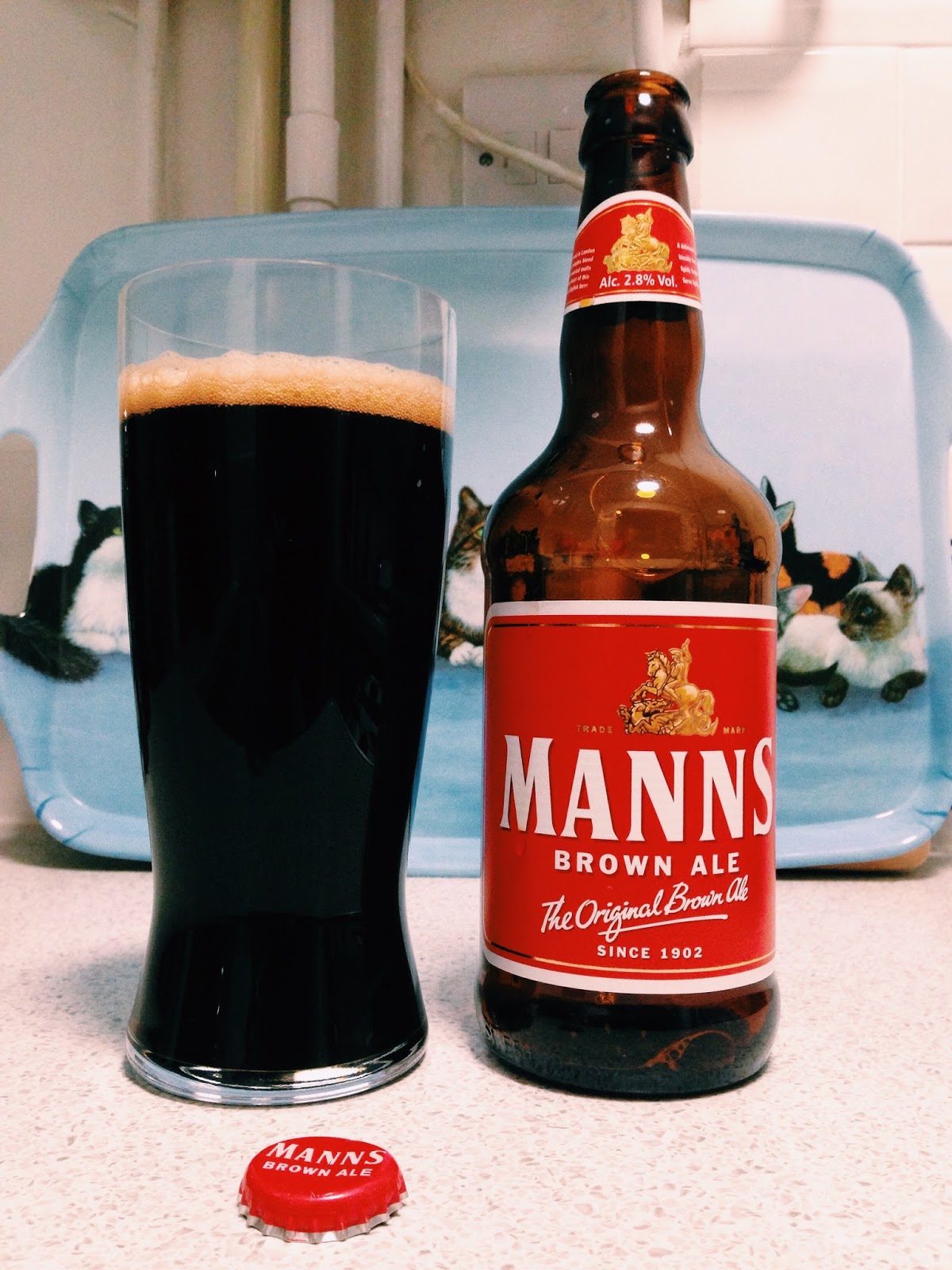
As brown ale stands today, archetypal examples of both the sweet/mild and strong-ish/dry versions remain. Mann’s Brown Ale, despite originating as one of the strongest examples of the style, now sits at 2.8% ABV and tastes largely of cola, treacle and toffee. Harvey’s Bloomsbury Brown, also at 2.8% has a strong caramel flavour, and may well be a relic of the days in which brown ale got its colour from caramel. I've never encountered any further examples of the low-gravity version of brown ale, and it’s easy to see why they fell out of favour – they’re interesting as a curiosity, but are bland and not very beery.

Newcastle Brown Ale remains the most commonly cited example of the stronger version. These beers are often dry and often described as ‘nutty’, although I've always thought this this is the power of suggestion at play – the phrase ‘nut brown ale’ is sometimes used to refer to the colour, but I've rarely detected a nutty taste. Newky Brown isn't a good beer, and it’s a shame it’s the only example of the style you’re likely to find in mainstream outlets. Far better is Samuel Smith’s Nut Brown Ale, which has a very dry quality that even veers towards red wine, and a deep, savoury malty body. (Edit; see here for some further interesting background on Newcastle Brown Ale from Martyn Cornell - "not, in any meaningful sense, a brown ale.")

Modern craft breweries have reinterpreted brown ale in several ways. The first sub-group pays homage to the traditional English brown ale, whilst not belonging to either the Mann’s or Newcastle camps. These beers are defined by a soft, comforting malt profile, which might include hints of caramel or toffee, milk chocolate, blackcurrants or blackberries or cola. A little roasted malt may creep in, but this will be more restrained than a porter or stout, and the beers are of a medium body. New-world hops might add a bitter, citrus finish but this will be subtle. Good examples I've tasted recently include Dirty Kitty by Denmark’s Beer Here and Maduro from Cigar City. Port Brewing’s Board Meeting deserves a mention for using these qualities as a foundation for a massive hit of coffee and rich chocolate – it’s terrific.

The ‘American brown ale’ style will take these characteristics and significantly amp up the hops, but not in a way that overpowers the malt backbone. Dark Star’s Rockhead is the best example of this I've tasted, and Fourpure's Beartooth is excellent, too.


Some beers call themselves ‘India brown ale’. What you’re getting here is obvious – a big hit of hops. This is generally my least favourite incarnation, though some are better than others, mainly because the brown ale base is wiped out and you end up with something closer to a black IPA. I would place BrewDog's recent “hopped-up brown ale” prototype in this category – I thought this was a poor beer all round, and tasted of little except overly bitter hops that left a citrus washing-up liquid taste that lasted for ages. Others whose tastes I trust found a lot more to it, so maybe I had an off bottle or my taste buds had an off day - either way, I stand by the assessment that the hop profile dominates everything else. Weird Beard’s No More Bright Ideas, whilst it tastes great, offers little to the brown ale enthusiast – it’s a very dry beer, bursting with vibrant and zesty hop character, but this renders the malt base irrelevant.

There is also a small breed of what appear to be brown ales, but aren't. When I wrote about Brighton Bier’s Free State, billed as “21st century brown” here, I remarked that the nevertheless delicious beer had very little ‘brown’ quality. Brewer Gary Sillence got in touch with me to clarify his intentions - “My main ambition was the break down the mainstream perception that brown beer means dull or old fashioned”, he said, and the beer was never intended to be received as a brown ale as such – his alternative tagline was “brown beer for a new generation”.  Magic Rock’s The Stooge, though billed as an American Brown Ale, seems to be doing much the same thing. It’s a far lighter shade of brown than most examples of the style. You might call its shade 'chestnut' – closer to a bitter (that's it in the photo at the very top of the first, if you'd like to see for yourself). And it drinks like a bitter, too, albeit one hopped with assertive US varieties alongside earthy British staples – the luscious malt character has an easy-drinking crispness to it that doesn't belong to brown ale. Are we at a point when the agonisingly unglamorous name ‘brown ale’ is more fashionable than ‘bitter’?
***

I don’t know it just seems this way because I've been actively looking for them, but I'm sure I'm seeing more brown ales than ever recently. With talk of a hop shortage, are breweries falling back on malt-driven styles such as this? In any event, I promise not to drone on about it any longer.

Monday, 7 December 2015

The best beery advent calendar

Beer advent calendars are all over Twitter this year - it seems there's scarcely a small brewery or mail-order bottle shop that hasn't put one together, not to mention the bloggers working their way through them. The more restrained amongst them, such as the Beer O'Clock Show, won't start until the 20th, and open a bottle for each of the 12 days of Christmas. Some ambitious writers are well under way with a 24 bottle run - notably Mark Johnson, who has collected an impressive collection of all festive seasonals to work through (and, incidentally, these posts are a master class in tasting notes - superbly written).

I was lucky enough to enjoy a beer advent calendar last year. I didn't buy it, or assemble it myself - Sidony put it together for me. After a couple of months of all but swearing off beer so that I could actually afford to buy Christmas presents, the revelation of this collection was a practically religious moment. Here it is;


And it was a very tastefully selected calendar, too - all my favourite beers, some I had yet to try, and finishing up with some special bottles as the big day drew closer. Amazing as this was, I suggested that this year, we opted for more conventional calendars (I had also put together a gift-based calendar for Sidony last year). But there was still a surprise in store for me.

In January, we visited Bamberg. One of the many wonderful things about Bamberg, aside from the beer, is its love of tacky tourist merchandise. At the Schlenkerla tavern, the two tendencies collide in a merchandise stall in what looks like a converted broom cupboard selling everything from mini-kegs of Marzen to branded tote bags. On the 1st December, I was presented with this;


"Recognise that building?", Sidony asked. "Looks a bit like the Schlenkerla pub", I thought, but didn't say out loud. Except it is the Schlenkerla pub, and those masters of marketing have produced this pretty advent calendar with a tastefully illustrated Bamberg scene behind each door. I may not be able to drink it, but I'm still convinced that this is the best beery advent calendar doing the rounds this year.

Wednesday, 25 November 2015

A date with Darkness


Whilst I do my fair share of thinking about (and drinking) beer, I don’t really do very much beer-related stuff. I don’t even go to pubs as often as I probably should, never mind travelling the country to do so; I have never been to a tap takeover, beer dinner, or even a beer festival. There are many reasons for this, but after breaking this drought at Dark Star meet-the-brewer event at Brighton’s North Laine Brewhouse last week, I'm determined to change that pattern.

The North Laine is a great space – part US-style brewpub and restaurant, part Bavarian beer hall, and can hold a lot of people, so it’s great to see them putting their extra capacity to good use with events like these. As we arrive, there’s already a small group clustered around the hand pumps at the end of the bar. Initially, we’re greeted with bad news – Dark Star’s head brewer Andy Patterson is in bed with the flu and won’t be making it. Luckily, one of the other brewers, Amir (new to the brewery after stints at Beavertown and Hackney), and director Paul Reed are here instead.

These are exciting times for Dark Star. For as long as I've lived here, their beers have been ever-present on bars across Sussex, but their reach is far greater than that of a small regional brewery. Alongside the Partridge, near the brewery, and the Evening Star in Brighton, they’re looking to open several new pubs – the first site, in Horsham, is scheduled for early next year. They also reveal this evening that they've outgrown their facilities in Partridge Green and are starting to look for new, larger premises.

Equally exciting for me is the launch of their new seasonal – Rockhead, an American brown ale, and I dive straight into a pint as people continue to arrive. I’d tried this recently from keg at the Star and was very impressed – served this way, the body is full and creamy, thick without becoming hard work. The cask version this evening is even better – it’s in fantastic condition and the hops taste hugely fresh and vibrant without threatening to wash out the foundation of warming malt. This balance isn’t always there in US-hopped brown ales, which can often come off more like black IPAs, but at the base of Rockhead are all the flavours I’m looking for in the style – caramel, cola, a little chocolate. The only American hop here is Amarillo, which lends a peachy sweetness, whilst Australian-grown Citra and a trio of British fuggles, Goldings and Admiral bring citrus bitterness.

Once everyone’s here, Paul and Amir each give a brief talk, giving some background on the brewery and their range of beers. There’s a raffle draw, in which I win a pint – I choose Revelation, which tastes all the sweeter as it’s free. Amir tells us that they use a device called a ‘hoptimiser’ in making this beer – it’s like a giant tea bag which infuses the beer with hops without directly adding them, giving the beer a smoother quality. Makes sense to me – my pint is full of juicy hop flavour, but is in no way spiky or dry. It’s fantastic.

After some plates of food are brought out for everyone to share, we hear from Laine’s head brewer Nic Donald, who talks us through the beers made in-house here, along with a quick brewery tour. When Sidony asks a question about sour beer, he’s even generous to share a sample of a pink grapefruit beer, soured in the kettle with Greek yoghurt and a dunk from some grain sacks, that he’s brewed at one of the company’s London pubs. It’s very good and I’d be delighted to see something similar on offer at the North Laine.

Beer is, quite obviously, best in a social situation. That social situation needn't be anything more complicated than a group of people talking. Beer is also good at enabling such situations, and not only through its inhibition-lowering qualities. A glass of beer in everyone’s hand is a great leveller and conversation starter, and that’s why these kinds of events can offer as much to the greenest novice as they can to the hardened beer nerds. My new year’s resolution for 2016 ought to be to do more of this sort of thing.

Monday, 9 November 2015

Who shares wins


Sharing beer with friends is great. That sounds obvious, I know, but I hardly ever do it. I sit down to drink with friends often, of course, but beyond the occasional “here, taste this”, or, “can I try a taste of yours?” we don’t share beer, and usually sit together drinking different things. The phenomenon of the bottle share clearly appeals to this desire for a group to experience the same beers together. It’s also a great excuse to actually open some of the special beers in your collection. It’s a near-universally acknowledged truth that once beers have been squirrelled away for a special occasion, this occasion never arrives. Some beers improve with age, but it’s a lot more fun to drink beer than to hide it in a cupboard.

In the absence of a more formally organised bottle share event, I recently invited a couple of friends round for a small but perfectly formed gathering of my own. The idea was to bring a beer that you wanted to share – not necessarily anything expensive or rare, though larger bottles are best, but something that you might not casually crack open and might benefit from some discussion.

We kicked off with Wiper & True’s plum pudding porter. I usually wouldn't start with a dark beer, but before I’d had a chance to raise the issue of sequencing, my friend Scott had eagerly popped the cap off with a lighter. An astringent, roasty bitterness is my first impression – this is something I enjoy in dark beers - followed by a boozy, brandy-like warmth. The plum and other additional flavours are far from overpowering, and in fact I might not have picked them out without being told they were in there. The fruit comes across as a general richness and depth of flavour, and whilst there’s some warming spice in the finish, it stops well short of tacky novelty Christmas beer territory. Classily done.

My own headlining contribution was BrewDog’s latest Born to Die double IPA. Despite having said I wanted to open something from my stash, I decided to go out and buy this instead. I've been reading a lot about US IPAs recently, and reports of fresh pours of the likes of Pliny the Elder and Heady Topper, legendary hop-bombs which I have never been lucky enough to taste, provokes a state in me which I can only describe as anguish. A beer like Born to Die is, I figured, the closest I’ll get for now. And, whilst I find the blundering BrewDog P.R. machine extremely tedious, they do pale and hoppy very well.

Born to Die smells like Haribo, and tastes like fruit juice. It’s very pale – IPAs of this strength are often closer to amber in colour. The object, it would seem, is to produce a beer as pale as possible, with little malt character, to further accentuate those fresh, juicy hops.  It’s citrus zest, pineapple and mango and, despite the hop dominance, to me it’s not excessively dry or bitter or extreme. The slick mouthfeel only makes it more drinkable. This might be my Platonic ideal of an IPA, or as close as I've come to it thus far.

Next was Wild Beer’s Ninkasi. I’ve tried this before and was distinctly impressed, and this occasion is no different. It’s instantly reminiscent of Orval in it’s peppery yeast character and dry effervescence. There’s more tropical fruit hop presence than I remember – as Scott points out, it actually tastes a bit like Lilt. It’s an indulgent, decadent beer, and I'm happy to have another bottle in my possession.


I’d also previously enjoyed Mikkeller’s It’s Alive! –specifically the Grand Marnier barrel-aged edition, which is exactly what my friend Ollie brought along. That was around two years ago, and got me very excited – it was probably the first beer I’d tried with such a prominent Belgian yeast character, and I remember exclaiming “this beer tastes like champagne!” Unfortunately, tonight’s bottle is an example of time being unkind to a beer. All the complexity I remember is gone, leaving behind a beer that’s flat, overly musty with Brett, and tasting overwhelmingly like sherry.

Thornbridge’s Rhubard de Saison followed. The recipe comes from a homebrewer who won the chance to have Thornbridge brew his beer. It smells bizarrely like Sprite (the second fizzy pop comparison of the evening), and my first mouthful seems to taste of almost nothing – it’s unbelievably bland. But the flavour builds and builds, and a beer of significant complexity reveals itself. The ever-so-slightly tart rhubarb and dry, spicy saison yeast is a perfect marriage, and a medicinal, herbal quality (eucalyptus?) adds depth. The body is a little thin for my liking, but that’s a small gripe.

I stopped taking notes then, though a few more bottles were opened. They were, from memory, Thornbridge and Wild Beer's Tart (disappointingly bland, especially as I really enjoyed it on keg), Duvel Tripel Hop 2015 (still great, though the hemp-like hop dankness has mellowed since I last tasted it, and more of the classic Duvel flavour shone through) and Buxton’s New World Saison (simply a beautiful, harmonious beer).


So if, like me, you haven’t made time to share beer with your friends in too long, clear a Saturday night and fill the fridge. It’s a lot of fun.

Monday, 12 October 2015

Sorachi onion soup


French onion soup with IPA – that was the idea that leapt into my head one afternoon, whilst daydreaming at work.  Not French onion soup accompanied by IPA – I mean with the beer in the soup, as part of the broth. There’s nothing new, of course, and as I googled the term I discovered I’m not the first to have the idea. But I did come up with a twist that I figured was worth a try – what if I was to use a single hop Sorachi Ace IPA? It’s an unusual and divisive hop that, to me, is a big burst of citrus (lemon and clementine) with a herbal edge which recalls dill. The fruitiness will match the tang of the cheese toasts which sit, oozing on top of the broth, whilst that savoury element is a natural partner for the herbs in the soup.

Beers showcasing Sorachi Ace aren't as unusual as they used to be, though they tend to stick to the saison style (the eponymous examplefrom Brooklyn Brewery, Wild Beer’s Epic Saison, or Adnams' version for Marks & Spencer – all great beers). The only beer I've come across that fits the bill is Weird Beard’s Sorachi Face Plant, so that’s what I'm using here.

As a guide, I referred to Felicity Cloake’s ‘perfect’ French onion soup recipe, making certain changes where necessary. I'm not using any cider or brandy, as I don’t want to confuse the flavour of the beer, and I'm using vegetable stock in place of beef, as I don’t eat meat. I'm also using cheddar cheese for my toasts – not very French, I know, but I love cheddar with sweet onions and I think it’s a perfect foil for hop bitterness.

The Ginger Pig, whose recipe I initially found, suggested that the chosen beer shouldn't be “too gutsy”. This is clearly not the case for the 8.6% beast I'm using. There is a lingering, boozy bitterness in the finished dish but, I would suggest, no more than there would have been had I added a nip of brandy at the last moment, as many recipes suggest. To me, it isn't too much, especially in combination with the cheese toasts, and a taste of the beer on the side pulls everything together beautifully. If you don’t want this bitterness, something like Adnams' Marks & Spencer saison, or Bristol Beer Factory’s Sorachi, a more subtle golden ale, might make a good substitute.

This recipe takes time, but it’s not labour intensive – most of the time, you can be elsewhere while the dish cooks.

INGREDIENTS (makes 2 small, starter-sized portions or one main course)
80g butter
5 onions (based on the medium-sized ones in a kilogram bag)
1 tsp plain flour
1 tsp balsamic vinegar
Pinch of dried thyme
1 bay leaf
300ml vegetable stock
200ml beer (Sorachi Face Plant or other Sorachi Ace beer)
1 tsp sugar
6 medium-thick slices of baguette
Grated cheddar cheese

METHOD

  • First, prepare the onions by peeling, halving and finely slicing.
  • Melt the butter in a large pan over a low to medium heat. When it’s melted, add the onions. Fry for a few minutes, then sprinkle with a generous pinch of salt. Stir frequently for about 10 minutes, until they begin to become soft and translucent.
  • Stir in the thyme and bay leaf, then turn the heat right down and put a lid on the pan. This will retain the moisture and help the onions to soften and caramelise quicker. They’ll still need at least an hour – 90 minutes if possible – until they’re a rich caramel colour.
  • Add the flour to the pan and stir for a minute or so. Now add the vinegar and roughly half of the beer along with the vegetable stock. If your flour has gone lumpy, you may need to use a whisk at this point. Simmer the broth for around another hour until it has significantly reduced, which will allow for the addition of the remaining beer at the last moment.
  • While the soup reduces, heat the grill and toast your baguette slices on both sides. Set these aside. Grate as much cheese as you dare to top the toasts later.
  • When the soup is looking thicker, heat the grill again, ready to grill the cheese toasts when the soup if finished.
  • Add a teaspoon of sugar to the broth, which will counteract some of the bitterness in the beer. Check the seasoning, and then stir in the remaining beer. Keep the heat very low, and stir just long enough to heat, but not reduce any further.
  • Ladle the soup into bowls. Top with the toasted baguette slices, then cover in grated cheese. Place the bowls under the grill until the cheese is melted and bubbling.
  • Serve, ideally with a glass of the same beer you used to cook as an accompaniment.  

  • Monday, 5 October 2015

    Two brown ales; Brighton Bier and Fourpure

    Usually, I wait until I've tried five or six new brown ales and post a bulletin on my latest finds, as I did here and here. On this occasion, I thought I’d better get in quick with my thoughts on two (I think) limited edition beers whilst they’re still around.


    Brighton Bier are having a great 2015. Having installed a brand new brewery, they’re going from strength to strength, and at this point have gotten extremely good at packing juicy hop flavour into their beers. Tasting Free State in cask conditioned form, I felt like the beer in front of me just could not possibly taste any fresher – the hops are so upfront, but at the same time, don’t smack you around the chops with bitterness. My guess, at the time, was the hop bill was a mixture of US and Southern Hemisphere hops – “something like orange and lime pith which seems like a Southern Hemisphere thing”, I wrote in a note on my phone, whilst also picking out a lychee tang that suggested Citra. I was wrong on both counts – this is a single hop beer made with Equinox, a new US variety from the same breeders that brought us Mosaic, Simcoe and the aforementioned Citra. The citrus pith thing is a kind of lingering fizzy sensation on the tongue, slightly dry and always encouraging another sip. A complex malt base brings a full, mealy body that’s pitched perfectly for my liking – not heavy going, but never feels like it’s slipping away too easily.

    I do have one slight issue, though. Had I been accosted in the pub, blindfolded and asked to taste this beer without knowing what it was, I would have confidently told you it was a pale ale. It’s brown in appearance, sure, but it’s a strange experience whereby the image of the glass you’re drinking from and the taste of the beer in your mouth don’t seem to match. Maybe, once the glass has warmed a little and once I go specifically in search of it, I can detect a hint of caramel, a little chocolate. Don’t get me wrong – this is a great beer, probably the best I've tasted from this excellent brewery and one I could drink endlessly. I just like a suggestion of something dark in my brown ale.


    In one of my first posts on the subject of brown ale, I featured a seasonal from Fourpure called, simply, American Brown Ale. This beer served as a prototype for Beartooth, an improved version under a new name and in a new can. I enjoyed it a lot first time round, though my review seems to dwell on a dryness that isn't really there in the new version. It’s still bitter, but well balanced, and full of juicy hop flavour as well.

    It’s a very handsome pour – dark brown, bordering on black, with a thick and creamy beige head, and an enticing aroma of fresh citrus fruits hits you immediately. The flavour is a delicate balancing act between malt and hops – there are husky, cereal-like flavours in the background, with a little roasted bitterness that brings coffee and the faintest hint of smoke. The hops, which recall grapefruit and small, sweet oranges – satsumas or tangerines - are harmonious with this malt backbone, neither element threatening to overpower the other. It’s wonderful, and you should drink it whilst you can.

    Monday, 17 August 2015

    Brown ale roundup

    In my last brown ale round-up, I linked to a Beervana article about the use of caramel colouring in Newcastle Brown Ale. I may have misunderstood the situation - I thought the controversy was based on the use of an additive to obtain the beer's colour, but in fact it was based on health concerns around the colouring in question, 4-MEI. In any case, we hopefully all agree that artificial colourings used in the likes of Coke and Pepsi don't belong in beer.

    Another thought-provoking development in the world of brown ale is this post from Ron Pattinson, in which he shares a recipe for Adnams XX mild from 1950. Here, Ron says that Adnams Nut Brown Ale would likely have used the same recipe, though primed differently for the bottle. This reminded me of a conversation I had with @WestBromEL after my initial brown ale posts. He'd always been told that brown ale was essentially bottled mild, and it is true that mild is rarely bottled. No beer books on my shelf mention any such link between mild and brown ale, but clearly there was such a relationship at one time. Anyway, here are some brown ales I've been drinking lately, starting with an old classic.


    For months, I couldn't find Mann’s Brown Ale anywhere. I wanted to include it when I did my initial brown ale round-up in the early days of this blog, but nowhere near me stocked it. Eventually, I found myself in one of those enormous ASDA superstores when I clocked Mann’s bottles on the shelves, and became consumed with excitement which I knew, even at the time, would inevitably outstrip the quality of the beer. I was mainly just curious – Mann’s is often cited as an example of a now near-extinct breed of brown ale, a counterpart to the likes of Newky Brown. You’ll find little bitterness and no dry finish to Mann’s – it was reportedly considered close to a soft drink at one time, which I can understand. It’s not just the meagre 2.8% ABV, it’s also the sweetness and easy drinkability. It is refreshing and thirst quenching, but in much the same way water is, and not very much like beer is. It also tastes an awful lot like cola to me, with a finish that recalls sparkling mineral water, and hints of treacle and toffee flavour.  I can’t imagine anyone ever thinking “I think I’ll have a nice beer” and then enjoying drinking this.

    Thornbridge Charlie Brown (peanut butter brown ale)
    My hand has often hovered over Charlie Brown in bottle shops, but something always stopped me taking the plunge. It’s a brown ale with peanut butter and, whilst I love brown ale and love peanut butter, I somehow couldn't quite believe it could be as great as it sounds. Still, I eventually had to try it. Upon pouring, the peanut aroma is immediately evident – it doesn't really smell of peanut butter, but more like raw peanuts with the husk still on. I was expecting more peanut on the initial taste – this is more like a brown ale that heightens the peanut butter flavours that are usually to be found somewhere in beers of this style, rather than providing a massive peanut butter hit. That’s fine – I still want it to taste of beer, otherwise I’d just eat a peanut butter sandwich.  Trouble is, I'm not overly enamoured with the base beer – the body is too thin to work with the peanut butter richness, and there’s an unpleasant, slightly vinegary acidity in the background that also clashes. I was a little disappointed, but not because brown ale and peanut butter don’t go together – I just don’t think this is a great brown ale to begin with. 


    North Laine Brewery Deadwood
    This one is currently available in cask-conditioned form at Brighton's North Laine brewpub so, if you're interested, you should probably get over there and try it while you can. And it is definitely worth a try, even if my pint wasn't without flaws. The beer is aged in bourbon barrels (edit: it's actually aged on bourbon-soaked oak chips, not in a barrel), which in principle is an excellent idea - it's usually stouts that get this treatment but, since your average brown ale is a little lighter-bodied, you're less likely to end up with anything so thick and oily as certain barrel-aged stouts. The bourbon profile in Deadwood is expertly judged, never overpowering the beer - the whisky brings honey and vanilla, and the time in the wood brings a dry, red wine-like finish. The further down the glass you get, the less prominent the bourbon notes, and bitter chocolate and grassy hops come to to foreground. Unfortunately, my pint was let down by a lack of body - it lacked the smooth, substantial mouthfeel I'm looking for from cask ale, and felt thin and watery. I'm hoping to try it again while its around - perhaps my complaints are simply due to the inconsistency of the cask, and it is otherwise a very good beer.

    So far I've mainly been interested in British-brewed brown ales but, since there aren't huge numbers of them, I'm going international with this time. I’d heard some good things about Norway’s Lervig, but unfortunately, their brown ale is a dud. There’s a little toffee, a little chocolate and, if you swill the beer around in your mouth desperately looking for it, a touch of hop bitterness. But overall, it’s watery and bland.

    I was expecting a powerfully hopped American brown ale from this, but it’s actually a more nuanced beer. The recipe is inspired by brown ales from the brewery’s past which, in turn, shows a strong British influence – liquorice, treacle, caramel and fruit cake are all in there, bringing to mind something like Harvey’s Bloomsbury Brown if it were twice as strong. A more modern twist is the use of Citra hops, which didn't exist when Anchor was brewing these early beers. Initially, I couldn't get any of the hop flavour at all, but it comes out as the beer warms, with a subtle gooseberry tang. It may not have the hop hit I was expecting, but this is a great beer.

    I have a big soft spot for Triple fff, as they are responsible for what I think was my first ever encounter with cask ale, many years ago. Whilst a little south of legal, I once entered an establishment in the brewery's home town of Alton, Hampshire and, in a bid to convince the barman I was surely of proper drinking age, asked for a beer recommendation. He suggested Moondance, their Best Bitter. I professed to love it at the time, though I wonder now how much I truly liked it and how much I was just pretending to be a grown up. I’d certainly love to try it again.

    And, perhaps fittingly, Triple fff are the outfit behind what I think is my first taste of cask brown ale – all the others I’ve tried have been from kegs, bottles or cans. In fact, I think hoppy brown ales might work best from casks; I’ve always found well-hopped beers softer and more rounded in cask form compared to the spikier, punchy keg equivalents. Both versions have their merits, but the smoothed-out hops in this beer work nicely with the malt flavours – the balance is perfect. The malt brings caramel and toffee along with a big hit of wafer biscuits, with tangerines from the hops. It’s excellent.


    The Kernel Brown Ale
    The Kernel's interpretation of brown ale pours disappointingly black. I'm worried I'm in for a thin-bodied porter. But then, as I go for a sip, dark ruby colours slosh around in front of me - that's better. The nose is a big whack of cereals, and the first sip is full of roasty, toasted malt flavours. It actually is a little like a porter, though perhaps medium-bodied where a darker beer might be thicker. In fact, it's the perfect body for a brown ale according to my preferences. Some caramel and toffee inch the beer away from porter territory, and there's a citrus zing in the finish; although the label doesn't tell us which hops are included, I'd guess something American and beginning with C. This is delicately done, though - it's not an American brown ale, it's a modern British version which looks to the US for influence. I like it a lot.

    ***

    I've also recently come across a couple of brown ales with the audacity to call themselves 'imperial'. They'll get their own post next week.


    Tuesday, 14 July 2015

    Burning Sky Vatted Porter


    Porter disappeared from Britain in 1974. In fact, the version brewed by Guinness until that date had only been available in Northern Ireland, so drinkers on the mainland would have been deprived of the style even earlier. This explains why the Californian Anchor Porter may, having been brewed since 1972, be the oldest porter still in existence

    In fairness, porter had been in decline for many years – since the late 1800s, in fact. Ron Pattinson's invaluable research suggests that, as porter’s popularity took a dive, so did the quality of the beer, as breweries looked after it less carefully. It’s gravity also gradually dropped - before the First World War, stout and porter had been barely distinguishable, but later, stout became the stronger beer. Whilst some drinkers might have turned to stout, popular tastes leant towards unaged X ales, which evolved into what we now call mild. From the 1920s onwards, porter was not a mainstream beer.
    The style returned, briefly, in the late 1970s, and several breweries made porters in the 1980s.

    Nowadays, porter's history is, along with that of IPA, one of beer's most treasured origin stories. But that period in which one of Britain’s richest beer traditions completely ceased to exist seems to have left a cultural scar on the current wave of small breweries. Most British micros now make a porter, and several excellent examples hail from the style’s spiritual home of East London. The renewed interest in the style also incorporates a corrective investment in porter’s past – many porters are based on vintage recipes. Even Guinness reportedly raided their archive of brewer’s logs to inspire their Dublin and West Indies porters, launched last year.

    But modern brewing techniques are very different to those of porter’s heyday. Few of these historical recreations, interesting though they are, taste much like the original beers would have. The most significant difference is the age of the beer – traditional porters would have spent months in a huge aging vat, sometimes as long as a year. And, inevitably, wild yeasts, including brettanomyces, would have made their way into these vats.

    Burning Sky’s vatted porter is the first I've encountered that recreates this aging process. A batch of porter is deliberately spiked with brett before spending five months in an oak vat. It’s a great idea and, in terms of process, not so vastly difference to the other special beers made at Burning Sky – the barrel aged, semi-sour saisons, or the Flanders Red.

    Towards the end of last year I tried the porter which is presumably the basis of this version, and it was excellent. Much of its richness and bitter, roasted flavour is retained here. There’s coffee and bitter chocolate, as we might expect, along with some toast, and carbonation is low. The sour note you'd expect from the brettanomyces is not so pronounced as I expected – the label suggests that this beer can either be drunk young, or kept for some time, and I’d be interested to see how a little more time in the bottle might change it. As it stands, the brett certainly alters the flavour profile of the beer, and it is still a recognisably great porter, so perhaps that’s for the best. The time in the oak brings, for me, an acidity that recalls red wine, a depth of flavour that even leans towards a slight saltiness, and some tart cherry notes which gel nicely with the coffee and chocolate.

    My bottle came from the fabulous Trafalgar Wines. The beer is harder to find online than I expected but, if you’re quick, you can snap up a handsome 750ml bottle here

    Tuesday, 7 April 2015

    Spanish beer haul pt.2; Lupulópolis


    The following beers were purchased at Lupulópolis in Seville.

    A very lively pour from this bottle, with deep black beer foaming insistently into the glass and settling into a thick, lasting beige head. The aroma is richly savoury, an intense nose full of toasted malt, and the first sip is satisfyingly full bodied with a beautiful viscous mouthfeel. The trio of US hops (Amarillo, Simcoe and Cascade) bring bitterness, but not a huge amount of juicy fruit flavour, which is fine by me as they never threaten to step on that malt backbone. There’s a slight tonic-like tang in the finish, which only encourages you to go back for more, and the beer’s 8.5% ABV reveals itself in a lasting boozy warmth. It’s subtle for a black IPA, but it’s a well-made beer all the same.

    A mid-strength porter although, amusingly, it says 4.8% on the front label and 5.6% on the back. The aroma is weak, with a hint of the tart, malt vinegar tang I associate with Harvey’s beers, and which is never inviting even if the beer is good once you taste it. Yunque has some very unusual flavours going on; I don’t get the usual treacle or coffee, with the roasted malt flavour taking a bit of a back seat whilst hazelnuts and big vanilla dominate. It tastes good, but I’ve never had a porter quite like it, and it’s not really what I’m looking for from the style.

    Cárdenas Stout (Dos Hermanas)
    This is the most local of all the bottled beers I picked up in Seville, brewed in Dos Hermanas just 15km outside the city. It’s an inauspicious start, as unfortunately there’s a lot of floating sediment in the glass, though the bottle has remained upright and I poured slowly. Even worse, the aroma is positively pungent, and not in a pleasant way. I don’t mean to be harsh, but it really does smell like a well-used chemical toilet, with a note of toothpaste in the background. I almost don’t want to taste it, though it’s not terrible when I do – just very, very strange. The roasted malt flavours are in the background, and the most prominent flavour is mint. As with the Kettal porter, it’s not that it tastes awful, it just isn’t anything like a stout should be. Compared to some of the other Spanish beers I’ve tried alongside it, this is, sadly pretty unaccomplished brewing.


    I don’t mind admitting that I selected this beer from the fridge based mainly on the wacky label and the fact that I love guinea pigs. Words cannot describe the joy this label brings me; I want a print of it on my wall, I want it on a T-shirt. Anyway,  Guinea Pigs! is based in Madrid, but works as a contract brewer, and Hopvana was brewed at Domus in Toledo. Whilst it’s a broadly American-style IPA, some interesting and creative decisions have been made here; for example, the hop bill mixes German Herkules and Saphir with Australian Summer, with Cascade being the only US hop included. The beer’s unusually dark colour can be attributed to the inclusion of chocolate malt alongside pale ale and crystal. The resulting flavour is both familiar and surprising at the same time; mango and sweet oranges, pink grapefruit and candy floss, balanced by a solid malt profile. I may have chosen it for dubious reasons, but Hopvana was nevertheless a fine choice!

    Guineu/BrauKunstKeller Collabrew Double IPA (Barcelona/Michelstadt, Germany)
    Guineu is the only Spanish microbrewery I’d heard of before this trip, and this double IPA is a collaboration with BraunKunstKeller, a German craft brewery. Whilst there are obviously exceptions, the thought of double IPAs sometimes makes me wince, because they’re just too much for me; too bitter, too strong, too demanding. This is not the case here, as the juicy fruit flavour is prominent, but without lip-puckering bitterness, and with a solid malt framework, too. The hops are a mixture of European varieties – Mandarina Bavaria and Hull Melon from Germany – in the kettle, and US – Mosaic and Citra – for dry hopping. It’s full of mango, papaya and pineapple, but built on a  foundation of crisp malt which I’d like to imagine is the German influence. It’s excellent.


    Not knowing any of the breweries on offer, I had to make my selections in the bottle shop on very limited data. So I figured, go for the beer with the personified cartoon hop on the label, and you can expect something really hoppy, right? Well, kind of. Take a sip and wait for that lupulin hit, and you’ll be disappointed, because the bitterness in this beer is surprisingly low. Nevertheless, it’s very flavoursome and fruity, with lots of juicy papaya and ripe white grapes. It hides its 9% strength very well, with light carbonation and a modest body that demands another gulp. It’s not at all what I expected, and I can imagine some people being really disappointed by it (the handful of reviews it has on Ratebeer are lukewarm at best, for example) but I loved it.


    ***
    It would be arrogant of me to make any broad claims to know Spanish craft beer based on the beers I've tasted in these posts; the generously stacked shelves in Lupulópolis are testament to the fact that I've barely scratched the surface of a rapidly growing scene. This is all the more remarkable when you consider that Spain, as far as I'm aware, doesn't have much of an indigenous beer tradition.The best beers I sampled are good enough to compete with the best beers coming out of the UK and the rest of Europe, and the ones that weren't so good are hopefully examples from brewers still on a learning curve. I'll happily take a light lager in an ice-encrusted glass from time to time, but on future holidays in Spain, it's great to know that proper beer is out there waiting to be discovered.