
Showing posts with label espiga. Show all posts

Sunday, 17 April 2016

La cerveza artesanal en Valencia

When I visited Seville last year, I drank some very fine Spanish beer. Spain’s beer culture is young, and this is particularly true in Seville; Ratebeer now lists four breweries or brewpubs within the city, but at that time there were just two. Valencia is the larger, hipper and more cosmopolitan of the two cities and beer culture here is far more established, with a handful of local breweries and a fine choice of bars and pubs. You’re likely to simply stumble upon good beer in this town, where bottle shops and brewpubs mingle with tourist attractions in the city centre and restaurants may include ‘cerveza artisanal Valenciana’ sections on their drinks menus.


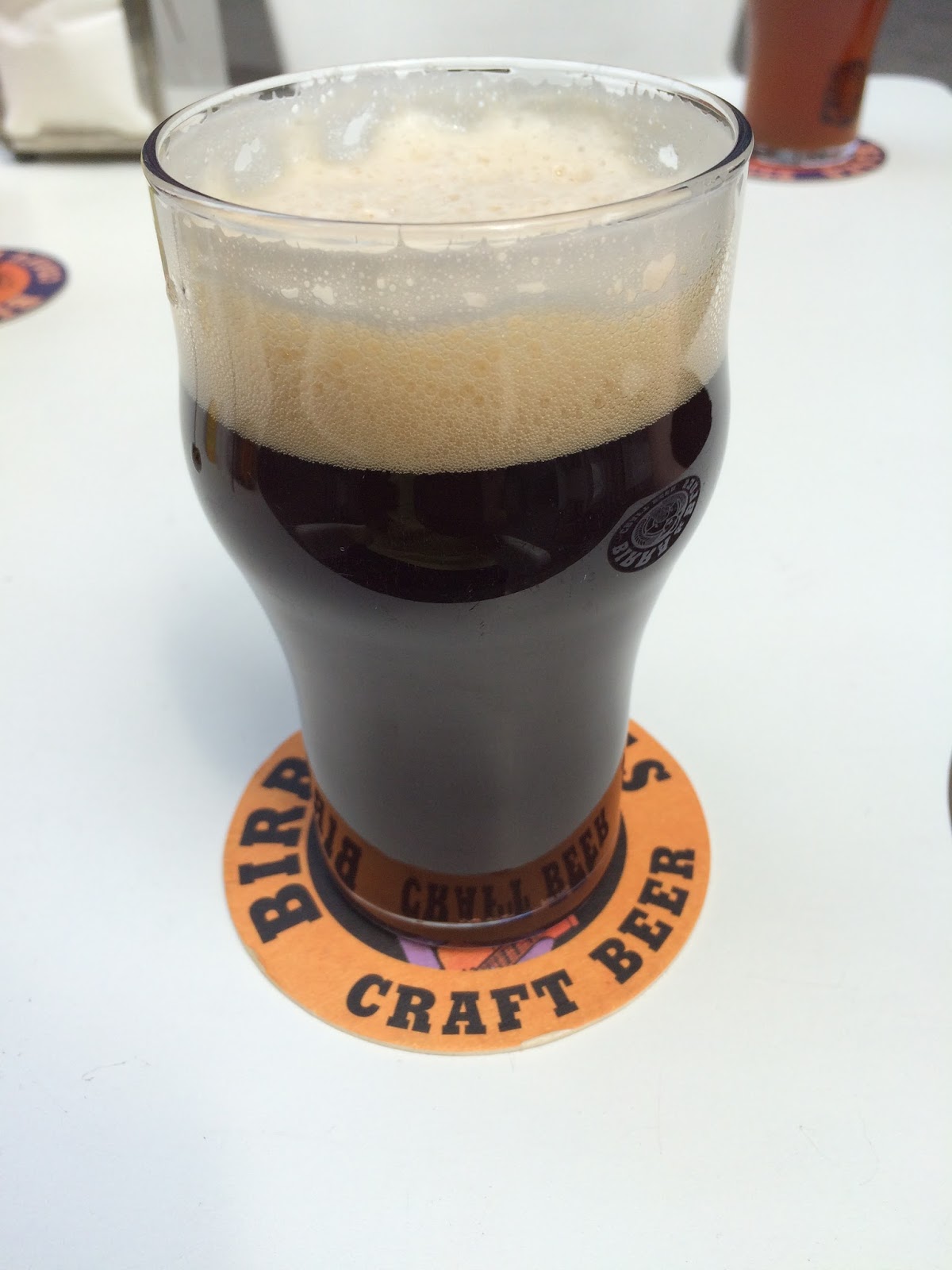
Birra & Blues is probably the most visible beer spot in Valencia, located in the heart of the old town just moments away from the central indoor market. Though it looks like the beer is brewed in a different premises, the bar is very much in the vein of a US brewpub – clean and bright, family friendly, and doing a good trade in tapas and coffee as well as beer. Indoor seating was, as far as I could see, fairly limited, but it’s a great place to stop by for an al fresco afternoon beer whilst wandering around the city centre.

La Negra, their brown ale is very good despite some problematic branding. It’s full of cocoa, raisins and dates, with a faint suggestion of coffee and some peach-skin earthiness before a finish which is ‘nutty’ in that it recalls the dry, bitter sensation of biting into a nut. John Lee Blues, a dry-hopped amber ale, has a strong candy sugar character along with some caramel, and just enough savoury toasted cereal notes to reign in the sweetness. The hop profile brings peaches, apricots  and mango and there’s a gentle bitter finish. Sadly only available in bottles, Black Blues Abbey is their interpretation of the Belgian abbey style, which is a strange experience – initially bland, it then becomes dry and quenching before a very late and very big burst of flavour. There’s blackberry, blackcurrant and cola along with a little phenolic bubblegum, and finally some gentle roast and ash. It’s not much like any Belgian beer I’ve tasted, but it’s an accomplished and interesting beer with complexity far beyond its modest 5.4% ABV.

The aforementioned Mercat Central also houses Las Cervezas del Mercado, a bottle shop which is astonishingly well stocked given its limited space - pick up some Spanish beers along with your smoked paprika, saffron and delicious juicy oranges. On the other side of the old town is the bizarrely named Beers and Travels – the shop is very much geared towards the beer side of things, though their website suggests they do book beery trips too. Here I picked out CCCP, a classic session IPA from local brewery Tyris, which is beautifully dry and full of pine and citrus zest – the sort of IPA that’s becoming unfashionable in this era of ever-later dry hopping and rapidly receding bitterness, but still holds a lot of charm in the afternoon sun. 


In the younger, more bohemian environment of Ruzafa is Olhöps, an achingly hip craft beer bar decked out in a Scandinavian minimalist style that reminds me of restaurants in modern art galleries. The likes of Mikkeller and Brew By Numbers are on tap alongside the Spanish beers, and there’s a small but tastefully curated selection of bottles to take away. Here I go for Zeta Hell, a lager from Valencia’s Zeta brewery, which is a delight – clean and full bodied with plenty of quenching carbonation and a spicy edge. Like Birra & Blues’ brown ale, Paqui Brown – the name puns on Jackie Brown with the nickname of a Valencian footballer - from Tyris also has questionable branding. It’s questionable in other ways, too – so pale that I can’t believe I’ve been served the right beer. Wondering whether the wrong keg has been attached to the tap, I enjoy the caramel-coloured beer anyway – approached as an amber ale, it has a pleasant peach and sherbet hop character over a smooth caramel malt backbone.


At the nearby Valencia on Tap, the mystery is solved. As the owner talks me through the beers on tap, he comes to Paqui Brown, explaining – “it’s a brown ale – well, they call it a brown ale, really its amber.” This place has a lot more in common with the unfussy locals bars you see everywhere in Spain, but with ten taps of great beer from the likes of Founders and Hitachino Nest in place of the solitary condensation-soaked Estrella Galicia font. Despite the name, the beers go beyond the strictly local – I try Achtung! Imperial Porter, a collaboration between Yria , from Noblejas in the Toledo province and the Bavarian Hanscraft & Co. which appears to have been brewed at Domus in Toledo. This is a beer of great complexity – earthy and slightly tart, it’s full of black cherries and dark berries, with a dryness that recalls cocoa powder before some dusty, musty barnyard flavours round it out. Garage IPA from Barcelona’s Espiga is a glorious burst of lemon peel, pine needles and herbs – there’s a particular zingy citrus flavour here which I also find in Beavertown’s Neck Oil and certain BrewDog beers – Simcoe, perhaps? The body is full, even verging towards creamy, and extremely satisfying.


My overall impression of Valencia suggests a beer culture that's catching up to where are in the UK in terms of visibility. The likes of Mahou may still dominate, but a focus on local and artisan produce in general benefits beer - you can, for example, fill growlers with Tyris pale ale at the central branch of El Court Ingles. Not all the beers were hugely exciting, but I certainly encountered nothing rough, amateurish or marred with off-flavours. Valencia may be some way off becoming a beer destination, but for a holiday of exploring by day and boozing by night, I'd highly recommend it.

Tuesday, 7 April 2015

Spanish beer haul pt.2; Lupulópolis


The following beers were purchased at Lupulópolis in Seville.

A very lively pour from this bottle, with deep black beer foaming insistently into the glass and settling into a thick, lasting beige head. The aroma is richly savoury, an intense nose full of toasted malt, and the first sip is satisfyingly full bodied with a beautiful viscous mouthfeel. The trio of US hops (Amarillo, Simcoe and Cascade) bring bitterness, but not a huge amount of juicy fruit flavour, which is fine by me as they never threaten to step on that malt backbone. There’s a slight tonic-like tang in the finish, which only encourages you to go back for more, and the beer’s 8.5% ABV reveals itself in a lasting boozy warmth. It’s subtle for a black IPA, but it’s a well-made beer all the same.

A mid-strength porter although, amusingly, it says 4.8% on the front label and 5.6% on the back. The aroma is weak, with a hint of the tart, malt vinegar tang I associate with Harvey’s beers, and which is never inviting even if the beer is good once you taste it. Yunque has some very unusual flavours going on; I don’t get the usual treacle or coffee, with the roasted malt flavour taking a bit of a back seat whilst hazelnuts and big vanilla dominate. It tastes good, but I’ve never had a porter quite like it, and it’s not really what I’m looking for from the style.

Cárdenas Stout (Dos Hermanas)
This is the most local of all the bottled beers I picked up in Seville, brewed in Dos Hermanas just 15km outside the city. It’s an inauspicious start, as unfortunately there’s a lot of floating sediment in the glass, though the bottle has remained upright and I poured slowly. Even worse, the aroma is positively pungent, and not in a pleasant way. I don’t mean to be harsh, but it really does smell like a well-used chemical toilet, with a note of toothpaste in the background. I almost don’t want to taste it, though it’s not terrible when I do – just very, very strange. The roasted malt flavours are in the background, and the most prominent flavour is mint. As with the Kettal porter, it’s not that it tastes awful, it just isn’t anything like a stout should be. Compared to some of the other Spanish beers I’ve tried alongside it, this is, sadly pretty unaccomplished brewing.


I don’t mind admitting that I selected this beer from the fridge based mainly on the wacky label and the fact that I love guinea pigs. Words cannot describe the joy this label brings me; I want a print of it on my wall, I want it on a T-shirt. Anyway,  Guinea Pigs! is based in Madrid, but works as a contract brewer, and Hopvana was brewed at Domus in Toledo. Whilst it’s a broadly American-style IPA, some interesting and creative decisions have been made here; for example, the hop bill mixes German Herkules and Saphir with Australian Summer, with Cascade being the only US hop included. The beer’s unusually dark colour can be attributed to the inclusion of chocolate malt alongside pale ale and crystal. The resulting flavour is both familiar and surprising at the same time; mango and sweet oranges, pink grapefruit and candy floss, balanced by a solid malt profile. I may have chosen it for dubious reasons, but Hopvana was nevertheless a fine choice!

Guineu/BrauKunstKeller Collabrew Double IPA (Barcelona/Michelstadt, Germany)
Guineu is the only Spanish microbrewery I’d heard of before this trip, and this double IPA is a collaboration with BraunKunstKeller, a German craft brewery. Whilst there are obviously exceptions, the thought of double IPAs sometimes makes me wince, because they’re just too much for me; too bitter, too strong, too demanding. This is not the case here, as the juicy fruit flavour is prominent, but without lip-puckering bitterness, and with a solid malt framework, too. The hops are a mixture of European varieties – Mandarina Bavaria and Hull Melon from Germany – in the kettle, and US – Mosaic and Citra – for dry hopping. It’s full of mango, papaya and pineapple, but built on a  foundation of crisp malt which I’d like to imagine is the German influence. It’s excellent.


Not knowing any of the breweries on offer, I had to make my selections in the bottle shop on very limited data. So I figured, go for the beer with the personified cartoon hop on the label, and you can expect something really hoppy, right? Well, kind of. Take a sip and wait for that lupulin hit, and you’ll be disappointed, because the bitterness in this beer is surprisingly low. Nevertheless, it’s very flavoursome and fruity, with lots of juicy papaya and ripe white grapes. It hides its 9% strength very well, with light carbonation and a modest body that demands another gulp. It’s not at all what I expected, and I can imagine some people being really disappointed by it (the handful of reviews it has on Ratebeer are lukewarm at best, for example) but I loved it.


***
It would be arrogant of me to make any broad claims to know Spanish craft beer based on the beers I've tasted in these posts; the generously stacked shelves in Lupulópolis are testament to the fact that I've barely scratched the surface of a rapidly growing scene. This is all the more remarkable when you consider that Spain, as far as I'm aware, doesn't have much of an indigenous beer tradition.The best beers I sampled are good enough to compete with the best beers coming out of the UK and the rest of Europe, and the ones that weren't so good are hopefully examples from brewers still on a learning curve. I'll happily take a light lager in an ice-encrusted glass from time to time, but on future holidays in Spain, it's great to know that proper beer is out there waiting to be discovered.