Showing posts with label brown ale. Show all posts

Sunday, 5 February 2017

The Session 120 Round-up

For The Session this month, I asked beer bloggers to write on the deliberately broad topic, 'brown beer'. The idea was to direct attention to a group of beers (brown ale, bitter, mild, dunkel) that are often overlooked and underrated. Thank you to all those who contributed - I'm delighted with both the quality and diversity of the responses.

Alec Latham at Mostly About Beer got the ball rolling with a characteristically philosophical approach to Tring Brewery's wonderful Death or Glory barley wine.

"This is where the beer was conceived and grew up. It isn’t refreshing but nourishing. It makes sense here in the biting jaws of January to help relax, thaw out and loosen sinews. It would make no sense in Sydney or in Palm Beach. It might have been fate that it was originally brewed at the end of October – just as we say goodbye to the sun and beer gardens."


Boak and Bailey took a "stream-of-consciousness" approach, pondering the colour brown, its associations and its meaning in beer.

"Back in the 1990s Sean Franklin of Rosster's ditched brown in favour of pale because he wanted a blank canvas on which hops could shine. If pale is blank, is brown noise? Or texture? Texture can be good. Noise too. There's a reason people put dirty old Polaroid filters on their iPhone photos."

Gareth at Barrel Aged Leeds sampled a couple of forward-thinking modern incarnations of brown ale.

"Instead of digging up the time capsule and finding nothing but a mouldy newspaper and a badly spelled letter, I picked up two bottles I thought would be at distant ends of the modern brown ale scale."

Andreas Krennmair at Daft Eejit Brewing offered up a traditional recipe for a dunkel lager which had me longing for a huge glass of brown beer in a shady beer garden.

"The resulting beer may not be cool, neither in the hip beer scene nor in the conservative Bavarian beer culture, but it's nevertheless a great beer style. If you're too lazy to brew it yours, here's my suggestion for a fantastic example of the style: Augustiner Dunkel. At 5.6% ABV, it is spicy, malty, with hints of chocolate and licorice, but never sweet."


Lisa Grimm's account of her relationship with brown beer acknowledges a British influence on her preferences and palate.

"I discovered that 'the good stuff' was often simply from a local family brewery, and they didn't always make enough to export. But I loved my go-to beers, even if they weren't 'fancy' - a pint of Theakston's Best, Brains Dark, Moorhouse's Black Cat, Lancaster Bomber. I tended to go for beers on a chestnut-to-dark-brown continuum, and while I do go for more variety today, overall, that pattern still seems to hold."

David J Bascombe found himself pining for the simple pleasures of a pint of bitter after moving to the US.

"I have been in the USA for just over a year now. I have found many good IPAs, and many good stouts. Brown beers, or rather beers resembling the sort of beer I could easily find back home are somewhat harder to come by. This makes me think that brown beer, or rather an English bitter in this case, is something I (and possibly many others) take for granted."

Roger Mueller at Bottled Roger's Beers somehow compares brown beer to Audrey Hepburn's hat. It makes sense in context.


The Beer Nut evangelises the brown malt porter, reviewing an example from Ireland's Galway Bay brewery.

"Among the handful of beer recipes I brew repeatedly at home is a low-gravity job I call a brown porter. It uses brown malt as the primary speciality malt - about 10% or so of the grist - seasoned with just a token bit of roast barley or black patent. I love the moreish mocha flavour that brown malt delivers when used in sufficient quantity, and it's something that one rarely seems to encounter in commercial beers. Until a couple of weeks ago, anyway."

Also in Ireland, Reuben at Tale of Ale praises the humble dark mild, focusing on an example from Dungarvan Brewing.

"The mild is a little thought of style these days and there are very few of them ever released in Ireland. They do make the perfect cask ale though and I find them a little more complex than your average pale ale/bitter but easier to drink than a stout. There's something comforting about a good mild ale. One of my favourite UK commercial examples is Thwaites Nutty Black on cask. It doesn't rate very highly on beer rating websites, but then again, do any milds?

Derick Peterman at Ramblings of a Beer Runner gives his own potted history of brown ale appreciation, from Samuel Smith's to local brews from his native California.

"One could derisively call brown ales the cockroaches of beer, continuing to persist despite commercially eradicative indifference. The thing is about brown ales are, whether in traditional form, modern renditions, or contemporary reworkings, they have their passionate believers."


Stan Hieronymus at Appellation Beer turns the 'brown beer' topic on its head somewhat.

"I might not be thinking about this in the right way. I understand the definition of "brown ale" and the variants, but I don't think "I'll have a brown beer" when I am considering what to drink next. Whatever brown brings to beer is part of a matrix."

F.D. Hofer at Tempest in a Tankard investigates a fascinating range of brown ales, including some particularly intriguing examples from Austria,

At Tuesday Pints, a personal history of brown ale appreciation, and notably another American blogger to name Samuel Smith's Nut Brown Ale as an influence.

"I drink more IPAs than anyone really needs to these days - they're inescapable. Much like many relationships, we never had a falling out, but we drifted apart. I'd say hello every now and then but mostly sought out the new and exciting barrel aged sour and didn't have time for this steady ale. I honestly don't remember the last time I brought a bottle home. So, as I write, I am also enjoying a fine pint of Nut Brown."


John Abernathy at The Brew Site also chose to focus on brown ales.

At Deep Beer, a consideration of Dogfish Head's Palo Santo Marron, a strong wood-aged brown ale which sounds very interesting indeed.

"I find this beer fascinating not only as a wonderful drink to enjoy, but also for the effort exerted to bring it into being. The fusion of the the wood and beer, ancient culture and domestication makes me pause as I sip it in - and not only because its 12% ABV. Not all browns are created equal."

And finally, my own contribution - a quick look at Brick Field Brown, a new addition to The Five Points' portfolio.

Thursday, 2 February 2017

The Session #120 - The Five Points Brick Field Brown

This is my contribution to The Session #120, hosted by yours truly. A full round up of the posts will follow.

I chose the topic of brown beer for The Session in an attempt to direct attention to some of the beer world’s underappreciated styles. Top of this list for me has always been brown ale, a subject to which I’ve dedicated plenty of words already on this blog. What more can I say on the subject?

Pondering this, I visited The Black Dove in Brighton for a pint of Brick Field Brown, a fairly new beer from The Five Points brewery in Hackney. I was instantly impressed by its hue; a dark, woody colour that would sit perfectly between bitter and stout on a beery colour chart. Taking a first gulp, smooth chocolate flavours were first to register. A very gentle coffee roast follows, a bit like you’d expect from a good dark mild and far subtler than that in a porter or stout. As it warms, that malt character becomes a little sweeter, with a suggestion of dulce de leche. Key for me is the hop profile – a subtle wave of peach and apricot before a bitter finish.


But what’s particularly exciting about Brick Field Brown is that, unlike most modern brown ales from British breweries, it is not a seasonal or one-off brew; it’s a permanent addition to Five Points’ core range. Which makes sense really – Community and Marketing Manager Doreen Joy Barber has described Five Points’ brand as “norm-core”; they’re not firing out limited edition beers or chasing trends, concentrating instead on a small portfolio which is executed to absolute perfection. Like myself, former Lead Assistant Brewer, Vito (now at Meantime) is passionate about brown ale, which Doreen calls “an unsung format”. Brick Field Brown began life as Vito’s Brown on the brewery’s pilot kit in late 2015, appearing for the thirsty public at that year’s London Brewer’s Market before joining the core line-up.


Brown ale may not excite everybody, but I hope that Five Points’ reputation for consistency and quality will tempt punters to give it a go. I certainly wasn’t expecting a brewery in hip East London to advocate the style, but I’m absolutely delighted they have. Seek it out if you can. 

Thursday, 14 January 2016

Brown ale: some final observations


Since starting this blog, I've rattled on about brown ale a fair amount. I feel I've done the subject to death, but I've also spent so much time obsessing over it that I still have things to say. Despite the stylistic diversity of brown ale, there are noticeable trends within the style. As the final word on brown ale for this blog, I propose a series of sub-categories. Bear in mind I'm not taking myself totally seriously in this – brown ale is obscure enough as it is without being chopped up into micro-styles. It’s just a way of presenting the continuities across the various examples of the style I've tasted in the past year or so.

I still try any new brown ale I see. If a local pub tweets that they’re serving one, or a brewery announces they’re making one, I’ll be making mental calculations as to how I can get to try it. It’s a uniquely fascinating style precisely because nobody seems to agree on exactly what it is. 
***
Your average beginners guide to beer styles tends to split brown ale into two categories – the sweet, low-gravity ales of the South of England, and the stronger, dry brown ales of the North. The truth is more complex; from the re-emergence of the style in the 1920s onwards, the beers were diverse and did not observe this imaginary north/south divide.

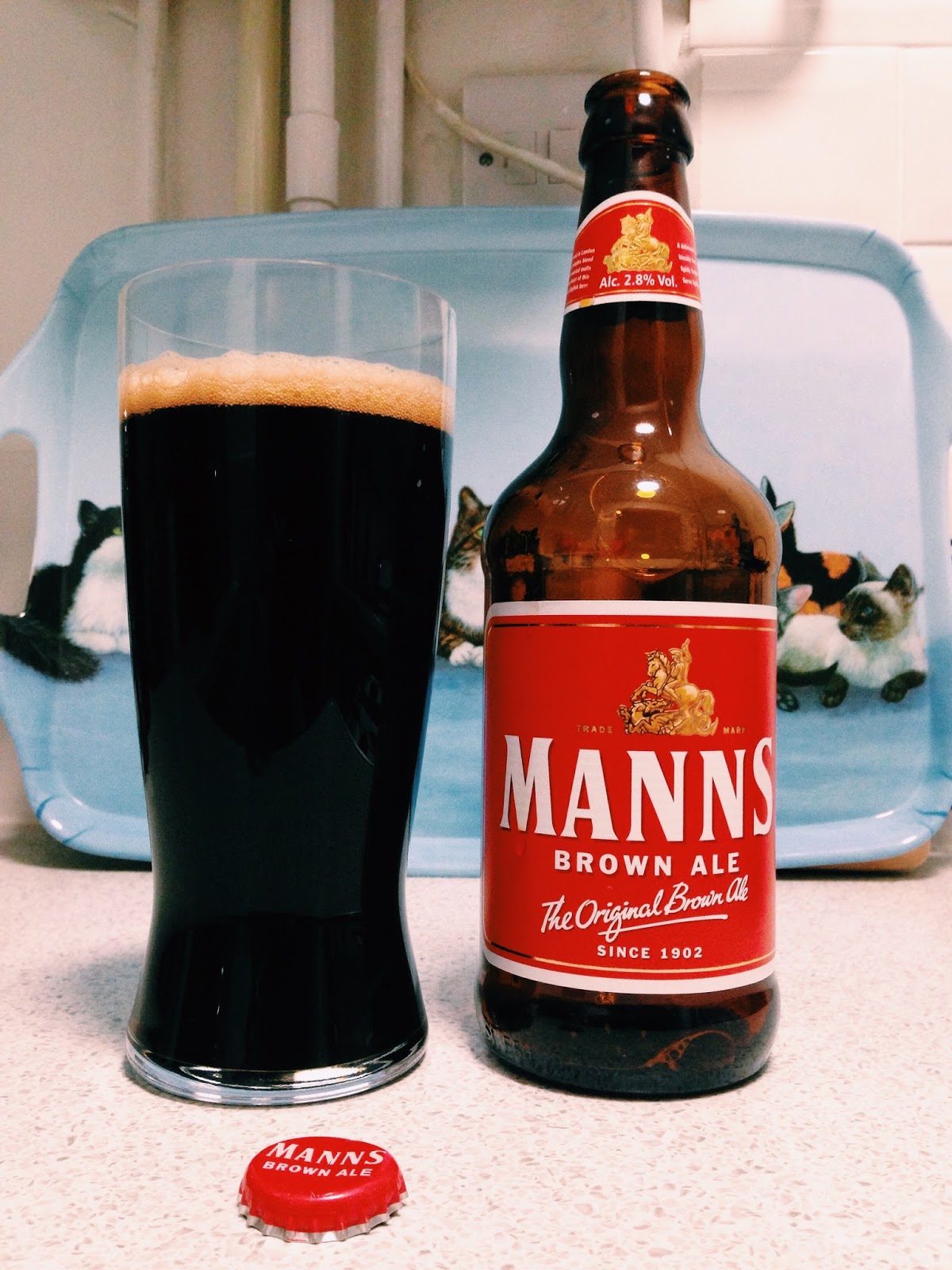
As brown ale stands today, archetypal examples of both the sweet/mild and strong-ish/dry versions remain. Mann’s Brown Ale, despite originating as one of the strongest examples of the style, now sits at 2.8% ABV and tastes largely of cola, treacle and toffee. Harvey’s Bloomsbury Brown, also at 2.8% has a strong caramel flavour, and may well be a relic of the days in which brown ale got its colour from caramel. I've never encountered any further examples of the low-gravity version of brown ale, and it’s easy to see why they fell out of favour – they’re interesting as a curiosity, but are bland and not very beery.

Newcastle Brown Ale remains the most commonly cited example of the stronger version. These beers are often dry and often described as ‘nutty’, although I've always thought this this is the power of suggestion at play – the phrase ‘nut brown ale’ is sometimes used to refer to the colour, but I've rarely detected a nutty taste. Newky Brown isn't a good beer, and it’s a shame it’s the only example of the style you’re likely to find in mainstream outlets. Far better is Samuel Smith’s Nut Brown Ale, which has a very dry quality that even veers towards red wine, and a deep, savoury malty body. (Edit; see here for some further interesting background on Newcastle Brown Ale from Martyn Cornell - "not, in any meaningful sense, a brown ale.")

Modern craft breweries have reinterpreted brown ale in several ways. The first sub-group pays homage to the traditional English brown ale, whilst not belonging to either the Mann’s or Newcastle camps. These beers are defined by a soft, comforting malt profile, which might include hints of caramel or toffee, milk chocolate, blackcurrants or blackberries or cola. A little roasted malt may creep in, but this will be more restrained than a porter or stout, and the beers are of a medium body. New-world hops might add a bitter, citrus finish but this will be subtle. Good examples I've tasted recently include Dirty Kitty by Denmark’s Beer Here and Maduro from Cigar City. Port Brewing’s Board Meeting deserves a mention for using these qualities as a foundation for a massive hit of coffee and rich chocolate – it’s terrific.

The ‘American brown ale’ style will take these characteristics and significantly amp up the hops, but not in a way that overpowers the malt backbone. Dark Star’s Rockhead is the best example of this I've tasted, and Fourpure's Beartooth is excellent, too.


Some beers call themselves ‘India brown ale’. What you’re getting here is obvious – a big hit of hops. This is generally my least favourite incarnation, though some are better than others, mainly because the brown ale base is wiped out and you end up with something closer to a black IPA. I would place BrewDog's recent “hopped-up brown ale” prototype in this category – I thought this was a poor beer all round, and tasted of little except overly bitter hops that left a citrus washing-up liquid taste that lasted for ages. Others whose tastes I trust found a lot more to it, so maybe I had an off bottle or my taste buds had an off day - either way, I stand by the assessment that the hop profile dominates everything else. Weird Beard’s No More Bright Ideas, whilst it tastes great, offers little to the brown ale enthusiast – it’s a very dry beer, bursting with vibrant and zesty hop character, but this renders the malt base irrelevant.

There is also a small breed of what appear to be brown ales, but aren't. When I wrote about Brighton Bier’s Free State, billed as “21st century brown” here, I remarked that the nevertheless delicious beer had very little ‘brown’ quality. Brewer Gary Sillence got in touch with me to clarify his intentions - “My main ambition was the break down the mainstream perception that brown beer means dull or old fashioned”, he said, and the beer was never intended to be received as a brown ale as such – his alternative tagline was “brown beer for a new generation”.  Magic Rock’s The Stooge, though billed as an American Brown Ale, seems to be doing much the same thing. It’s a far lighter shade of brown than most examples of the style. You might call its shade 'chestnut' – closer to a bitter (that's it in the photo at the very top of the first, if you'd like to see for yourself). And it drinks like a bitter, too, albeit one hopped with assertive US varieties alongside earthy British staples – the luscious malt character has an easy-drinking crispness to it that doesn't belong to brown ale. Are we at a point when the agonisingly unglamorous name ‘brown ale’ is more fashionable than ‘bitter’?
***

I don’t know it just seems this way because I've been actively looking for them, but I'm sure I'm seeing more brown ales than ever recently. With talk of a hop shortage, are breweries falling back on malt-driven styles such as this? In any event, I promise not to drone on about it any longer.

Wednesday, 25 November 2015

A date with Darkness


Whilst I do my fair share of thinking about (and drinking) beer, I don’t really do very much beer-related stuff. I don’t even go to pubs as often as I probably should, never mind travelling the country to do so; I have never been to a tap takeover, beer dinner, or even a beer festival. There are many reasons for this, but after breaking this drought at Dark Star meet-the-brewer event at Brighton’s North Laine Brewhouse last week, I'm determined to change that pattern.

The North Laine is a great space – part US-style brewpub and restaurant, part Bavarian beer hall, and can hold a lot of people, so it’s great to see them putting their extra capacity to good use with events like these. As we arrive, there’s already a small group clustered around the hand pumps at the end of the bar. Initially, we’re greeted with bad news – Dark Star’s head brewer Andy Patterson is in bed with the flu and won’t be making it. Luckily, one of the other brewers, Amir (new to the brewery after stints at Beavertown and Hackney), and director Paul Reed are here instead.

These are exciting times for Dark Star. For as long as I've lived here, their beers have been ever-present on bars across Sussex, but their reach is far greater than that of a small regional brewery. Alongside the Partridge, near the brewery, and the Evening Star in Brighton, they’re looking to open several new pubs – the first site, in Horsham, is scheduled for early next year. They also reveal this evening that they've outgrown their facilities in Partridge Green and are starting to look for new, larger premises.

Equally exciting for me is the launch of their new seasonal – Rockhead, an American brown ale, and I dive straight into a pint as people continue to arrive. I’d tried this recently from keg at the Star and was very impressed – served this way, the body is full and creamy, thick without becoming hard work. The cask version this evening is even better – it’s in fantastic condition and the hops taste hugely fresh and vibrant without threatening to wash out the foundation of warming malt. This balance isn’t always there in US-hopped brown ales, which can often come off more like black IPAs, but at the base of Rockhead are all the flavours I’m looking for in the style – caramel, cola, a little chocolate. The only American hop here is Amarillo, which lends a peachy sweetness, whilst Australian-grown Citra and a trio of British fuggles, Goldings and Admiral bring citrus bitterness.

Once everyone’s here, Paul and Amir each give a brief talk, giving some background on the brewery and their range of beers. There’s a raffle draw, in which I win a pint – I choose Revelation, which tastes all the sweeter as it’s free. Amir tells us that they use a device called a ‘hoptimiser’ in making this beer – it’s like a giant tea bag which infuses the beer with hops without directly adding them, giving the beer a smoother quality. Makes sense to me – my pint is full of juicy hop flavour, but is in no way spiky or dry. It’s fantastic.

After some plates of food are brought out for everyone to share, we hear from Laine’s head brewer Nic Donald, who talks us through the beers made in-house here, along with a quick brewery tour. When Sidony asks a question about sour beer, he’s even generous to share a sample of a pink grapefruit beer, soured in the kettle with Greek yoghurt and a dunk from some grain sacks, that he’s brewed at one of the company’s London pubs. It’s very good and I’d be delighted to see something similar on offer at the North Laine.

Beer is, quite obviously, best in a social situation. That social situation needn't be anything more complicated than a group of people talking. Beer is also good at enabling such situations, and not only through its inhibition-lowering qualities. A glass of beer in everyone’s hand is a great leveller and conversation starter, and that’s why these kinds of events can offer as much to the greenest novice as they can to the hardened beer nerds. My new year’s resolution for 2016 ought to be to do more of this sort of thing.

Monday, 5 October 2015

Two brown ales; Brighton Bier and Fourpure

Usually, I wait until I've tried five or six new brown ales and post a bulletin on my latest finds, as I did here and here. On this occasion, I thought I’d better get in quick with my thoughts on two (I think) limited edition beers whilst they’re still around.


Brighton Bier are having a great 2015. Having installed a brand new brewery, they’re going from strength to strength, and at this point have gotten extremely good at packing juicy hop flavour into their beers. Tasting Free State in cask conditioned form, I felt like the beer in front of me just could not possibly taste any fresher – the hops are so upfront, but at the same time, don’t smack you around the chops with bitterness. My guess, at the time, was the hop bill was a mixture of US and Southern Hemisphere hops – “something like orange and lime pith which seems like a Southern Hemisphere thing”, I wrote in a note on my phone, whilst also picking out a lychee tang that suggested Citra. I was wrong on both counts – this is a single hop beer made with Equinox, a new US variety from the same breeders that brought us Mosaic, Simcoe and the aforementioned Citra. The citrus pith thing is a kind of lingering fizzy sensation on the tongue, slightly dry and always encouraging another sip. A complex malt base brings a full, mealy body that’s pitched perfectly for my liking – not heavy going, but never feels like it’s slipping away too easily.

I do have one slight issue, though. Had I been accosted in the pub, blindfolded and asked to taste this beer without knowing what it was, I would have confidently told you it was a pale ale. It’s brown in appearance, sure, but it’s a strange experience whereby the image of the glass you’re drinking from and the taste of the beer in your mouth don’t seem to match. Maybe, once the glass has warmed a little and once I go specifically in search of it, I can detect a hint of caramel, a little chocolate. Don’t get me wrong – this is a great beer, probably the best I've tasted from this excellent brewery and one I could drink endlessly. I just like a suggestion of something dark in my brown ale.


In one of my first posts on the subject of brown ale, I featured a seasonal from Fourpure called, simply, American Brown Ale. This beer served as a prototype for Beartooth, an improved version under a new name and in a new can. I enjoyed it a lot first time round, though my review seems to dwell on a dryness that isn't really there in the new version. It’s still bitter, but well balanced, and full of juicy hop flavour as well.

It’s a very handsome pour – dark brown, bordering on black, with a thick and creamy beige head, and an enticing aroma of fresh citrus fruits hits you immediately. The flavour is a delicate balancing act between malt and hops – there are husky, cereal-like flavours in the background, with a little roasted bitterness that brings coffee and the faintest hint of smoke. The hops, which recall grapefruit and small, sweet oranges – satsumas or tangerines - are harmonious with this malt backbone, neither element threatening to overpower the other. It’s wonderful, and you should drink it whilst you can.

Monday, 7 September 2015

A brief history of brown ale


In my last post about brown ale, I mentioned a post on Ron Pattinson’s Shut Up About Barclay Perkins blog which alluded to certain historic brown ales as bottled versions of mild. Most beer books will contain a fairly brief summation of brown ale’s past, but this was a new one on me, and made me realise how little of the style’s history I actually knew. What details I stumbled across were initially confusing and hard to piece together. The answer was, obviously, to search the term ‘brown ale’ on Ron’s blog and sift through the results. If you want to know the facts about the evolution of a historic beer style, Ron Pattinson really is your man. His research is based on extensive trawling of brewer’s records and, whilst some interpretation may occasionally be required, I think it’s safe to assume any information posted at Barclay Perkins is documented fact.

For my own benefit, I decided to compile a brief history of brown ale as I now understand it, based on Ron’s blogs on the subject. I may have misinterpreted certain things, and I don’t claim to understand the tables of numbers or certain technical information he posts, but the basics I’ve discovered there have helped straighten the story out in my own mind and are hopefully fairly accurate. If you’re a more seasoned beer expert than I or have a head for figures, Ron’s work will be right up your street.

***
Brown ale began life in the 18th century, when it was available as either Common Brown Ale, or the stronger Stitch. At this time, ‘ale’ and ‘beer’ were distinct from one another – beer was stronger, and heavily hopped to prepare it for a keeping period of 9-12 months. Ale was lightly hopped, and drunk as soon as the cask cleared. Common Brown Ale and Stitch were both made from brown malt. Around the turn of the century, the increasing popularity of porter saw these styles died out. Brown ale ceased to exist for around a century.

Mann’s were the first brewery to revive the style, and it returned to the mainstream again in the 1920s. Though all were very different to the original brown ales, these modern versions were stylistically diverse. The commonly accepted split between weaker, sweet beers from the South and strong, drier beers in the North is quickly debunked by Ron’s findings – many Northern brown ales were low in alcohol and Southern beers strong. Newcastle Brown Ale was one of the few stronger brown ales to survive, whereas Mann’s, one of the strongest brown ales in the 1930s, ended up with an AOV of just 2.8%. When writers like Michael Jackson later came to write about the style, these were the principle examples on the market, which may have contributed to this imagined divide.

There is a link between brown ale and mild, especially in the South.  Many breweries bottled their dark mild as brown ale, though the beer was primed differently for the bottle. This could explain why brown ale was almost exclusively bottled, and mild usually draught. Exactly why bottled dark mild wasn’t simply called dark mild isn’t clear. Brown ale is absent from the brewing records of certain breweries who are known to have sold them, and this is because it was brewed exactly as the breweries’ dark mild. This was far from the case for all brown ales, though – many were far stronger than any mild and brewed to their own recipe. Some breweries also brewed a stronger version known as Double Brown Ale. The colour of these modern brown ales was not imparted by brown malt, nor roasted malts, but from dark sugar or caramel. In cases where mild was bottled as brown ale, caramel may have been added.

And finally, an expression that always confused me - Nut Brown Ale, which appears on beer labels to this day. This describes the colour of all kinds of brown beer - it does not specifically refer to brown ale, and is certainly not a distinct sub-style - and was used in traditional poems and songs, especially those heard at public feasts.

***
Conversation for your next dinner party, eh? I've often noted how vague the definitions of brown ale are and how different one can taste from another, and it would seem it has always been this way. Please do let me know if I'm confusing any of the details here, and thanks to Ron for his invaluable research.

Monday, 24 August 2015

Imperial brown ale

In the months since I started this blog, I've paid particular attention to brown ale. I try to order brown ale or buy a bottle whenever I see it, because it’s an interesting style that I think is underused and underrated. Few brown ales I've tried taste alike, and the style is very loosely defined, which leaves more space for brewers to get creative – hence the existence of ‘imperial’ brown ales.

Style pedants will hate this term, of course. ‘Imperial’ refers to the extra-strong stouts brewed for export to the Russian imperial court in the 1700s. Brown ale never made such a journey, but the term has come to denote a stronger and altogether bigger version of just about any style from pilsner to saison. So imperial brown ale isn't a style with any tradition behind it, but one that’s been invented by brewers looking to experiment with the humble brown ale.

The two examples in question here are big beers – Nøgne Ø's Imperial Brown Ale is 7.2%, MRS Brown 9.5%. The brown ale story begins with Mann’s, now just 2.8% (though originally stronger), whilst encompassing big boozy beasts like these, and that’s just another example of the diversity I love in the style.


This beer contains vanilla, pecan and maple syrup. Sounds like a recipe for a delicious breakfast cereal  rather than a great brown ale, but I’ve often found where Siren are involved, the wackier ingredients do tend to work with the beer. Not only that, but it’s aged in bourbon barrels, too, so we can expect flavours far removed from your average brown ale.

The beer pours very dark, almost black. There are translucent brown edges around the glass when held up to the light, but otherwise this looks much more like a porter or stout. The aroma is strong bourbon, vanilla and appetising, fresh chocolate. My first impression after a tentative gulp is of the sheer complexity of the beer – there are so much flavours going on at once - more chocolate and vanilla, toasted marshmallow, dark berries. The maple syrup only comes through as the beer warms, and is sweet and earthy and delicious, a little like caramel. The pecan is present towards the second half of the glass, too, and brings a certain bitter and dry quality. There’s warming whisky and a bitterness like dark chocolate in the finish.

It’s a beautiful beer, harmonious despite its complexity. The high ABV works with the bourbon flavours – yes, it’s boozy, but then it’s a beer with a pronounced whisky influence. Approached as a brown ale, though, it doesn't offer much – in fact, it almost begs the question of whether you can blow up a brown ale in this fashion without leaving the style behind. If this had been labelled a porter instead, I doubt it would have raised any eyebrows, though there isn't a roasted malt quality in MRS Brown. In any case, the style is really only used a base for the additional flavours – you’re never going to drink this and think “this is a great brown ale”, because the experience of drinking it is all about taking a sip and saying “oh I get the maple syrup now… and there’s a bit of pecan.” In any event, the most important thing is this – it’s a great beer.


Turns out you can inflate a brown ale whilst staying true to the style, as that’s exactly what Nøgne Ø have achieved here. Its colour is far more befitting a brown ale, and the aroma of caramel and currants is familiar although the ‘imperial’ nature of the beer brings a big whiff of booze, too.

Though it's brewed in Norway, stylistically this is somewhere between British and American takes on brown ale. The hops, for example, are a mix of East Kent Goldings, Chinook and Columbus, and the yeast is a traditional English ale strain. Honestly, I didn't get much of the C-hops, not even much bitterness. At the same time, it’s not sweet, just dominated by malt flavours rather than hops. Sherry, vanilla and toffee along with the elevated ABV give an impression of a soft and warm beer, and it’s satisfyingly full-bodied without being viscous and oily as strong dark beers can be.

Monday, 17 August 2015

Brown ale roundup

In my last brown ale round-up, I linked to a Beervana article about the use of caramel colouring in Newcastle Brown Ale. I may have misunderstood the situation - I thought the controversy was based on the use of an additive to obtain the beer's colour, but in fact it was based on health concerns around the colouring in question, 4-MEI. In any case, we hopefully all agree that artificial colourings used in the likes of Coke and Pepsi don't belong in beer.

Another thought-provoking development in the world of brown ale is this post from Ron Pattinson, in which he shares a recipe for Adnams XX mild from 1950. Here, Ron says that Adnams Nut Brown Ale would likely have used the same recipe, though primed differently for the bottle. This reminded me of a conversation I had with @WestBromEL after my initial brown ale posts. He'd always been told that brown ale was essentially bottled mild, and it is true that mild is rarely bottled. No beer books on my shelf mention any such link between mild and brown ale, but clearly there was such a relationship at one time. Anyway, here are some brown ales I've been drinking lately, starting with an old classic.


For months, I couldn't find Mann’s Brown Ale anywhere. I wanted to include it when I did my initial brown ale round-up in the early days of this blog, but nowhere near me stocked it. Eventually, I found myself in one of those enormous ASDA superstores when I clocked Mann’s bottles on the shelves, and became consumed with excitement which I knew, even at the time, would inevitably outstrip the quality of the beer. I was mainly just curious – Mann’s is often cited as an example of a now near-extinct breed of brown ale, a counterpart to the likes of Newky Brown. You’ll find little bitterness and no dry finish to Mann’s – it was reportedly considered close to a soft drink at one time, which I can understand. It’s not just the meagre 2.8% ABV, it’s also the sweetness and easy drinkability. It is refreshing and thirst quenching, but in much the same way water is, and not very much like beer is. It also tastes an awful lot like cola to me, with a finish that recalls sparkling mineral water, and hints of treacle and toffee flavour.  I can’t imagine anyone ever thinking “I think I’ll have a nice beer” and then enjoying drinking this.

Thornbridge Charlie Brown (peanut butter brown ale)
My hand has often hovered over Charlie Brown in bottle shops, but something always stopped me taking the plunge. It’s a brown ale with peanut butter and, whilst I love brown ale and love peanut butter, I somehow couldn't quite believe it could be as great as it sounds. Still, I eventually had to try it. Upon pouring, the peanut aroma is immediately evident – it doesn't really smell of peanut butter, but more like raw peanuts with the husk still on. I was expecting more peanut on the initial taste – this is more like a brown ale that heightens the peanut butter flavours that are usually to be found somewhere in beers of this style, rather than providing a massive peanut butter hit. That’s fine – I still want it to taste of beer, otherwise I’d just eat a peanut butter sandwich.  Trouble is, I'm not overly enamoured with the base beer – the body is too thin to work with the peanut butter richness, and there’s an unpleasant, slightly vinegary acidity in the background that also clashes. I was a little disappointed, but not because brown ale and peanut butter don’t go together – I just don’t think this is a great brown ale to begin with. 


North Laine Brewery Deadwood
This one is currently available in cask-conditioned form at Brighton's North Laine brewpub so, if you're interested, you should probably get over there and try it while you can. And it is definitely worth a try, even if my pint wasn't without flaws. The beer is aged in bourbon barrels (edit: it's actually aged on bourbon-soaked oak chips, not in a barrel), which in principle is an excellent idea - it's usually stouts that get this treatment but, since your average brown ale is a little lighter-bodied, you're less likely to end up with anything so thick and oily as certain barrel-aged stouts. The bourbon profile in Deadwood is expertly judged, never overpowering the beer - the whisky brings honey and vanilla, and the time in the wood brings a dry, red wine-like finish. The further down the glass you get, the less prominent the bourbon notes, and bitter chocolate and grassy hops come to to foreground. Unfortunately, my pint was let down by a lack of body - it lacked the smooth, substantial mouthfeel I'm looking for from cask ale, and felt thin and watery. I'm hoping to try it again while its around - perhaps my complaints are simply due to the inconsistency of the cask, and it is otherwise a very good beer.

So far I've mainly been interested in British-brewed brown ales but, since there aren't huge numbers of them, I'm going international with this time. I’d heard some good things about Norway’s Lervig, but unfortunately, their brown ale is a dud. There’s a little toffee, a little chocolate and, if you swill the beer around in your mouth desperately looking for it, a touch of hop bitterness. But overall, it’s watery and bland.

I was expecting a powerfully hopped American brown ale from this, but it’s actually a more nuanced beer. The recipe is inspired by brown ales from the brewery’s past which, in turn, shows a strong British influence – liquorice, treacle, caramel and fruit cake are all in there, bringing to mind something like Harvey’s Bloomsbury Brown if it were twice as strong. A more modern twist is the use of Citra hops, which didn't exist when Anchor was brewing these early beers. Initially, I couldn't get any of the hop flavour at all, but it comes out as the beer warms, with a subtle gooseberry tang. It may not have the hop hit I was expecting, but this is a great beer.

I have a big soft spot for Triple fff, as they are responsible for what I think was my first ever encounter with cask ale, many years ago. Whilst a little south of legal, I once entered an establishment in the brewery's home town of Alton, Hampshire and, in a bid to convince the barman I was surely of proper drinking age, asked for a beer recommendation. He suggested Moondance, their Best Bitter. I professed to love it at the time, though I wonder now how much I truly liked it and how much I was just pretending to be a grown up. I’d certainly love to try it again.

And, perhaps fittingly, Triple fff are the outfit behind what I think is my first taste of cask brown ale – all the others I’ve tried have been from kegs, bottles or cans. In fact, I think hoppy brown ales might work best from casks; I’ve always found well-hopped beers softer and more rounded in cask form compared to the spikier, punchy keg equivalents. Both versions have their merits, but the smoothed-out hops in this beer work nicely with the malt flavours – the balance is perfect. The malt brings caramel and toffee along with a big hit of wafer biscuits, with tangerines from the hops. It’s excellent.


The Kernel Brown Ale
The Kernel's interpretation of brown ale pours disappointingly black. I'm worried I'm in for a thin-bodied porter. But then, as I go for a sip, dark ruby colours slosh around in front of me - that's better. The nose is a big whack of cereals, and the first sip is full of roasty, toasted malt flavours. It actually is a little like a porter, though perhaps medium-bodied where a darker beer might be thicker. In fact, it's the perfect body for a brown ale according to my preferences. Some caramel and toffee inch the beer away from porter territory, and there's a citrus zing in the finish; although the label doesn't tell us which hops are included, I'd guess something American and beginning with C. This is delicately done, though - it's not an American brown ale, it's a modern British version which looks to the US for influence. I like it a lot.

***

I've also recently come across a couple of brown ales with the audacity to call themselves 'imperial'. They'll get their own post next week.


Wednesday, 14 January 2015

Brown Ale pt. 3 - Three 'modern' brown ales


I like and admire Pressure Drop immensely. After being disappointed by a pricey half-pint of Stone’s Ruination IPA a few months ago (it tasted like it had had a long, hard journey to get into my glass, and the hop hit I was prepared for just never quite happened), a superb pint of Pressure Drop’s Bosko confirmed that there really isn’t much point importing hoppy US beers when British breweries can provide beer which is just as good, and much fresher. I also love the fact that a hip London brewery would include something as esoteric as a foraged herb heffeweisse alongside US influenced pale ales in its core range. And I love the fact they brew a brown ale.

This is the first of the brown ales that pours truly brown. I joked about expecting the Newcastle Brown Ale to look like water from the River Tyne, but this really does look like Thames water - with a beautiful effervescence and off-white head to lure you in, of course. The nose gives a lot of roasted malts, akin to porter or stout territory. The mouthfeel is endlessly satisfying and chewy, and those roasted flavours make themselves known straight away. Neither the label nor the Pressure Drop website tell us what hops go into Stokey Brown, but I’m guessing they’re American. They lend a fruity quality and a dry background, with oranges and mangoes on the nose and clementines on the tongue.  I struggled for a while to put my finger on the flavour I was getting from this beer and I almost don’t want to write it because it’s so wanky, but… there’s a certain taste going on here that I can only compare to the caramelised parts of roasted sweet potatoes. Believe me, I know how that reads, but that’s what I taste.

Are there similarities between this and the more traditional examples I’ve already encountered? Well, if I really search for it I think I can detect a hint of that treacly malt flavour, but it’s a stretch. A pattern I am beginning to see throughout, though, is characteristics I’d expect from a porter or stout appearing in brown ales in a somewhat muted form, which makes sense – brown logically sits between pale and dark. The roasted malt flavour here supports this idea. Stokey Brown is far more generously hopped than the other beers, but it’s easier going than a punchy black IPA. It’s also very, very good and a beer I would love to drink again and again.


I particularly wanted to include Hastings because they’re relatively local to me and I really like what they do. They brew a Best Bitter and proudly brand it as such, which is something few new wave craft breweries do, but they also make more self-consciously ‘craft’ beers under the ‘Hastings Handmade’ brand, which is unusual for a small regional. Most importantly, all the beers I’ve tried have been exemplary, and for me they’re by far the most exciting of the numerous new-ish Sussex breweries.

Now, I acknowledged before I embarked on my mini-survey of brown ales that it was slightly unfair to compare traditional brown ales to their modern, super-hopped equivalents. By calling their version an India Brown Ale, Hastings make it clear that this one really is all about the hops, so including it is even less fair. But again, this demonstrates the way in which beer styles develop and are tweaked and spiced up by brewers all the time. Hastings add yet another tweak in bypassing the US and making their brown ale with two varieties of Slovenian hops.

The beer is an inviting dark brown not unlike the Samuel Smith’s version. I have to be honest and confess that my nose lets me down on this one; I get almost no aroma at all. This makes the huge grapefruit punch in the first mouthful all the more pleasant a surprise. This calms as I continue to drink, settling into a prickly dance on the tongue. Zesty citrus dominates and, in a blind taste test I could easily mistake this for a pale ale. It’s delicious, but frankly a completely different beast to the likes of Harvey’s Lewes Castle. Their varying shades of brown are all they have in common.


If British brown ales are rarely seen, brown ales with an “American accent” (as Brooklyn nicely put it in describing theirs) are slightly more visible, even if a British brewery has produced them. The US hops in Fourpure’s version hit you as soon as you pop the can, with a waft of tropical fruit accompanied by a pungent smell that reminds me of ammonia, only much more pleasant. The fruity hop flavour is balanced by a deep, rich, roasted malt flavour, but the bitterness lingers. This moreish bitterness and dry finish remind me of the Samuel Smith’s ale I tasted – the comparison I made to red wine tannins applies here, too, although the presence of robust hops makes the Fourpure a very different beer.

I could quite easily have polished this off in just a few glugs if I didn’t deliberately pace myself. The initial hop hit followed by warming malt is pleasing enough in itself, but as the dryness takes over, you find you’re taking another gulp without even knowing it, the bitterness nudging you to go back to the glass again and again. American brown ale might just be my new favourite beer style and the Samuel Smith’s comparison and the gentle presence of warm, stouty malt flavours draws a clear link between the traditional and the modern.

Incidentally, thank you to Sidony for not only encouraging me to write a beer blog, but actually getting excited at finding this beer and buying it for me.

To conclude… if the British brown ale is vanishing, perhaps we can attribute this to the hazy definitions of what constitutes a brown ale. It’s a bit of a non-style, somewhere between bitter and porter, and it’s easy to understand why it might not be at the top of brewers’ to-do lists. That transatlantic conversation between American craft brewers and their British counterparts is promising for brown ale, though, and as much as I love a good black IPA, I’d love to see more breweries trying their hand at American brown, which offers many of the same pleasures in a subtler form.


Your recommendations are more than welcome, and I’d be interested to hear the views of brown ale haters and believers alike.

Tuesday, 6 January 2015

Brown ale pt. 2 : Three 'traditional' brown ales


Brown Ale #1 - Newcastle Brown Ale


It makes sense to start here, doesn't it? Newcastle is likely to be the principle point of reference in many people’s idea of what brown ale is. It is also the only brown ale I was able to find in any supermarket or mainstream off license in Brighton. And, aside from anything else, I haven’t tasted it in years. After deciding to include it in this post, I had to think about whether I knew I didn't like it, or simply suspected it wasn't very exciting. I know I've drunk it before, but I think my main motivation for doing so was to appear more interesting by choosing something other than lager; I didn't make any tasting notes, put it that way.  Still, I’m determined to give it a fair chance and reserve judgement before I objectively taste it.

The first thing you’re likely to notice about Newcastle Brown Ale is that it isn't especially brown. When I imagine this beer, I’m picturing something akin to the water in the River Tyne; murky, maybe even a little gloopy. In fact, there’s an attractive translucence about it, and indeed the brewery are said to have tinkered with the colour for some years in an attempt to make it more visually appealing. This might explain the clear glass bottle, too. I don’t think I’ve ever tasted a lightstruck beer, but nevertheless, clear glass is always a warning sign for indifferent brewing.

The nose is dominated by malt, and actually reminds me of lager more than anything. As the beer warms, the aroma gets a little grassier, maybe with a little hay, too, but there’s not much going on here. And the taste isn't exactly a revelation, either. It’s surprisingly sweet, and again, the most prevalent flavours are those you’d expect from a much lighter beer; lager-like malt dominates, with a slight lingering bitterness from the hops. If you try really hard, you might detect the slightest notes of stewed apples, ground almonds and hazelnuts. But that might just be wishful thinking. Imagine a drink that’s half Belgian dubbel and half tap water and you’re getting close.

Bland though it may be, this beer is at least refreshing, especially considering its usually consumed at temperatures far below those usually recommended for ale (mine spent about 45 minutes in the fridge before drinking, for what it’s worth). But my bottle is borderline flat, and the mouthfeel is thin and flimsy; it makes for easy drinking, but it’s fundamentally unsatisfying.


Would I drink it again? I might, if I happened to be stuck in a terrible pub where the only alternatives were awful mass-produced lagers. But I’d rather drink almost anything else. The bar is certainly set very low for the remaining brown ales in my selection.


And to follow, how could I resist Harveys' tongue-in-cheek “tribute”, featuring the eponymous castle on the label? My relationship with Harvey’s has been up and down; I've found some of their beers extremely disappointing and bland and some of them wonderful. I despised their Best Bitter for years until a revelatory few pints just before Christmas (in a student bar serving nothing but Best, Carlsberg and Guinness, of all places) confirmed that it is a terrific beer worthy of its reputation, and I suspect my disappointment with it in the past was due to poor conditioning in local pubs.

Harvey’s version of brown ale pours much darker than Newcastle’s. It is almost opaque, looking something like a porter or stout. The aroma shares characteristics with several of the brewery’s beers – perhaps it’s the house yeast I’m recognising here. It’s slightly vinous, or maybe closer to malt vinegar. The taste, thankfully, is more palatable than this would suggest, however, with black treacle, plums and some bread and cereal notes.  There’s a little sweetness, especially as the beer warms, with the slightest hint of chocolate. The mouthfeel is much more substantial than the Newcastle, thicker and with a pleasing tingle of carbonation on the tongue.

Given the choice, I’d probably opt for the more robust porter from the same brewery, but this is a very enjoyable beer, particularly well-suited to a wintery Sunday afternoon on the sofa.


If you’re looking for traditional examples of pretty much any indigenous British beer style, Samuel Smith’s beers tend to provide a good guide. Not every beer in their portfolio is great, but several are; Taddy Porter is a favourite, and I’m also very partial to their Imperial Stout, full of flavour at a very low ABV for the style. It makes sense that they’d brew a straight-up brown ale and, somehow making it sound even less exciting than it already does, they call it Nut Brown Ale.

It pours a caramel colour, far darker than Newcastle but nowhere near stout territory. The nose has more of that vinous quality I noted in the Harvey’s, mixed in with treacly malt and a little walnut. The flavour recalls wholemeal bread, and actually reminds me of biting into a nut; it’s very dry and bitter. If that doesn’t sound like a ringing endorsement, I’d also point out that it’s very refreshing. The lingering bitterness in the finish and aftertaste reminds me very much of red wine, and drinking this I even get a little of the warm feeling in the chest that I get whenever I stray from the grain over to the grape.

It’s not the most exciting beer in the world, but for sheer drinkability, I’d rate Sam Smith’s the highest of the three traditional brown ales I've tasted. The red wine comparison and absence of overly bold and intrusive flavours make me think that this could accompany a wide variety of foods, and indeed the label suggests pairing it with dishes as diverse as roast grouse and biryani.

To conclude… it’s difficult to take a great deal away from this mini-tour of traditional brown ales. Newcastle Brown Ale has very little in common with the other two beers I tasted, but that’s to be expected from a beer produced by a multinational corporation rather than a small regional brewery. There were some characteristics shared by both Harvey’s and Sam Smiths; that molasses-like malt flavour is present in a somewhat muted form in certain porters, but is a key feature of both of these brown ales. Could it be a defining feature of the style? Both beers have a certain moreish dryness, too. Beyond that, there’s not much going on to define what I mean what I say brown ale. I’d try more to get a broader cross section if I could, but further traditional examples are simply not available in my area (I had hoped to sample at least Mann’s, which I understand is sweeter, but it doesn't seem to make it down to Brighton.) For the ‘modern’ breweries I’ll be sampling next, the canvas is almost blank.

Monday, 5 January 2015

Brown Ale pt. 1


Brown is used in craft beer circles as a synonym for boring. Admittedly, people are usually talking about bitter (Boring Brown Bitter) when they use this slight, but there is a clear preference for beers that are either decidedly pale or decidedly dark. And let’s face it, the humble brown ale hardly screams “glamour”, does it? New Zealand’s 8-Wired brewery, whose Pacific-hopped Rewired is an excellent interpretation of the style, wonder, have the mass brewing companies driven the style into oblivion by claiming it for their most unattractive products?” They might have a point there – the rather undistinguished Newcastle Brown Ale is probably the prominent example for British readers.

Brown ale remains a bit of a blind spot for me. I feel as though I like the style based on some versions I’ve tried – Brew By Numbers’Willamette and Summit variety was memorable on keg, and a bottle of Brooklyn Brown Ale really impressed – but I almost never see it around. So I decided I should fill in some gaps and seek out some current examples of the style. I’ve tasted six beers, split into two very broad categories – ‘traditional’ and ‘modern’.

Now, allow me to acknowledge the flaws in my own plan before someone else does; some of these ‘modern’ examples use US hops, and may even be billed as American Brown Ale. This is a flaw in that it isn’t exactly fair to compare a beer spiked with US hops to an example using all British varieties, especially if I confess a preference for assertive New World hops. However, I think it’s valid in that it follows the evolution of the style – like so many other half-forgotten British beers, US craft brewers have made their own interpretations and this in turn influences the current wave of small British breweries. If I was doing a similar round up with IPAs, for example, I’d be tempted to include both Worthington White Shield and Punk IPA, because these two very different beers would give you a sense of the way the style travels and is constantly reimagined. So there.

Part 2, featuring three 'traditional' brown ales, will follow tomorrow.

(Incidentally, I hit upon this idea before discovering Boak and Bailey’s excellent porter taste-off, but you should definitely read that too.)