Showing posts with label smoked beer. Show all posts

Sunday, 27 September 2020

Beers from the smoke


In life, I am a planner. In beer drinking, I am a ticker. These two characteristics compliment one another, especially whilst travelling, but if I’m not careful spontaneity can go out the window. Whilst I’ve had many beer experiences in which careful planning paid off and I was right to leave nothing to chance, the experiences I wasn’t expecting are often more powerful.

The photo above is a memento from one such occasion. As my train pulled into Kings Cross, I smelt smoke. Not the kind that might raise alarm bells in a major railway station, but delicious smoke, charcoal grill-type smoke. I don’t know what it was – possibly something as mundane as a ham and cheese toastie wafting down from the refreshments car – but it was especially evocative, and put immediately in mind of rauchbier. In fact, rauchbier was already on my mind; I’d read that morning that Anspach and Hobday would be pouring theirs at their Bermondsey tap room that day.

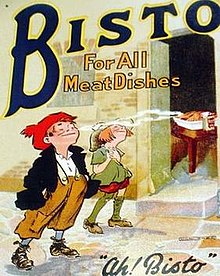
With my nose held high in the air, chasing aromas like the grotesque children in vintage Bisto adverts or Divine in John Waters’ Polyester, I formed an improvised plan. I’d need to change trains at London Bridge, so a one-stop diversion could have me in Bermondsey in no time. Over to Druid Street for a swift smokey treat, then back on my way. That’s exactly what I did, and it was wonderful.

Why am I telling this story? I don’t know, really. It is a very long and quite tangential way to start talking about rauchbier. To discuss this style, I need to return to that word evocative. Rauchbier feels especially appropriate at this time of year, as distant bonfires spread their aromas far and wide, soaking into your clothes and confirming that summer is well and truly over. I’ve drunk Spezial Rauchbier on Brighton beach in mid-30 degree heat, and it was still great – but a crisp autumnal air is undoubtedly more appropriate.

I was delighted, then, to find that not one but two London breweries have tried their hand at the style for the A/W 2020 season – the afformentioned Anspach and Hobday, and Signature Brew, who kindly gifted me two cans of theirs.


Signature call their offering In the Dark, so I was surprised that it poured a pretty light amber colour reminiscent of Vienna lager. The aroma proves quickly that there’s nothing half-hearted about it though, with a big hit of smoky bacon on the nose. This is, as will be obvious to anyone familiar with rauchbier, a large component of the flavour, if not an original tasting note. Once you get used to the style, what’s interesting is what else is going on beyond the ham. In this case, the smoke is well integrated with the malt flavour, mingling with toasted and bready notes. There are some almost salty mineral flavours, and just a touch of lemony astringency lending a welcome zingy freshness, before finishing on a burnt caramel note. Like the best smoked beers, this balances intensity, complexity and drinkability very well indeed – I confessed by ticker tendencies at the start of this post, but I’d happily forget all that and drink this all night if I found it in my local.


To Anspach and Hobday, then. This year’s simply titled The Rauchbier is, for the first time, a lager. It makes for a beautiful pour, with a big off-white head that sticks around right til the end of the glass (a result of the addition of that very un-Germanic ingredient, maize?) That meaty umami smoke is there in spades, as per, but rounded out by an intriguing herbal note suggestive of oregano. Spot on, really – but the real coup here is actually more about texture and mouthfeel. The carbonation is relatively soft, which makes the beer feel full and smooth – closer to Schlenkerla marzen poured directly from the cask than the bottled equivalent.

Time for more planning – how can I get hold of more of these beers to see me through the lengthening nights ahead?

Monday, 6 July 2015

London Smoke porter & chipotle BBQ sauce


With BBQ season firmly upon us, smoked beer is never far from my mind. And since my BBQ beans cooked with Beavertown Smog Rocket porter went a while ago, I decided to tweak the recipe to make a rich, tangy BBQ sauce that I could store in my fridge in anticipation of my first BBQ of the year. I only made a few changes – a little less passata, a little more beer. Some added mushroom ketchup (which I use as a vegetarian alternative to Worcestershire sauce – if you don’t mind the anchovy content, you could use that instead) and tamarind sauce for extra depth and tang. And some chipotle chilli, for added smoke and a fiery kick.

Having used Smog Rocket already, I didn't want to go with the same beer this time around. Smoked porter is undoubtedly the way to go – the smoke is appropriate, and the roasted malts match the sweet treacle in the sauce. So this time I've opted for Five Points’ London Smoke. It’s a big beer in many ways – rich, boozy, full of coffee, chocolate and currant flavours, amongst others. The smoke is not hugely pronounced, but gives a meaty background that will work. It’s quite bitter, so an extra touch of sugar is needed.

The sauce tastes great. If you eat meat, I imagine this could make for a really special burger. And as you tuck into your juicy half-pounder, you might pity me with my dry, lifeless soya patty – but you needn't bother, because I've come to love the ‘hockey puck’ veggie burger. Especially with one of these on top.

Ingredients      

  • 1 chopped onion
  • 1 tsp smoked garlic powder, or 2 cloves fresh smoked garlic, minced or crushed
  • 1 tsp chipotle paste or half a dried chipotle chili, deseeded and finely chopped
  • Generous pinch of smoked paprika
  • Pinch of oregano
  • 200ml Five Points London Smoke, or other smoked porter
  • 150ml passata
  • 1 tsp black treacle/molasses
  • 2 tbsp tomato puree
  • 1 tbsp soft dark brown sugar, plus an extra pinch
  • 1 tbsp Dijon mustard
  • 1 tbsp red wine vinegar
  • 1 tsbp mushroom ketchup or Worcestershire sauce
  • 1 tsp tamarind sauce

Method

  • Fry the onion on a medium heat for about 5 minutes, until soft and golden.
  • Stir in the smoked garlic, chipotle, oregano and smoked paprika and fry for another minute or so.
  • Add the passata and stir in all of the other ingredients and season. Retain a small amount of the beer (around 10-15ml) and keep to one side.
  • Reduce the heat as far as possible whilst keeping the sauce at a simmer. Stir frequently to make sure it isn’t burning, and simmer for around an hour, or until thick, checking the seasoning several times. It’s unlikely to ever become quite as thick and gloopy as a bottled BBQ sauce, but use this consistency as a guide.
  • Once you reach your desired consistency, remove the pan from the heat and set to one side to cool.
  • Once cooled, transfer the sauce into a blender or food processor with the remaining beer. Once smooth, return to the blended sauce to the pan.
  • Whilst the sauce reheats, wash and sterilise a jar. To do this, thoroughly wash the jar with washing up liquid and hot water, but don’t dry it. Then place it in the oven upside down on a baking tray and turn on the heat. After a few minutes, turn it the other way up. Keep checking it, and when the moisture has dried, remove it from the oven. Fill it with the warm sauce and fit the lid tightly. Once the jar has cooled, put it in the fridge until ready to serve. 

Thursday, 7 May 2015

Smog Rocket baked beans


Though I reserve a special kind of disgust for the luminous-orange tinned monstrosity that is commonly sold under the name ‘baked beans’, the rich, tangy, home-made, cowboy-style version of the dish is one of my favourite things to eat. Piled on top of some thick toast with some strong cheddar grated on top, these beans are a perfect winter warmer. Stir in some smoked paprika and cumin and they make a great filling for a Tex Mex-style burrito, too. And whilst the worst of winter might be behind us now, as the weather warms up, I'm still craving those beans. In the US, Boston beans are often served as a side dish to BBQ food; there’s a similar depth of flavour and sweet and sour tang. As the smell of smoke in the air begins to signify summer barbecues rather than winter bonfires, I find myself thinking up ways to replicate the smokiness from the open fire in the dish. The answer is, obviously, beer.

Mark Dredge has made a version of this dish using Schlenkerla Marzen, which looks great.  Whilst acknowledging his idea, I want to use my own recipe for the beans, which is based on various different versions I've tweaked and compiled over the years. When it comes to the beer, I want something dark and rich, smoked but subtle with it. A porter should work with the treacle in the dish, so I'm opting for Beavertown’s Smog Rocket. This beer was originally conceived as a match for BBQ ribs, so it should be especially appropriate. Mark notes that even with a full on rauchbier, he didn't end up tasting much smoke in his beans, so I'm going to use smoked garlic in place of regular garlic, and season with smoked salt, too. I'm reducing the amount of treacle in the recipe, as the beer should add a similar depth of flavour, and whereas I’d normally add some vegetable stock, I'm getting rid of it here to account for the beer.

How does it taste? Beautiful. The smoke is there, just a hint in the background, and would complement barbecued food perfectly – I’ll be making this as a side dish for my back garden BBQs this summer – but the beer’s principal value here is adding richness and deep, moreish flavour.


Ingredients
  • 2 cans of borlotti beans, drained (the classic tinned version of baked beans are haricot, but you could use almost any variety. I particularly like borlotti beans and most recipes suggest them)
  • 1 tsp smoked garlic powder (you can used fresh smoked garlic, but I've found the powder to be more pungently smoky. I buy it in a resealable packet from the specialist ingredient section of Sainsbury’s)
  • 1 onion, chopped
  • 150ml Beavertown Smog Rocket smoked porter
  • 200ml passata
  • 1 tsp black treacle/molasses
  • 2 tbsp tomato puree
  • 1 tbsp soft dark brown sugar
  • 1 tbsp Dijon mustard
  • 1 tbsp red wine vinegar
1. Preheat the oven to about 160°.
      2. Find a pan which has a lid and is suitable for both the stovetop and the oven – a cast-iron casserole or similar is ideal. Fry the onion until soft and golden, then add the garlic powder and fry off for another minute or so.
      3. Keep the beans to one side, and combine all of the other ingredients in the pan to make a sauce. Once combined, add the beans and bring to a boil.
      4.  Once the dish has come to the boil, turn off the hob, place the lid on the pan and put it into the oven. Bake for about 90 minutes, stirring every now and again. Be sure to scrape the stodgy, caramelised, crusty bits from the edge of the pan and stir them back into the sauce, as they’re full of flavour.
      5.  After 90 minutes, remove the lid and check the consistency. By now it should have thickened, with little excess liquid floating to the top. Once you reach this point, remove the lid and return the pan to the oven to reduce further. It may not sound appetising, but this dish tastes best when it’s gloopy, so put it back, uncovered, in the oven until it is a shade of reddish brown, thick and looking almost crusty on the surface. Remove from the heat and stir before serving.

Wednesday, 15 April 2015

Thornbridge vs. Schlenkerla: Battle of the Bocks

I’ve often thought that one of the Thornbridge brewery’s strongest suits is their respectful approach to beer styles, along with an interest in slightly more esoteric or niche styles less often attempted by other UK brewers. A copy of Michael Jackson’s Beer Companion and access to Thornbridge beers can teach a novice beer drinker an awful lot – I know, because I learnt a lot this way myself. Craft Beer Co. in Brighton seems to have at least two of their brews on at any one time and so as I read about, for example, kolsch beer, I was able to sample Tzara – surely the next best thing to a visit to Cologne, and way more satisfying than any imported bottle. Similarly, my first taste of Bière de Garde orginated not in Nord-Pas-de-Calais, but in the Peak District. When my dad returned from a trip to France with a couple of bottles of Dyuck Jenlain Ambrée, I was amazed at how true to style the Thornbridge example, still fresh in my mind, had been.

Considering this, I recently realised I had a bottle of both Thornbridge’s Bamberg and Schnlenkerla’s Urbock in my cupboard. This, I thought, could offer an opportunity to see just how well Thornbridge’s beers hold up in comparison to the classics of their style. And so, I decided to taste the two beers side-by-side. Now, I want to make it clear from the get-go that this is purely a bit of fun. There are many reasons why a comparison of this kind isn’t totally fair, not least the fact that strong smoked beer is kind of a palate scorcher. But the beers are both smoked bocks, with similar ABVs (6.5% for Schlenkerla, 6% for Thornbridge), and Thornbridge are acknowledging the influence of (if not inviting comparison to) Schlenkerla by naming their version after the city that famously houses that brewery. Still, the following is not intended to be anything other than a light-hearted experiment; apart from anything else, the tasting itself was really fun to do.


To help me with this venture, I enlisted the help of my other half, Sidony, who took me to Bamberg earlier in the year and became a Schlenkerla devotee in the process. We began by pouring each bottle into two glasses, after which I attempted a blind taste-test by closing my eyes and asking Sidony to hand me a glass without telling me which of the beers it contained. An unscientific element came into play immediately, however; whilst pouring, the aroma of the Thornbridge beer hit me very strongly. After smelling the two glasses, I predicted the one with the most intense, ham-like aroma was Thornbridge, but my guess was based on this prior information rather than a true blind test. The glass with the more powerful aroma unsurprisingly tasted stronger and smokier, too, and this glass actually turned out to be Schlenkerla.

Schlenkerla’s Urbock is, in every sense, a bigger version of their classic marzen. The meaty smokiness is just as strong, but more nuanced – flavours I haven’t detected in the marzen are apparent here, such as tobacco, oak, liquorice and certain herbal notes, and once the smoke subsides, there’s a poke of citrus sharpness. The elevated ABV is evident and, together with a fuller body and pleasantly oily mouthfeel, this slips down easily and leaves a warmth in the chest. Sidony uses an analogy rarely called upon in the beer world – make-up. There are many types of primer (something that is applied pre make up application). Some are gels & creams that often hit the skin and dry down almost immediately, making whatever comes after it apply roughly, whilst others have a more silicone feeling to them, which lets anything come after it glide on. Drinking the beer is a similarly seamless sensation; it's smooth and silky, slippery, easy drinking.

In comparison, Thornbridge’s Bamberg seems a little puny. To again acknowledge the flaw in this test, it is a little mean to taste this after such an intense beer as the Schlenkerla bock. I rinsed my mouth out with plenty of water in order to best compare them, but my palate was undoubtedly affected by the previous beer’s smoke. The smokiness is far milder here, but Bamberg also seems to me like a much cleaner (if stronger than average) lager than your typical rich, warming bock. The body is noticeably thinner, with more carbonation, and the colour resembles a Vienna lager, far lighter than Schlenkerla’s dark copper. Sidony doesn’t like it at all – for her, it neither warms nor refreshes and it’s neither a summer nor a winter beer. I’m much keener; admittedly, after Schlenkerla, it barely tastes like a smoked beer anymore, but then I think I’d enjoy an unsmoked version just as much, because for me it’s a robust but crisp lager. I’d prefer a slightly lower alcohol content, though, because I don’t feel the boosted ABV brings anything to the beer; the body is no fuller than your average lager, and you don’t get that tingling booze warmth.

As I said at the beginning, this was purely intended as a fun little experiment, and there’s no slight on Thornbridge intended – they remain one of the UK breweries I most admire, and to say that any brewery makes a smoked beer that doesn’t quite measure up to Schlenkerla is truly no insult. Apart from anything else, I really enjoyed Bamberg in its own right, and fully intend on trying it again on its own to appreciate it properly.